

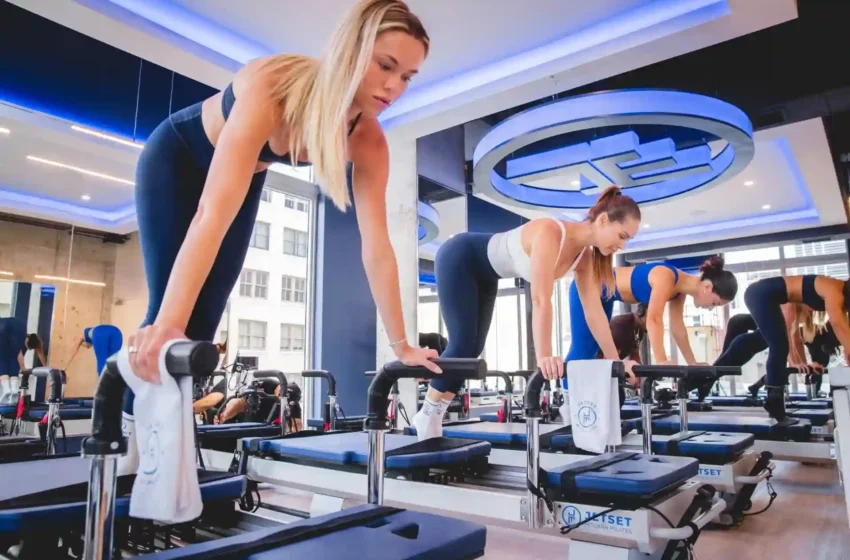
Achieve Your Fitness Goals Fast with Jetset Pilates Programs
Have you ever wanted a workout that makes you feel stronger without making exercise feel like a punishment?
That is one reason Jetset Pilates has attracted attention among people looking for a more modern approach to fitness. The Pilates-inspired method combines controlled movements, resistance, core training, balance, and muscular endurance in a structured workout designed to challenge the whole body.
The growing popularity of boutique fitness also reflects a broader change in how people exercise. Many are no longer interested only in lifting the heaviest weight or running the longest distance. They want workouts that improve strength, mobility, posture, coordination, and body awareness at the same time.
In this guide, we will explore what Jetset Pilates is, how its workouts work, what results are realistic, and how to decide whether this style of Pilates belongs in your fitness routine.
What Is Jetset Pilates?
Jetset Pilates is a modern, reformer-focused Pilates fitness concept built around dynamic, controlled movements and resistance-based training.
Rather than treating Pilates as simple stretching, contemporary reformer workouts can provide a demanding full-body session. The reformer uses springs, a moving carriage, straps, and other components to create resistance and support different exercises.
A typical class may move through exercises targeting the:
- Abdominals and core
- Glutes and hips
- Quadriceps and hamstrings
- Shoulders and arms
- Back
- Stabilizing muscles
The controlled nature of the exercises is important. You are not simply moving as quickly as possible. Instead, the goal is to maintain alignment and control while working against resistance.
Why modern reformer Pilates feels different
A reformer can change the way an exercise feels compared with a traditional mat workout.
For example, a basic leg movement can become considerably more challenging when springs create resistance throughout the motion.
Moreover, the unstable or moving carriage can require additional stabilization. This means that seemingly small adjustments in your feet, pelvis, or spine can change the exercise significantly.
That combination of resistance and precision is one of the reasons reformer Pilates has become such a popular boutique fitness format.
How Jetset Pilates Can Support Your Fitness Goals
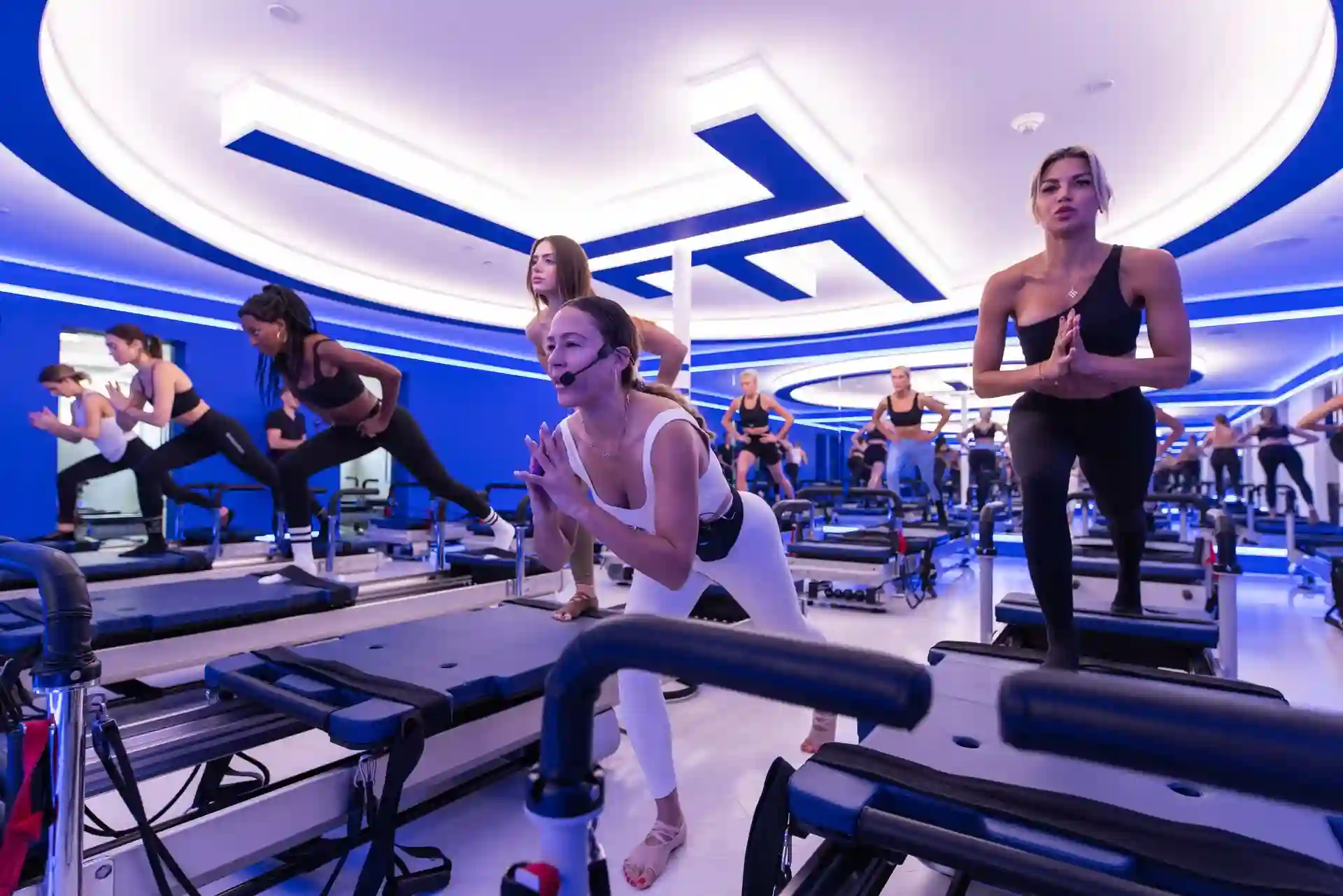
A major advantage of Jetset Pilates is its ability to combine several elements of physical fitness in one session.
However, it is important to understand what Pilates can and cannot do. No single exercise system is perfect for every goal.
1. Better core strength
Core training is central to Pilates.
Instead of only performing traditional crunches, Pilates exercises can challenge the muscles around the abdomen, pelvis, spine, and hips through controlled movement.
For example, maintaining a stable trunk while moving your legs against reformer resistance requires the core to work continuously.
Over time, this can improve your ability to control your body during exercise and everyday movement.
2. Improved muscular endurance
Pilates often uses repeated movements, sustained positions, and controlled tempo.
This creates a different training stimulus from lifting a very heavy weight for a small number of repetitions.
If you find that your muscles become tired during a long Pilates sequence, that is partly because the workout is challenging their ability to maintain force over time.
3. Greater mobility and flexibility
Modern Pilates sessions often include movements that take the hips, shoulders, and spine through useful ranges of motion.
However, flexibility and mobility are not exactly the same.
Flexibility generally refers to how much a muscle or joint can move, while mobility also involves your ability to control that movement.
Pilates can work on both, particularly when exercises are performed slowly and with good technique.
Jetset Pilates and the Modern Boutique Fitness Trend
The popularity of Jetset Pilates fits into a larger shift toward boutique fitness.
People increasingly want workouts that feel like an experience rather than simply another task on a weekly schedule.
Boutique studios often create an environment with structured classes, instructors, music, social interaction, and a clear training format.
This can have an important practical benefit: accountability.
If you enjoy the atmosphere and know that a class is waiting for you at a particular time, you may be more likely to keep exercising.
And consistency matters.
A moderately challenging workout performed regularly is usually more useful than an extremely difficult workout that you only do occasionally.
The psychological side of boutique workouts
Exercise is not purely physical.
Enjoyment, motivation, confidence, and social connection can all influence whether someone continues an exercise routine.
For example, someone who dislikes running may struggle to maintain a running program even if running is excellent cardiovascular exercise.
That same person might enjoy reformer Pilates and attend three sessions every week.
In that situation, the “best” workout is partly determined by what the person can consistently perform.
What Results Can You Expect From Jetset Pilates?
Searches for dramatic Pilates Body Transformation results are common online.
However, an expert approach requires realistic expectations.
Regular Pilates may contribute to improvements in:
- Core endurance
- Balance
- Muscular control
- Flexibility
- Mobility
- Postural awareness
- General physical conditioning
You may also notice that certain everyday movements become easier.
For example, getting up from the floor, maintaining balance on one leg, or controlling your body during other workouts may feel more natural.
What about weight loss?
Pilates can contribute to calorie expenditure and overall physical activity.
However, fat loss depends on the broader energy balance of your lifestyle, including food intake, activity levels, sleep, and other factors.
A reformer class should therefore be viewed as one component of a healthy fitness strategy rather than a guaranteed fat-loss solution.
If your goal is significant weight reduction, combining Pilates with resistance training, cardiovascular activity, regular walking, and appropriate nutrition may provide a more complete approach.
Jetset Pilates vs. Traditional Gym Training
The Pilates Body vs Gym Body discussion often creates unnecessary competition between different forms of exercise.
They actually solve different problems.
Traditional gym training, especially progressive resistance training, is highly effective for developing strength and muscle mass.
Pilates can complement this by emphasizing core control, movement quality, stability, and muscular endurance.
| Goal | Pilates | Traditional Gym Training |
| Core control | Excellent | Excellent with proper programming |
| Mobility | Strong focus | Depends on program |
| Maximal strength | Limited compared with heavy lifting | Excellent |
| Muscle growth | Moderate potential | Excellent with progressive overload |
| Balance and coordination | Strong focus | Can be included |
| Muscular endurance | Strong | Depends on training style |
| Cardiovascular fitness | Usually moderate | Depends on exercise selection |
Moreover, there is no reason you cannot use both.
Someone could attend reformer Pilates twice a week, lift weights twice a week, and walk or perform cardiovascular exercise on additional days.
That creates a broader training program rather than forcing every fitness goal into one workout.
Can Beginners Try Jetset Pilates?
Yes, but beginners should start with appropriate instruction.
The reformer can look intimidating when you first see it. Springs, straps, a moving carriage, and unfamiliar exercises can make the equipment seem complicated.
Fortunately, the basic principles are easier to understand when an instructor explains them step by step.
What beginners should focus on
During your first classes, prioritize:
- Learning proper alignment
- Understanding how the reformer works
- Controlling each movement
- Learning breathing patterns
- Using manageable resistance
- Asking for modifications when needed
Do not worry about performing the most advanced exercise in the room.
A beginner who performs a simple movement correctly is building a stronger foundation than someone who attempts a difficult exercise without control.
Be Fit Modern Pilates and Other New Pilates Trends
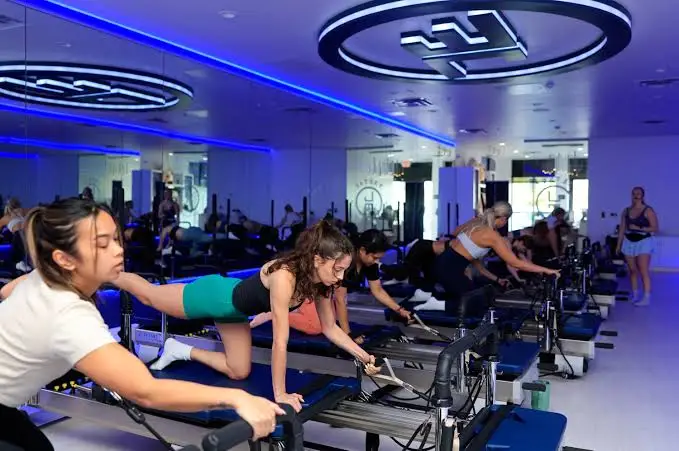
The Pilates world has expanded far beyond classical mat routines.
You may encounter programs such as Be Fit Modern Pilates, which reflect the broader movement toward combining traditional Pilates principles with contemporary fitness ideas.
Other styles focus on specific populations or movement goals.
For example, Somatic Pilates places greater emphasis on body awareness and the experience of movement.
Pilates Habitat is another example of the expanding Pilates landscape, where Pilates is increasingly presented as part of a broader wellness and movement culture.
The terminology can sometimes become confusing because different studios and instructors may use similar words for different training formats.
Therefore, look beyond the name.
Ask what the program actually includes, who teaches it, how exercises are modified, and whether the intensity matches your current fitness level.
What About Pilates for Men?
The idea that Pilates is mainly for women is an outdated stereotype.
Pilates for Men can provide useful training for people who lift weights, run, cycle, play sports, or simply want better movement control.
Athletes may particularly appreciate the focus on core stability and body awareness.
For example, a recreational golfer might use Pilates to work on trunk control and hip mobility, while a runner could use it as complementary strength and stability training.
Pilates does not replace sport-specific training. Instead, it can support physical qualities that contribute to broader performance.
Pelvic Pilates: What You Should Know
Pelvic Pilates is another term you may encounter when researching specialized Pilates programs.
These routines generally place additional emphasis on the pelvis, deep core muscles, posture, breathing, and movement control.
The pelvic region plays an important role in trunk stability and movement.
However, people experiencing pelvic-floor symptoms should avoid assuming that a generic online Pilates routine is the correct treatment.
Pain, pressure, incontinence, or other persistent symptoms may require assessment from a qualified healthcare professional or pelvic-health physiotherapist.
In other words, Pilates can be useful, but it should not replace individualized medical care when a specific condition is present.
Is the 28-Day Wall Pilates Trend Worth Trying?
Social media has made home Pilates challenges extremely popular.
You may have seen searches for 28 Day Wall Pilates Challenge Free, promising dramatic results from short daily workouts.
The appeal is understandable.
A four-week challenge provides structure, removes some decision-making, and can help beginners establish an exercise habit.
However, the number 28 is not a magic deadline for transforming your body.
A challenge can be useful if it encourages regular movement, but results depend on the quality of the program, your starting point, nutrition, recovery, and what you continue doing afterward.
How to use a challenge intelligently
If you try a home Pilates challenge:
- Start with beginner-level movements.
- Do not ignore pain.
- Take recovery days when appropriate.
- Focus on technique rather than speed.
- Avoid unrealistic before-and-after promises.
- Continue exercising after the challenge ends.
The best challenge is the one that creates a sustainable habit rather than a temporary burst of motivation.
How to Build a Balanced Weekly Routine
If you want to make Jetset Pilates part of your long-term fitness plan, consider combining it with other forms of exercise.
A simple weekly structure could look like this:
Monday: Reformer Pilates
Tuesday: Walking or cardiovascular exercise
Wednesday: Resistance training
Thursday: Rest or light mobility
Friday: Reformer Pilates
Saturday: Strength training or recreational activity
Sunday: Recovery
This is only an example.
Your schedule should reflect your fitness level, goals, work demands, recovery capacity, and other activities.
Why strength training can complement Pilates
Resistance training provides a straightforward way to apply progressive overload.
You can gradually increase the weight, repetitions, sets, or training difficulty.
That makes traditional strength work particularly useful when your goal is to build substantial muscle or improve maximal strength.
Pilates can then provide a complementary focus on control, stability, mobility, and muscular endurance.
Common Mistakes to Avoid
Even an excellent fitness method can become less effective when used incorrectly.
Trying to exercise as intensely as possible
Sweating more does not automatically mean you had a better workout.
Pilates depends heavily on controlled movement. Rushing through exercises can reduce the quality of the movement and make it harder to maintain proper alignment.
Copying advanced social-media workouts
Online videos often show people with extensive training performing difficult movements.
That does not mean those exercises are appropriate for beginners.
Progress gradually.
Expecting overnight changes
A few sessions can make you feel different, but meaningful physical adaptations take time.
Think in terms of weeks and months, not days.
Ignoring recovery
Muscles adapt during recovery, not only during exercise.
Adequate sleep, nutrition, hydration, and rest days are therefore important parts of any Pilates program.
How to Get More From Every Jetset Pilates Session
Your results depend not only on attendance but also on how you approach each class.
Before starting, make sure you understand the equipment and resistance level.
During the workout, pay attention to your breathing and alignment instead of trying to match another participant’s pace.
Moreover, communicate with your instructor.
If an exercise feels too difficult, ask for a modification. If the movement feels too easy, ask whether there is a safe progression.
Track functional progress
Do not measure progress only through photographs or body weight.
Instead, consider whether you can:
- Hold positions for longer
- Control movements more smoothly
- Perform exercises with better alignment
- Improve balance
- Increase resistance
- Move through a greater range of motion
- Complete classes with less fatigue
These changes provide useful evidence that your fitness is developing.
How Personal Experience Can Shape Your Pilates Journey
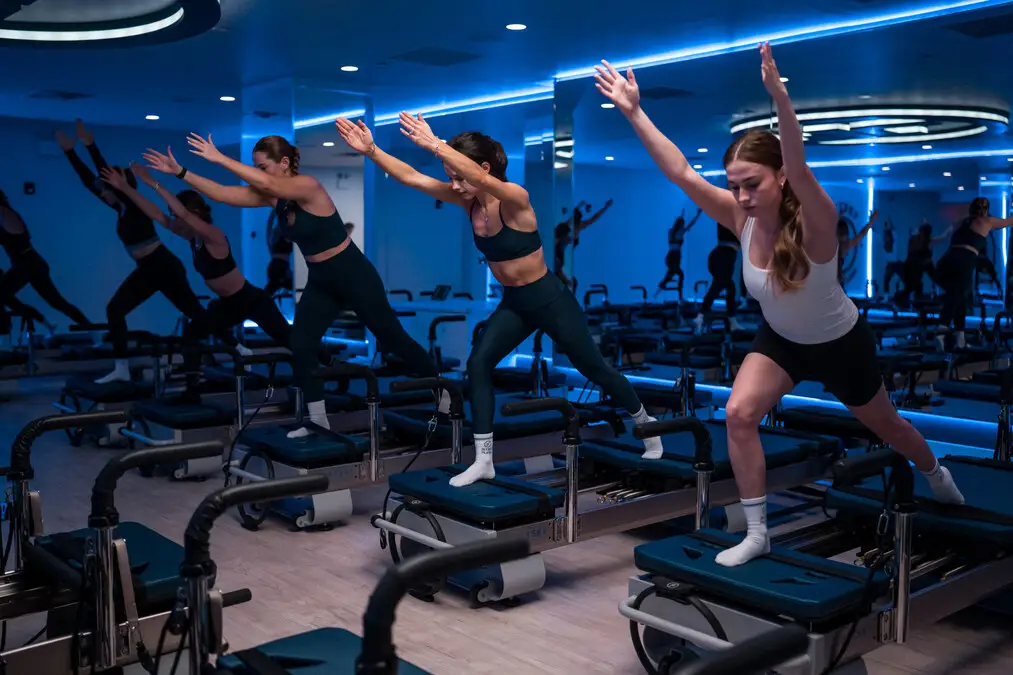
One lesson that becomes clear after working with different training styles is that consistency usually beats novelty.
It is tempting to move from one viral workout to another whenever social media introduces a new trend.
However, the body responds to repeated training and gradual progression.
For example, attending two Pilates classes every week for six months is likely to provide a more meaningful training experience than trying six different fitness challenges for one month each.
The same principle applies to nutrition, strength training, and cardiovascular exercise.
Find a routine you enjoy, learn the movements properly, and give your body enough time to adapt.
Choosing a Quality Pilates Program
Before signing up for a program, consider the following:
- Instructor qualifications: Does the instructor have appropriate Pilates training?
- Beginner support: Are modifications clearly explained?
- Class structure: Is there a logical progression?
- Equipment: Is the reformer maintained properly?
- Intensity: Does the class match your fitness level?
- Safety: Are proper alignment and movement cues emphasized?
- Goals: Does the program match what you actually want to achieve?
A premium-looking studio is not automatically a better training environment.
The quality of instruction matters more than the aesthetic appeal of the room.
Conclusion
Jetset Pilates reflects the modern evolution of Pilates from a traditional movement system into a popular full-body fitness experience.
Its combination of reformer resistance, controlled movement, core training, balance, and muscular endurance can make it a valuable part of a balanced exercise program.
However, realistic expectations matter.
Pilates can support strength, mobility, posture, coordination, and body awareness, but it should not be marketed as a magical shortcut to instant weight loss or overnight body transformation.
The smartest approach is to combine Pilates with other forms of physical activity based on your goals.
In short, the best fitness program is not necessarily the hardest one. It is the one you can perform safely, enjoy consistently, and progress over time.
FAQs About Jetset Pilates
Is Jetset Pilates good for beginners?
Yes. Beginners can learn reformer Pilates with proper instruction and suitable modifications. Start with foundational movements rather than advanced exercises.
How many times a week should I do Jetset Pilates?
For many beginners, two to three sessions per week is a practical starting point. Your ideal frequency depends on your fitness level, recovery, and other training.
Can Jetset Pilates help with weight loss?
It can contribute to overall physical activity and calorie expenditure. However, sustainable weight loss also depends on nutrition, daily activity, sleep, and total energy balance.
Does Jetset Pilates build muscle?
Pilates can improve muscular strength and endurance, particularly in the core, legs, and stabilizing muscles. For significant muscle growth, progressive resistance training is usually more effective.
Is Jetset Pilates better than traditional Pilates?
Not necessarily. Modern reformer classes may offer a faster-paced, fitness-oriented experience, while traditional Pilates emphasizes the original principles of controlled movement, precision, breathing, and alignment. The better option depends on your goals and preferences.
⭐ Make MindLiva Your Preferred Source on Google
Get trusted health, wellness, and lifestyle articles from MindLiva.
Add MindLiva
Samie Babaei is a medical science student at Shahid Beheshti University of Medical Sciences with a strong interest in health, wellness, and medical research. As a health writer and researcher at MindLiva, she focuses on creating clear, evidence-based content that helps readers better understand health and well-being.