
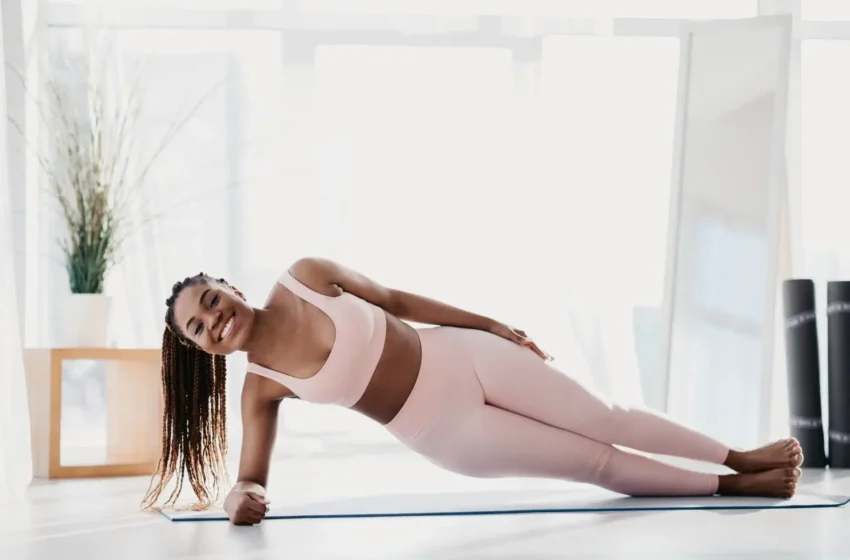
Pilates Body vs Gym Body: Which One Builds a Stronger Core?
Have you ever wondered why someone who looks lean and athletic after years of Pilates can have a very different physique from someone who spends years lifting weights?
That question is at the center of the Pilates Body vs Gym Body debate.
The difference is not simply about appearance. Pilates and traditional gym training use different methods to challenge the body. Pilates focuses heavily on controlled movement, core stability, posture, balance, flexibility, and muscular endurance. Strength training, meanwhile, uses progressive resistance to increase muscle strength and size.
However, choosing one does not mean rejecting the other.
In my experience, the most useful way to compare them is to ask what each method does particularly well. In this guide, we will compare Pilates and gym training for core strength, muscle growth, body composition, mobility, posture, athletic performance, and long-term fitness.
Pilates Body vs Gym Body: What Does the Difference Actually Mean?
The phrase Pilates Body vs Gym Body is popular because people notice differences between physiques developed through different training styles.
But the phrase can be misleading.
There is no scientifically defined “Pilates body” or “gym body.” Your physique reflects many factors, including genetics, nutrition, training history, body-fat levels, sleep, hormones, and daily activity.
Still, training style matters.
A person who performs Pilates several times a week may develop excellent muscular endurance and movement control without gaining large amounts of muscle mass.
Someone who follows a structured resistance-training program with progressive overload may develop significantly greater muscle size and maximal strength.
What Pilates Typically Emphasizes
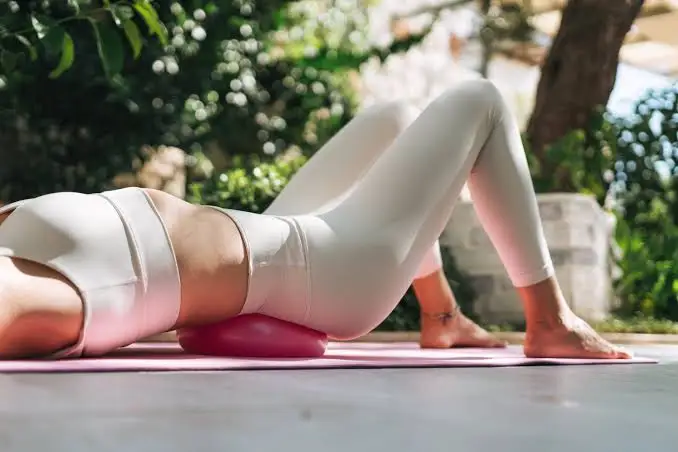
Pilates commonly focuses on:
- Core stability
- Controlled movement
- Postural alignment
- Balance
- Flexibility
- Muscular endurance
- Breathing
- Body awareness
- Coordination
What Gym-Based Strength Training Emphasizes
Resistance training can focus on:
- Muscle hypertrophy
- Maximal strength
- Power
- Progressive overload
- Muscular endurance
- Bone loading
- Athletic performance
- Body composition
Therefore, the two methods are not opposites.
They simply emphasize different adaptations.
Pilates Body vs Gym Body for Core Strength
If your main question is which approach builds a strong core, the answer depends on what you mean by “strong.”
There is a major difference between core endurance, core stability, and maximal trunk strength.
Pilates is particularly well suited to the first two.
Many Pilates exercises require you to stabilize your trunk while your arms and legs move.
For example, during a dead-bug variation, your abdominal muscles must help prevent unwanted movement while your limbs move independently.
That is a real form of core strength.
However, traditional resistance training can also develop a very strong core.
Heavy squats, deadlifts, carries, rows, overhead presses, and other compound exercises require significant trunk stability.
Pilates for Deep Core Control
Pilates often uses relatively low external resistance.
Instead, the difficulty can come from:
- Leverage
- Repetition
- Slow tempo
- Isometric holds
- Balance
- Range of motion
- Reduced support
This creates a different type of challenge.
Research has found that Pilates can improve abdominal muscular endurance. A systematic review and meta-analysis of healthy participants reported improvements in abdominal endurance compared with no exercise.
However, that does not prove Pilates is superior to strength training for every aspect of core strength.
The more accurate conclusion is that Pilates is an effective tool for developing core control and muscular endurance.
Which Builds More Muscle: Pilates or the Gym?
This is where the Pilates Body vs Gym Body comparison becomes much clearer.
If your primary goal is significant muscle hypertrophy, traditional resistance training has the advantage.
Why?
Because muscle growth responds strongly to progressive resistance and sufficient training volume.
A person can make Pilates increasingly difficult, but there are practical limits to how much external load most Pilates exercises provide.
In a gym, you can progressively increase resistance.
For example:
Week 1: Squat 60 kg
Week 4: Squat 65 kg
Week 8: Squat 70 kg
Week 12: Squat 75 kg
That measurable progression provides a straightforward way to overload the muscles.
Where Pilates Still Helps
That does not make Pilates ineffective.
Pilates can strengthen muscles, particularly through repeated controlled contractions.
It can also improve muscular endurance and movement control.
Therefore, someone interested in building a strong, muscular physique might combine:
Resistance training for muscle growth + Pilates for mobility, core control, and muscular endurance.
That combination can be more useful than treating fitness as an either-or decision.
Pilates Body vs Gym Body for Muscle Tone
“Toning” is one of the most misunderstood fitness terms.
Muscles do not become toned because a specific exercise has a special toning effect.
A more defined appearance generally comes from having enough muscle combined with relatively low body fat.
Pilates can contribute to muscular development and endurance.
It can also improve posture, which may make your body appear longer and more upright.
However, if someone wants visibly larger shoulders, chest, arms, glutes, or legs, progressive resistance training will usually be more effective.
For example, exercises such as:
- Squats
- Lunges
- Hip thrusts
- Bench presses
- Rows
- Pull-ups
- Shoulder presses
can be loaded progressively.
That makes traditional gym training particularly valuable for hypertrophy.
Pilates Body vs Gym Body for Fat Loss
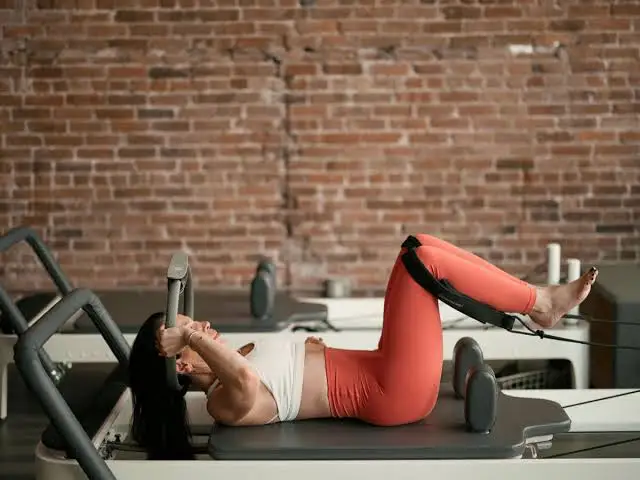
Neither Pilates nor weight training automatically causes fat loss.
Fat loss is primarily influenced by energy balance over time, although appetite, sleep, activity, stress, and other factors also affect the process.
Pilates burns calories, but the amount depends on the workout duration and intensity.
Strength training can also contribute to energy expenditure while helping preserve or build lean mass.
For many people, the best approach is a combination of:
- Resistance training
- Regular walking or aerobic activity
- Pilates or mobility work
- A sustainable nutrition strategy
- Adequate sleep
Moreover, increasing daily movement can be just as important as adding another intense workout.
A 30-minute Pilates class followed by hours of sitting is not automatically better than a moderate workout combined with an active lifestyle.
How Pilates Can Improve Mobility and Flexibility
This is one area where Pilates can have a clear advantage for many people.
Traditional strength programs can improve mobility when exercises are performed through appropriate ranges of motion.
However, mobility is not always a major focus.
Pilates places more direct attention on controlled movement through different ranges.
For example, exercises may involve:
- Spinal articulation
- Hip extension
- Hip rotation
- Shoulder movement
- Hamstring flexibility
- Thoracic rotation
Research has reported improvements in flexibility and dynamic balance following Pilates programs, although study quality and results vary.
That makes Pilates particularly appealing to people who feel stiff from sitting or repetitive movement.
Why Mobility Matters for Strength
Imagine two people who can squat the same weight.
One has good ankle, hip, and thoracic mobility.
The other reaches the required position by compensating elsewhere.
Their strength numbers may look identical, but their movement quality is different.
This is why mobility and strength should not be treated as competing goals.
Good strength is more useful when you can control the positions in which you use it.
Pilates Body vs Gym Body for Posture
Another common reason people start Pilates is posture.
Modern life involves enormous amounts of sitting.
Laptop work, driving, phones, gaming, and long commutes can all reduce movement variety.
Pilates can encourage awareness of spinal alignment, shoulder position, pelvic control, and breathing.
However, posture is not simply a matter of finding one perfect position.
Your body should be able to move between positions comfortably.
A strong posture strategy therefore involves strength, mobility, coordination, and movement variety.
Pilates can contribute to all four.
Can Pilates Build Athletic Performance?
Yes, but it depends on the sport.
Pilates is not a replacement for sprint training if you want to become faster.
It is not a replacement for heavy strength training if maximal strength is your goal.
However, it can support athletic qualities such as:
- Trunk stability
- Balance
- Coordination
- Mobility
- Body awareness
- Muscular endurance
Consider a tennis player.
The athlete repeatedly rotates, stops, changes direction, and transfers force between the legs and upper body.
Better trunk control may help support those movements.
Similarly, a runner may benefit from stronger hip and trunk control.
The role of Pilates is therefore best understood as complementary training.
Pilates Body vs Gym Body for Men
There is no reason men should avoid Pilates.
Pilates for Men can be particularly valuable for lifters, runners, cyclists, athletes, and desk workers.
A man who spends several days each week lifting weights may already have substantial strength.
What he may lack is mobility, controlled range of motion, or endurance in smaller stabilizing muscles.
Pilates can help address those areas.
For example, a powerlifter may use Pilates during a lighter training period to work on breathing, trunk control, and movement quality.
A recreational athlete may use it as a recovery-focused session.
Again, the goal is not to replace strength training.
It is to fill the gaps.
Pilates Body vs Gym Body: What About Men and Muscle Size?
If a man wants a large muscular physique, resistance training should be the foundation.
There is nothing inherently wrong with wanting bigger muscles.
Hypertrophy training is well supported by exercise science and can improve strength and physical function.
Pilates can still play a supporting role.
A practical weekly program could look like this:
Monday: Upper-body strength
Tuesday: Pilates
Wednesday: Lower-body strength
Thursday: Rest
Friday: Full-body strength
Saturday: Pilates or light cardio
Sunday: Rest
This provides exposure to both resistance training and controlled movement.
Somatic Pilates Adds Another Layer of Body Awareness
You may also have noticed the growing interest in Somatic Pilates.
Somatic movement places additional attention on internal sensations and awareness.
Instead of simply asking whether you completed an exercise, you may pay attention to where you feel tension, how your breathing changes, or whether one side of your body moves differently.
This approach can make Pilates feel slower and more intentional.
However, research specifically on Somatic Pilates is more limited than research on Pilates itself.
Therefore, it is better viewed as a mindful movement approach rather than a proven treatment for medical or mental-health conditions.
Pilates Habitat and the Modern Pilates Experience
The modern Pilates environment is also changing.
A concept such as Pilates Habitat reflects the growing interest in creating spaces where movement, recovery, strength, and body awareness come together.
Meanwhile, studio and franchise models such as Be Fit Modern Pilates and Jetset Pilates show how Pilates has expanded beyond traditional mat classes.
The important point is not the brand name.
It is the quality of the training.
Look for instructors who explain technique, provide modifications, and progress exercises appropriately.
A beautiful studio cannot compensate for poor programming.
What About Pelvic Pilates?
Pelvic Pilates is another term people may encounter when researching Pilates.
It generally refers to exercises that pay attention to pelvic control, breathing, pelvic-floor function, and the muscles surrounding the pelvis.
The pelvis plays a major role in movement and trunk stability.
However, people with persistent pelvic pain, urinary symptoms, or other pelvic-health concerns should seek assessment from an appropriate healthcare professional.
Online exercises should not be treated as a universal medical treatment.
For healthy individuals, pelvic awareness can simply be another part of learning better movement control.
Are Viral Pilates Challenges Worth Trying?
Social media has made short Pilates challenges extremely popular.
You may see searches for 28 Day Wall Pilates Challenge Free, for example.
These programs can be useful for motivation.
A 28-day structure gives people a clear target and can help create consistency.
However, the number “28” does not have magical significance.
Your body does not suddenly transform on day 28.
What matters is whether the program provides appropriate progression and whether you can continue exercising afterward.
The same principle applies to before-and-after photos.
A Pilates Body Transformation may look dramatic online, but photographs do not tell you everything about someone’s training, diet, genetics, lighting, posing, or timeline.
Look for sustainable progress rather than overnight promises.
Pilates Body vs Gym Body: Which Is Better for Beginners?
For complete beginners, either approach can work.
The better choice depends on what you enjoy and what you need.
Pilates May Be a Good Starting Point If You:
- Feel stiff
- Want to improve body awareness
- Prefer lower-impact exercise
- Want to strengthen your core
- Need to improve balance
- Want structured mobility work
Gym Training May Be Better If You:
- Want to build significant muscle
- Want to increase maximal strength
- Enjoy lifting weights
- Want measurable resistance progression
- Need sport-specific strength development
However, beginners do not need to choose forever.
Starting with Pilates and later adding strength training can work.
Starting with weights and adding Pilates later can also work.
How to Combine Pilates and Gym Training
For many people, combining both methods produces the most balanced result.
Here is a simple example.
Option 1: Three Gym Days + Two Pilates Days
Monday: Strength training
Tuesday: Pilates
Wednesday: Strength training
Thursday: Rest
Friday: Strength training
Saturday: Pilates
Sunday: Rest
Option 2: Two Gym Days + Two Pilates Days
Monday: Full-body strength
Tuesday: Pilates
Wednesday: Rest
Thursday: Full-body strength
Friday: Rest
Saturday: Pilates
Sunday: Walking or rest
The best schedule is the one you can recover from.
More training is not automatically better.
Common Mistakes When Comparing Pilates and Gym Training
The biggest mistake is assuming appearance tells you everything about fitness.
Someone can look muscular but have poor mobility.
Someone can look lean but have excellent endurance.
Someone can practice Pilates and still lift heavy weights.
Someone can lift weights and also practice yoga or Pilates.
Bodies are not divided into neat categories.
Mistake 1: Thinking Pilates Is “Easy”
Advanced Pilates can be extremely demanding.
The difficulty may come from leverage, control, balance, repetition, and time under tension rather than heavy external weight.
Mistake 2: Thinking Gym Training Is Only About Appearance
Resistance training can improve strength, bone health, physical function, and athletic performance.
It is much more than bodybuilding.
Mistake 3: Chasing the Wrong Metric
Do not judge your program only by how sore you feel afterward.
Better measures include:
- Increased strength
- Better movement control
- Improved balance
- Greater mobility
- Better exercise technique
- Consistency
- Recovery
The Evidence-Based Answer: Which One Wins?
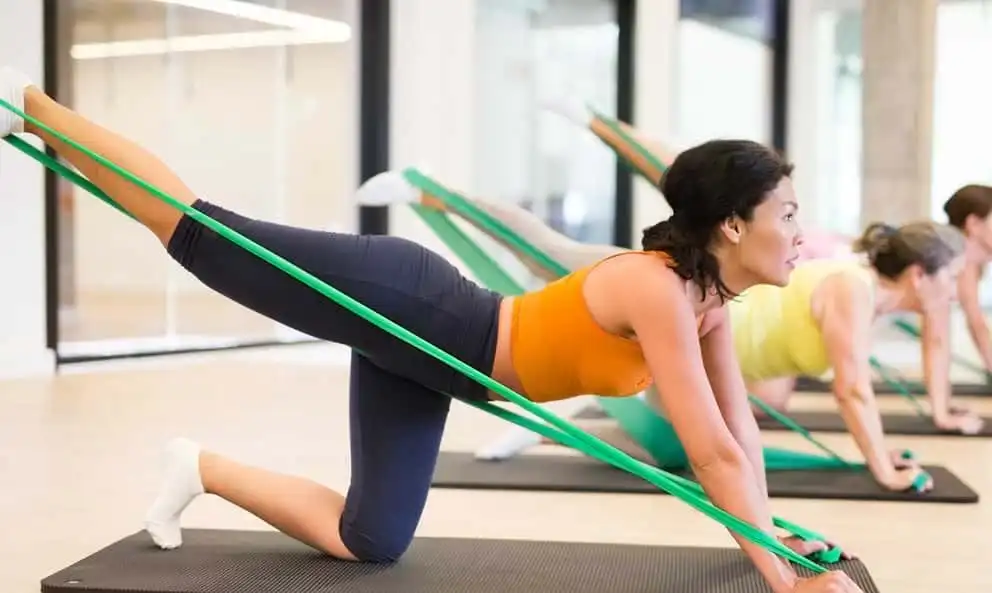
If the question is “Which builds more muscle?”, gym-based resistance training wins.
If the question is “Which can improve core endurance and movement control?”, Pilates is highly useful.
If the question is “Which improves maximal strength?”, progressive resistance training has the advantage.
If the question is “Which is better for mobility and controlled movement?”, Pilates can be particularly valuable.
If the question is “Which should I do?”, the answer may be both.
Research does not support the idea that Pilates is universally superior to other forms of exercise. One systematic review found insufficient evidence to conclude that Pilates was clearly better than other exercise methods for several strength outcomes.
That is not a weakness.
It is simply what the evidence tells us.
Good fitness programming is about matching the method to the goal.
Final Verdict on Pilates Body vs Gym Body
The Pilates Body vs Gym Body debate sounds like a choice between two competing worlds.
It does not need to be.
Pilates offers controlled movement, core endurance, balance, mobility, posture, and body awareness.
Gym-based resistance training offers progressive overload, maximal strength, hypertrophy, and measurable muscle development.
Each has strengths.
The most complete approach may combine them.
If you want a stronger core, do not focus only on abdominal exercises.
Train the muscles that stabilize your trunk.
Improve your mobility.
Build strength.
Practice controlled movement.
Recover properly.
And most importantly, choose a routine you can sustain.
A strong body is not defined by one training style. It is defined by what the body can do.
FAQs About Pilates Body vs Gym Body
Is a Pilates body better than a gym body?
Neither is inherently better. Pilates and gym training create different adaptations. Pilates emphasizes controlled movement, core stability, mobility, and endurance, while resistance training is especially effective for muscle size and maximal strength.
Can Pilates build a strong core?
Yes. Pilates can develop core endurance and trunk control through exercises that require stabilization while the limbs move. However, heavy resistance exercises can also provide substantial core strength benefits.
Can I do Pilates and lift weights?
Absolutely. Combining Pilates with resistance training can provide a balanced program that develops strength while also improving mobility, balance, core control, and movement quality.
Is Pilates good for building muscle?
Pilates can strengthen muscles and improve muscular endurance, but it is generally less effective than progressive resistance training for maximizing muscle hypertrophy.
How often should I do Pilates if I lift weights?
One or two Pilates sessions per week can complement a strength program effectively. However, the right amount depends on your total training volume, recovery, fitness level, and goals.
⭐ Make MindLiva Your Preferred Source on Google
Get trusted health, wellness, and lifestyle articles from MindLiva.
Add MindLiva
Samie Babaei is a medical science student at Shahid Beheshti University of Medical Sciences with a strong interest in health, wellness, and medical research. As a health writer and researcher at MindLiva, she focuses on creating clear, evidence-based content that helps readers better understand health and well-being.