

Pilates Habitat: Your Ultimate Destination for Core Strength
Have you ever finished a workout feeling tired but wondered whether you actually moved better?
That question is at the heart of modern Pilates.
Pilates Habitat has become an appealing concept for people who want more than a quick workout. The focus is on creating an environment where core strength, mobility, posture, balance, breathing, and controlled movement work together.
This matters because your core is involved in far more than abdominal exercises. It helps stabilize your body while you walk, lift, rotate, run, bend, and perform everyday tasks.
Moreover, Pilates can complement strength training rather than compete with it. Research suggests Pilates may improve abdominal muscular endurance, flexibility, balance, and physical conditioning, although results vary across studies.
In this guide, we will explore what makes the Pilates Habitat approach valuable, which exercises can strengthen your core, how Pilates compares with gym training, and how to build a realistic routine.
What Is Pilates Habitat?
The phrase Pilates Habitat can be understood as more than a workout location.
It describes an environment or approach centered on Pilates principles such as control, concentration, breathing, precision, alignment, stability, and mindful movement.
A good Pilates environment encourages you to understand your movement rather than simply complete repetitions.
For example, imagine performing 10 slow bridges.
A traditional approach might focus mainly on completing all 10 repetitions. A more mindful Pilates approach asks additional questions:
- Is your pelvis staying stable?
- Are both feet pressing evenly?
- Are you using your glutes?
- Is your lower back taking over?
- Can you breathe comfortably?
- Can you lower your spine with control?
These details matter.
Quality of movement is often more valuable than simply increasing the number of repetitions.
Why the Pilates Habitat Concept Matters
Modern fitness can sometimes become overly focused on intensity.
People are encouraged to lift heavier, run faster, complete more repetitions, and burn more calories.
Those goals can be useful, but they are not the entire picture.
A well-rounded fitness program also needs mobility, balance, recovery, coordination, and movement control.
That is where a Pilates-centered environment can be useful.
Pilates Habitat and Core Strength
When most people hear “core strength,” they immediately think about six-pack abs.
However, the core is much more complex.
It includes muscles that help control and stabilize the trunk and pelvis. These muscles work with the hips, spine, shoulders, and breathing system to help transfer force throughout the body.
For example, when you pick up a suitcase, your abdominal muscles are not working alone.
Your hips, legs, back, shoulders, and trunk must coordinate.
Pilates trains this type of coordination through controlled movements.
What Makes Pilates Core Training Different?
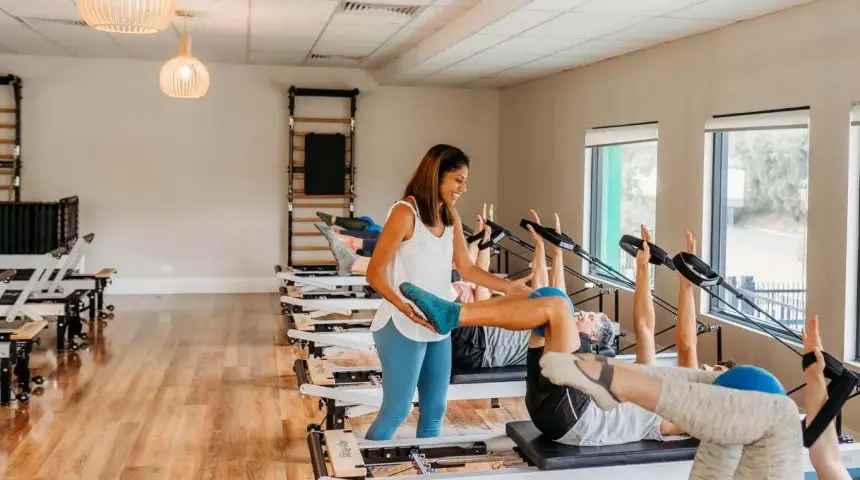
Pilates exercises often use relatively light resistance but create a challenge through:
- Slow movement
- Long muscle contractions
- Small ranges of motion
- Unstable positions
- Repeated controlled movements
- Isometric holds
- Precise breathing
- Balance demands
A plank, for example, is simple in theory.
However, holding a plank while maintaining proper alignment requires the abdominal muscles, shoulders, hips, and legs to work together.
The same principle appears throughout Pilates.
The Best Pilates Habitat Exercises for a Strong Core
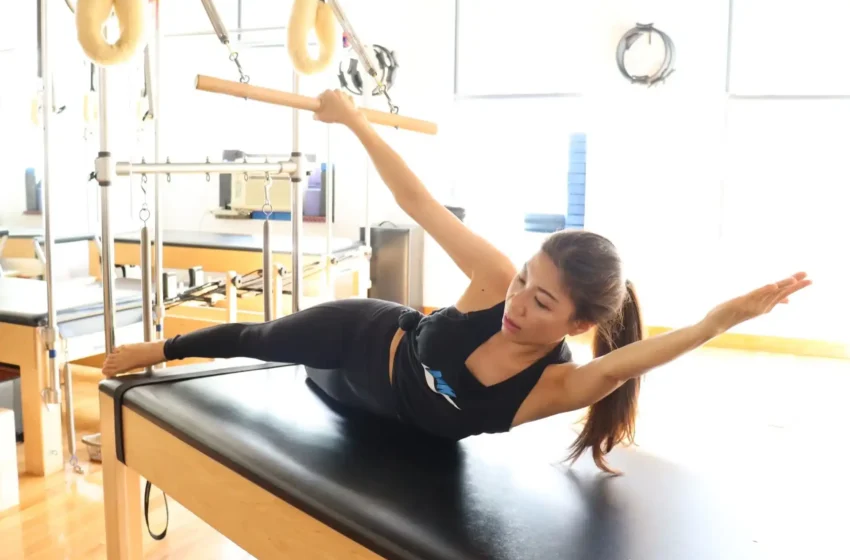
You do not need an expensive reformer to begin.
A simple mat routine can provide an effective introduction.
1. Pelvic Tilts
Lie on your back with your knees bent and feet flat.
Slowly tilt your pelvis so that your lower back gently moves toward the floor. Then return to a neutral position.
This simple exercise teaches pelvic awareness and controlled abdominal engagement.
2. Dead Bug
Lie on your back with your arms extended and knees bent.
Slowly lower one leg while keeping your trunk stable. Return to the starting position and alternate sides.
If your lower back arches excessively, reduce the range of motion.
Control comes first.
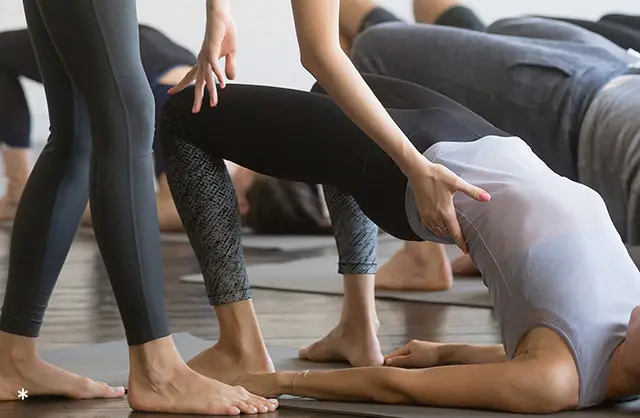
3. Pilates Bridge
Start with your feet flat and knees bent.
Press through your feet and slowly raise your hips. Pause briefly, then lower your spine gradually.
The bridge challenges the glutes and hamstrings while requiring pelvic control.
4. Swimming
Lie face down with your arms extended.
Lift opposite arm and leg, then alternate sides in a controlled rhythm.
This exercise challenges the posterior chain while requiring trunk stability.
5. Side Plank
A side plank trains the muscles responsible for lateral trunk stability.
Beginners can keep one knee on the floor.
As strength improves, progress to a full side plank.
6. Pilates Roll-Up
The roll-up requires significant abdominal control and spinal articulation.
However, it is not a beginner exercise for everyone.
If you cannot perform it comfortably, use simpler core exercises first.
Pilates Habitat and Posture
Posture is not simply about standing perfectly upright.
Your body constantly adjusts its position as you sit, walk, reach, lift, and turn.
Therefore, good posture is better understood as the ability to control alignment while moving.
Pilates can help develop this awareness.
For example, a person who spends eight hours at a computer may become accustomed to a limited range of movement. A Pilates session can introduce controlled spinal, shoulder, and hip movement.
This does not mean Pilates can “fix” every posture problem.
However, it can help people become more aware of alignment and movement habits.
Pilates Habitat for Mobility and Flexibility
Mobility and flexibility are related but not identical.
Flexibility generally refers to how much a muscle or joint can move.
Mobility involves the ability to control movement through that available range.
That distinction is important.
Imagine someone who can easily touch their toes but struggles to maintain balance while moving through a single-leg squat.
They may have flexibility but limited movement control.
Pilates addresses both qualities through slow, deliberate exercises.
Research has reported improvements in flexibility and dynamic balance following Pilates programs, although the evidence varies in quality and the results are not universal.
Why Mobility Matters as You Age
Maintaining mobility becomes increasingly important as people get older.
Simple movements such as getting out of a chair, climbing stairs, reaching overhead, and bending down depend on adequate strength and range of motion.
That is why a Pilates-based fitness routine can be useful beyond aesthetics.
The goal is not simply to look fit. It is to remain capable.
Pilates Habitat vs. Traditional Gym Training
The phrase Pilates Body vs Gym Body creates the impression that these approaches produce completely different types of people.
In reality, they can complement one another.
Gym-based resistance training is highly effective for developing muscle strength and hypertrophy when progressive overload is applied.
Pilates emphasizes controlled movement, core endurance, stability, mobility, and body awareness.
Consider the comparison:
| Training Goal | Pilates | Traditional Strength Training |
| Core endurance | Excellent | Excellent |
| Maximum strength | Moderate | Excellent |
| Muscle hypertrophy | Moderate | Excellent |
| Mobility | Strong focus | Program dependent |
| Balance | Strong focus | Variable |
| Movement control | Major emphasis | Exercise dependent |
| Muscular endurance | Strong | Strong |
| Equipment | Often minimal | Often extensive |
Therefore, you do not have to choose.
A strength athlete might benefit from one or two Pilates sessions each week.
A Pilates enthusiast might add resistance training to build greater maximal strength.
The best program depends on the goal.
Pilates Habitat and Muscle Tone
The word “toning” is often misunderstood.
Muscles do not become “toned” through a unique type of exercise.
A more defined appearance generally comes from a combination of muscle development and lower levels of body fat.
Pilates can help strengthen muscles and improve muscular endurance.
It can also improve posture, which may make your physique appear more upright and balanced.
However, if your primary goal is significant muscle growth, progressive resistance training should remain part of the plan.
This is one reason I prefer a balanced approach rather than claiming that Pilates is the answer to every fitness goal.
Can Pilates Support a Pilates Body Transformation?
A Pilates Body Transformation is possible in the broad sense that consistent Pilates training can contribute to changes in strength, endurance, mobility, posture, and body composition.
But realistic expectations matter.
Your results depend on:
- Training frequency
- Exercise intensity
- Nutrition
- Sleep
- Genetics
- Overall daily activity
- Starting fitness level
A person who begins with low activity may notice substantial changes from a consistent Pilates routine.
Someone who already trains five days per week may see smaller changes.
That is normal.
Progress should be measured against your starting point, not someone else’s social-media photograph.
Pilates Habitat for Men
There is no physiological reason Pilates should be considered a women’s-only activity.
Pilates for Men can be particularly useful for people who spend much of their time lifting weights, sitting at a desk, running, cycling, or playing sports.
For example, a man who performs heavy squats and deadlifts may have excellent lower-body strength but still benefit from additional mobility and trunk-control work.
Likewise, an athlete may use Pilates to complement sport-specific training.
The exercises do not need to be dramatically different.
The programming should simply reflect the individual’s goals.
What About Pelvic Pilates?
You may also encounter the phrase Pelvic Pilates when searching for Pilates programs.
This usually refers to exercises that pay special attention to the pelvis, pelvic floor, breathing, posture, and surrounding muscles.
The pelvic region is an important part of trunk and hip function.
However, pelvic exercises should not be promoted as a universal treatment for medical conditions.
If you experience persistent pelvic pain, urinary symptoms, or other health concerns, professional assessment is more appropriate than relying solely on online workouts.
For general fitness, pelvic awareness can still be a useful part of learning better movement control.
Somatic Pilates and Body Awareness
Another growing trend is Somatic Pilates.
This approach combines Pilates-style movement with greater attention to internal body sensations.
Instead of rushing through an exercise, you might slow down and notice where you feel tension, whether your breathing changes, or whether one side of your body moves differently.
This can make a familiar Pilates exercise feel completely different.
However, it is important to be precise about the evidence.
Research specifically on “Somatic Pilates” as a distinct method is limited. The stronger evidence comes from research on Pilates, physical activity, mindfulness, and related movement practices.
That means it can be a useful approach without making unsupported medical claims.
Pilates Habitat and Popular Pilates Trends
The Pilates market has changed dramatically as studios and online programs have grown.
You may encounter brands and searches involving Be Fit Modern Pilates, Jetset Pilates, and other contemporary Pilates concepts.
You may also see home-workout searches such as 28 Day Wall Pilates Challenge Free.
These trends make Pilates more accessible.
However, a popular program is not necessarily a well-designed program.
When choosing a class or instructor, look for:
- Clear exercise demonstrations
- Beginner modifications
- Safe progressions
- Qualified instruction
- Realistic claims
- Proper attention to technique
- Appropriate rest and recovery
Do not assume that a workout is effective simply because it is difficult.
Difficulty and quality are not the same thing.
How to Build Your Own Pilates Habitat at Home
You do not need a dedicated studio.
A small, quiet space can work surprisingly well.
Ideally, you need:
- A comfortable exercise mat
- Enough floor space to extend your arms and legs
- A resistance band
- Optional light hand weights
- Water
- Comfortable clothing
More importantly, create an environment that encourages consistency.
Put your mat somewhere visible.
Schedule your sessions at a predictable time.
Remove distractions when possible.
The objective is to turn movement into a routine rather than something you do only when motivation appears.
A Simple Weekly Pilates Habitat Routine
For a beginner, two or three Pilates sessions per week can be a reasonable starting point.
Monday: Core and Stability
- Pelvic tilts
- Dead bugs
- Bridges
- Modified plank
- Side plank
Wednesday: Mobility and Posture
- Cat-cow
- Spine rotation
- Shoulder mobility
- Hip mobility
- Controlled roll-downs
Saturday: Full-Body Pilates
- Bridge
- Swimming
- Side-lying leg work
- Plank variations
- Controlled core exercises
- Gentle mobility
Each session can last approximately 20–40 minutes.
If you also lift weights, run, cycle, or play sports, adjust the volume according to your recovery.
How to Make Pilates More Challenging
Pilates does not need to remain easy forever.
You can progress through several methods.
Increase Time Under Tension
Slow the movement down.
A three-second lowering phase can make a familiar exercise considerably more demanding.
Reduce Support
Move from a supported position to a less stable one.
For example, progress from a knee-supported side plank to a full side plank.
Add Resistance
Resistance bands, Pilates springs, or appropriate weights can increase the challenge.
Improve Precision
Sometimes the most difficult progression is simply performing the same movement with better control.
If your hips rotate during a single-leg exercise, improving pelvic stability may be a more meaningful goal than adding more repetitions.
Common Pilates Mistakes to Avoid
Even a low-impact workout can be performed poorly.
Watch out for these mistakes.
Rushing: Fast repetitions often reduce control.
Holding your breath: Breathing is an important part of Pilates.
Chasing flexibility: Do not force a joint beyond a comfortable range.
Ignoring pain: Muscle effort and sharp pain are not the same.
Doing too much too soon: Advanced exercises require a foundation.
Focusing only on appearance: Performance, mobility, and consistency are equally important.
A good instructor should help you understand why an exercise is being performed, not simply tell you to copy a movement.
What the Research Says About Pilates
Evidence supports several benefits associated with Pilates, but responsible reporting requires some nuance.
A systematic review and meta-analysis found improvements in abdominal muscular endurance and other measures of physical conditioning in healthy participants.
Another review examining Pilates and muscle strength concluded that the evidence was not strong enough to show that Pilates was clearly superior to other exercise methods for several strength outcomes.
That is useful information.
It means Pilates can be effective without needing to be described as the “best” exercise.
Fitness is not a competition between methods.
The best exercise program is the one that matches your goals, abilities, preferences, and schedule—and that you can sustain.
The Future of Pilates Habitat-Style Training
The next stage of Pilates is likely to be more personalized.
Technology can already track movement, provide guided workouts, and help users monitor consistency.
However, technology cannot completely replace good instruction.
A screen may tell you to perform a movement.
A skilled instructor can observe that your pelvis is rotating, your shoulders are tense, or your breathing has changed.
That human feedback remains valuable.
At the same time, home Pilates makes high-quality movement education more accessible to people who cannot attend a studio regularly.
The future may therefore involve a combination of studio instruction, digital training, wearable technology, strength training, and individualized programming.
Final Takeaway: Build Your Own Pilates Habitat
A strong body is not simply one that can lift heavy weights.
It is a body that can stabilize, move, adapt, recover, and perform everyday tasks with confidence.
That is why the Pilates Habitat concept is so appealing.
It places core strength inside a larger framework of mobility, posture, balance, breathing, and body awareness.
Pilates can support muscular endurance and movement quality, while strength training can provide progressive resistance for greater strength and muscle growth.
Together, they can form a highly effective fitness strategy.
So start simply.
Choose two sessions per week. Learn the basic movements. Slow down. Pay attention to your breathing. Progress when the exercises become comfortable.
You do not need a perfect body or a perfect workout space to begin. You simply need a place to move and a reason to keep going.
FAQs About Pilates Habitat
What is Pilates Habitat?
Pilates Habitat describes a Pilates-centered approach or environment focused on core strength, controlled movement, mobility, breathing, posture, and body awareness.
Is Pilates Habitat good for beginners?
Yes. Beginners can start with basic exercises such as bridges, pelvic tilts, dead bugs, and gentle mobility work. The most important factor is learning proper technique before progressing.
Can Pilates Habitat help build a strong core?
Yes. Pilates can improve abdominal muscular endurance and trunk control. Research supports improvements in several measures of physical conditioning, although it is not necessarily superior to every other form of exercise.
Is Pilates better than weight training?
Neither is universally better. Pilates is particularly useful for movement control, mobility, balance, and muscular endurance, while progressive resistance training is highly effective for increasing strength and muscle size.
How often should I do Pilates?
For most beginners, two to three sessions per week is a practical starting point. The ideal amount depends on your fitness level, other training, recovery, and personal goals.
⭐ Make MindLiva Your Preferred Source on Google
Get trusted health, wellness, and lifestyle articles from MindLiva.
Add MindLiva
Samie Babaei is a medical science student at Shahid Beheshti University of Medical Sciences with a strong interest in health, wellness, and medical research. As a health writer and researcher at MindLiva, she focuses on creating clear, evidence-based content that helps readers better understand health and well-being.