



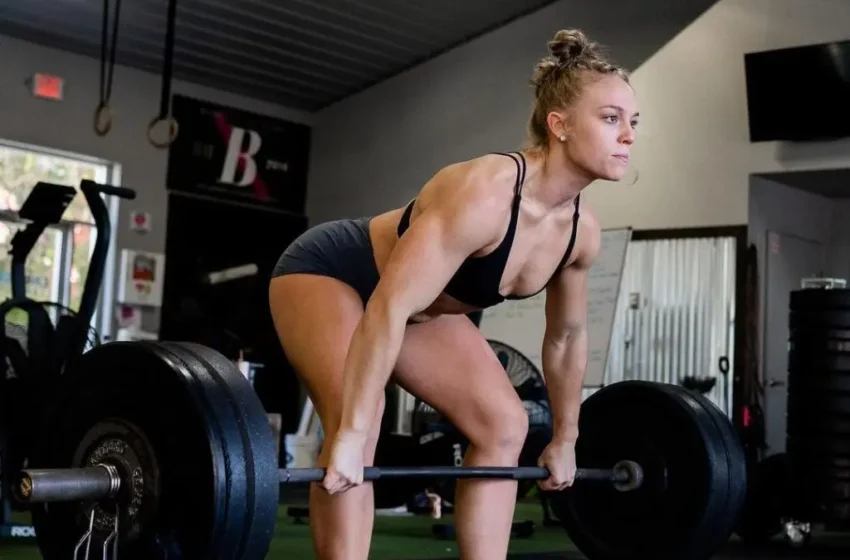
CrossFit Women: Empower Strength & Confidence
Have you ever walked into a CrossFit gym and wondered whether the workouts are really suitable for women?
The answer is yes—but the more important question is how the training is designed and adapted to the individual.
CrossFit combines resistance training, cardiovascular conditioning, gymnastics, Olympic lifting, and functional movements. For women, this can create a well-rounded approach to improving strength, endurance, mobility, coordination, and confidence.
However, effective training is not about copying the strongest person in the gym.
It is about learning proper movement, choosing an appropriate load, recovering well, and gradually becoming more capable.
In this guide, we will explore how crossfit women can train for strength and confidence, what changes to expect, how to approach nutrition and recovery, and how to avoid common mistakes that can slow progress.
Why CrossFit Women Are Changing the Fitness Conversation
For years, women’s fitness was often marketed around getting smaller, lighter, or simply burning calories.
CrossFit helped introduce a different message: become stronger and more capable.
Instead of measuring success only through body weight or clothing size, athletes can track improvements in pull-ups, squats, deadlifts, running times, rowing performance, Olympic lifts, and workout scores.
That shift can be meaningful.
For example, a beginner who could not perform a single bodyweight squat comfortably may eventually complete dozens with excellent technique. Another athlete might progress from assisted pull-ups to strict repetitions.
These changes are measurable.
Moreover, they can improve confidence outside the gym because physical competence often changes how people view their own abilities.
Strength is not about becoming “too muscular”
One common concern among women is that resistance training will automatically create excessive muscle size.
In reality, muscle development depends on factors such as training volume, intensity, genetics, nutrition, recovery, and overall energy intake.
Building significant muscle mass generally requires consistent resistance training and sufficient nutrition over time.
Therefore, women should not avoid strength training because of fear of suddenly becoming excessively muscular.
Strength training is a tool.
You can use it to become stronger, improve performance, support bone health, develop muscle, or simply feel more capable in daily life.
CrossFit Women and the Benefits of Strength Training
A well-designed CrossFit program can develop several physical qualities at once.
1. Increased muscular strength
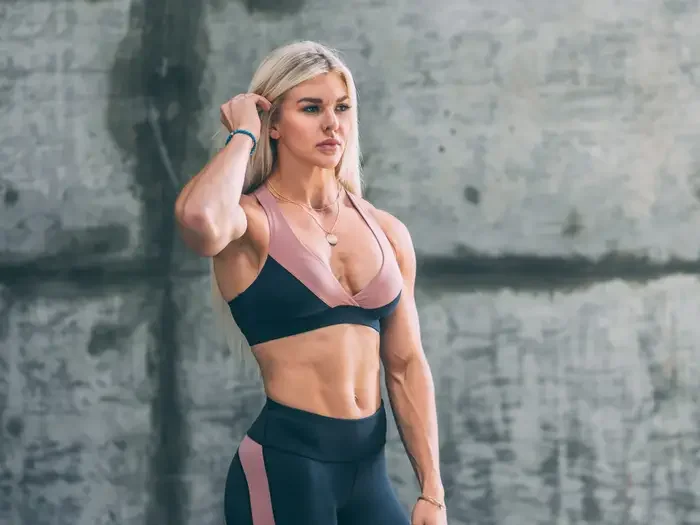
Movements such as squats, deadlifts, presses, cleans, and rows train major muscle groups.
Progressive resistance encourages the body to adapt.
Over time, this can make everyday tasks easier, from carrying groceries to lifting luggage.
2. Better cardiovascular fitness
CrossFit sessions often combine resistance exercises with running, rowing, cycling, jumping, or other conditioning movements.
This creates a broad fitness stimulus.
However, not every session needs to be maximal intensity.
Low- and moderate-intensity conditioning also has an important place in a balanced training plan.
3. Improved coordination
Technical exercises require different parts of the body to work together.
For example, Olympic lifting requires precise timing between the legs, hips, torso, arms, and hands.
This makes training about more than raw strength.
4. Greater confidence
One of the most rewarding changes can be psychological.
Learning a movement that once seemed impossible can create a powerful sense of achievement.
That confidence often comes from evidence rather than motivation.
You know you are stronger because you can actually do something you could not do before.
How CrossFit Women Should Start Training
Starting correctly matters more than starting aggressively.
A new athlete does not need to perform the hardest version of every movement during the first week.
Instead, begin by learning fundamental movement patterns.
These can include:
- Squatting
- Hip hinging
- Pushing
- Pulling
- Carrying
- Bracing the core
- Jumping and landing
- Basic cardiovascular movements
A qualified coach should help you understand technique and provide appropriate scaling.
Scaling is a strength, not a weakness
Suppose a workout calls for pull-ups, but you cannot yet perform one.
You might use:
- Ring rows
- Resistance bands
- Assisted pull-ups
- Controlled jumping pull-ups
The purpose is to train the underlying movement and gradually develop the required strength.
The same idea applies to push-ups, handstands, Olympic lifts, box jumps, and heavier barbell movements.
The best version of an exercise is the one that challenges you without destroying your technique.
CrossFit Women and Building a Strong Body
CrossFit can contribute to a strong, athletic appearance, but body shape is not determined by training alone.
Genetics, nutrition, hormones, sleep, age, daily activity, and training history all influence body composition.
That is why two women can follow similar programs and develop different physiques.
Some may gain more visible muscle in their shoulders and legs.
Others may notice changes mainly around body composition and fitness performance.
Neither outcome is automatically better.
Focus on performance-based goals
Instead of setting only appearance-based goals, consider targets such as:
- Perform your first strict pull-up.
- Increase your deadlift.
- Improve your 1-kilometer run time.
- Perform 10 quality push-ups.
- Increase your squat strength.
- Complete a workout without excessive breaks.
- Improve mobility and movement control.
These goals give you something concrete to work toward.
Furthermore, performance improvements can happen even when the scale barely changes.
CrossFit Workout Selection for Women
Not every crossfit workout needs to be extremely intense.
A balanced training week can include different types of sessions.
For example:
Strength day:
Squats, presses, deadlifts, and accessory work.
Conditioning day:
Running, rowing, cycling, bodyweight exercises, and moderate resistance.
Skill day:
Gymnastics, Olympic lifting technique, mobility, and movement drills.
Recovery day:
Walking, stretching, mobility, or low-intensity cardio.
This variation helps reduce monotony and allows different physical systems to develop.
It also makes it easier to manage fatigue.
Understanding the CrossFit WOD
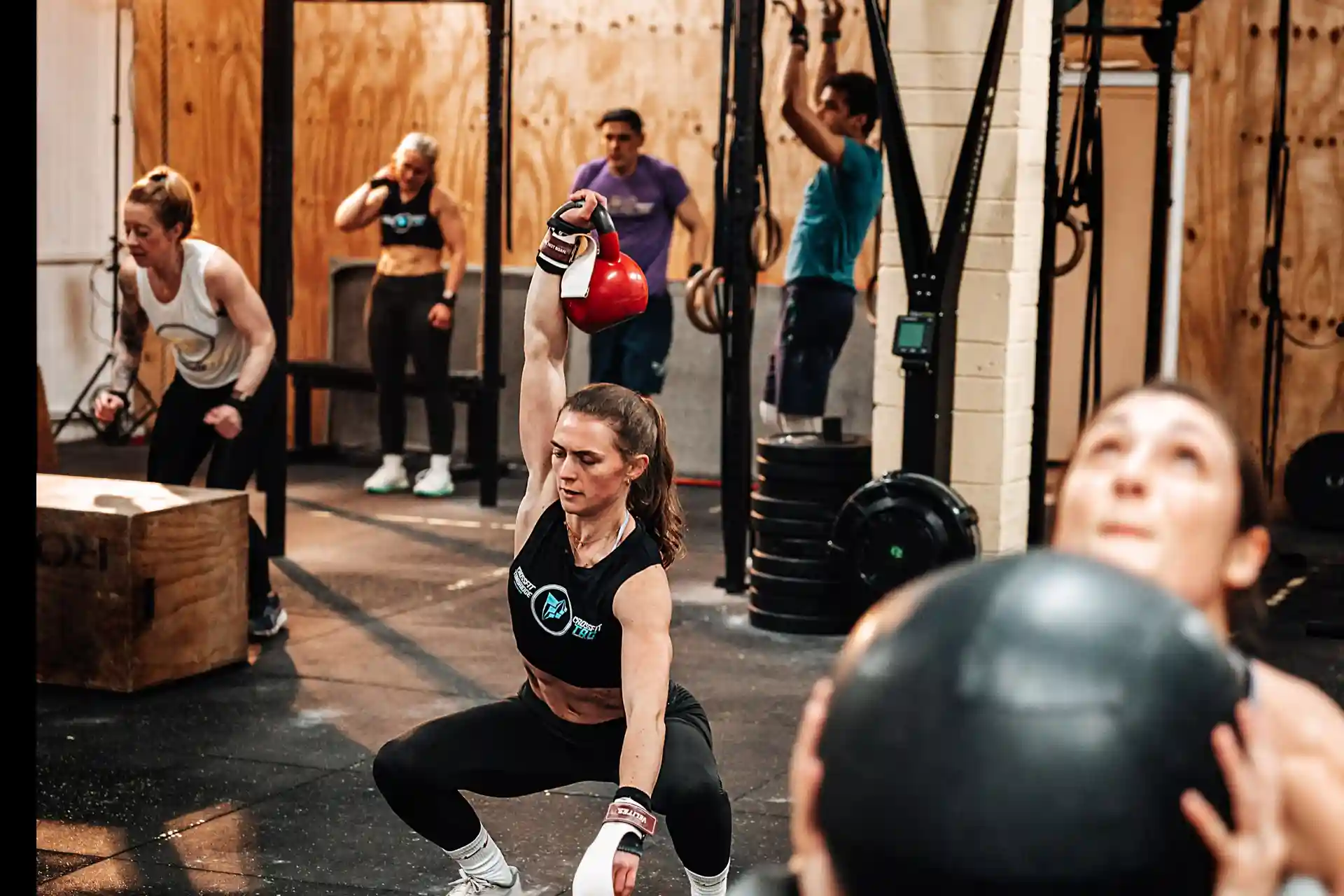
The crossfit wod, or Workout of the Day, can have very different formats.
You might encounter:
- AMRAP: As many rounds or repetitions as possible.
- EMOM: Every minute on the minute.
- For time: Complete a set amount of work as quickly as possible.
- Strength work: Lift a prescribed weight or work toward a heavy repetition.
- Chipper: Move through a longer list of exercises.
The key is understanding what the workout is designed to achieve.
If the goal is strength, a very heavy load with adequate rest may be appropriate.
If the goal is conditioning, lighter loads and continuous movement may be more suitable.
In short, the workout stimulus matters more than simply finishing first.
CrossFit Women and Olympic Lifting
Olympic lifting is one area where CrossFit can help women develop explosive power.
Movements such as the clean, jerk, and snatch demand speed, mobility, coordination, and strength.
The power snatch crossfit movement, for example, teaches an athlete to generate force rapidly and receive the bar overhead in a controlled partial squat.
However, technical lifts should be learned progressively.
Beginners may start with:
- PVC pipe drills.
- Empty-bar movements.
- High-hang variations.
- Hang movements.
- Light loaded repetitions.
- Gradual increases in weight.
The objective is not to impress the room.
It is to build a movement pattern that remains reliable as the load increases.
What Cindy Can Teach CrossFit Women
Benchmark workouts are useful because they give athletes measurable tests.
The cindy crossfit workout is a classic example.
It combines pull-ups, push-ups, and air squats in a 20-minute AMRAP.
Although the movements are simple, the accumulated volume can become demanding.
For example, completing 15 rounds means:
- 75 pull-ups
- 150 push-ups
- 225 air squats
That illustrates why pacing matters.
The workout is not about sprinting through the first few minutes.
Instead, successful athletes learn how to distribute their effort.
Why Cindy is useful for progress
A beginner might start with scaled pull-ups.
Months later, she may perform the same benchmark with strict or standard repetitions.
Even if the total score does not dramatically increase, the movement quality may represent substantial progress.
That is why cindy crossfit should be treated as a benchmark rather than a simple competition.
CrossFit Girls and the Culture of Benchmark Workouts
The term crossfit girls refers to a well-known group of named benchmark workouts used within CrossFit.
These workouts are often repeated over time.
Their popularity comes from their simplicity and measurable nature.
For women entering CrossFit, these benchmarks can provide useful milestones.
However, your first experience with a benchmark does not need to match an advanced athlete’s score.
Your job is to establish your own baseline.
Then, with consistent training, you can return to the workout and see what has changed.
Nutrition for CrossFit Women
Training provides the stimulus.
Nutrition helps provide the resources needed to recover from it.
Women who train regularly should pay attention to sufficient protein, carbohydrates, healthy fats, fluids, and micronutrients.
Protein
Protein supports muscle repair and adaptation.
Useful sources include:
- Eggs
- Greek yogurt
- Fish
- Chicken
- Lean meat
- Tofu
- Beans
- Lentils
- Cottage cheese
The ideal intake varies according to body size, training volume, dietary pattern, and goals.
Carbohydrates
Carbohydrates are especially useful for high-intensity training because they provide readily available energy.
Rice, potatoes, oats, fruit, whole grains, and other carbohydrate-rich foods can fit into a balanced diet.
Reducing carbohydrates too aggressively may make demanding training feel harder.
Hydration
Even moderate dehydration can affect exercise performance.
Drink fluids regularly throughout the day and pay particular attention to hydration around long or sweaty training sessions.
Recovery: The Missing Piece for CrossFit Women
Training adaptation does not happen only while you are exercising.
Recovery is part of the process.
If you repeatedly train hard without adequate sleep or rest, performance can eventually decline.
Signs that you may need to reduce training stress include:
- Persistent fatigue
- Declining performance
- Poor sleep
- Unusual soreness
- Lack of motivation
- Reduced workout quality
However, one difficult training day does not automatically mean you are overtraining.
Look for patterns rather than isolated events.
Sleep matters
Most adults benefit from consistent, sufficient sleep.
A regular sleep schedule can support physical recovery, concentration, mood, and training performance.
Therefore, improving sleep may sometimes be more useful than adding another workout.
CrossFit Women and Menstrual Cycle Considerations
Women may notice changes in energy, appetite, mood, or training comfort across the menstrual cycle.
However, responses vary greatly.
There is no universal rule saying that every woman must train at a particular intensity during a particular phase.
Instead, pay attention to individual patterns.
If you consistently notice that certain days feel harder, adjust your training load or intensity when appropriate.
For some athletes, that might mean reducing volume.
For others, no adjustment may be necessary.
Individual response matters more than rigid fitness rules.
Common Mistakes CrossFit Women Should Avoid
Chasing someone else’s numbers
A stronger athlete may have years more training experience.
Comparing your first year with someone else’s tenth year is rarely useful.
Using poor technique to lift heavier
Adding five kilograms is not progress if your movement quality collapses.
Technical consistency should remain a priority.
Doing every workout at maximum intensity
High-intensity sessions are stressful.
If every training session becomes a race, recovery can become difficult.
Ignoring strength imbalances
If your pulling strength is weak but your lower body is strong, spend time addressing the limitation.
Balanced development improves overall performance.
Under-eating
Trying to combine hard training with an overly restrictive diet can leave you tired and unable to recover properly.
Performance requires fuel.
How to Build Confidence Through CrossFit
Confidence does not appear simply because someone tells you to be confident.
It grows through repeated experiences of solving difficult problems.
Maybe your first goal is a push-up.
Then you learn a pull-up.
Later, you lift a barbell that once seemed impossibly heavy.
Each achievement provides evidence that your abilities can change.
That is one of the strongest psychological benefits of structured training.
Use small goals
Instead of thinking, “I need to become extremely fit,” choose a specific target.
For example:
“I want to perform five strict pull-ups within six months.”
That goal gives you a clear direction.
You can then break it into smaller steps.
This approach is much more useful than relying on motivation alone.
CrossFit Women vs. Traditional Gym Training
Both approaches can work well.
The better choice depends on your goals and personality.
| CrossFit | Traditional Gym |
| Group-based training is common | Often self-directed |
| Frequent workout variation | More predictable sessions |
| Combines strength and conditioning | Easy to specialize |
| Strong community culture | Greater individual control |
| Often coach-led | Usually more independent |
| Functional and technical movements | Excellent for targeted hypertrophy |
For someone who enjoys community and variety, CrossFit can be highly motivating.
For someone who prefers bodybuilding-style training or wants maximum control over individual exercises, a traditional gym may be a better fit.
There is no universal winner.
How to Track Progress as a CrossFit Woman
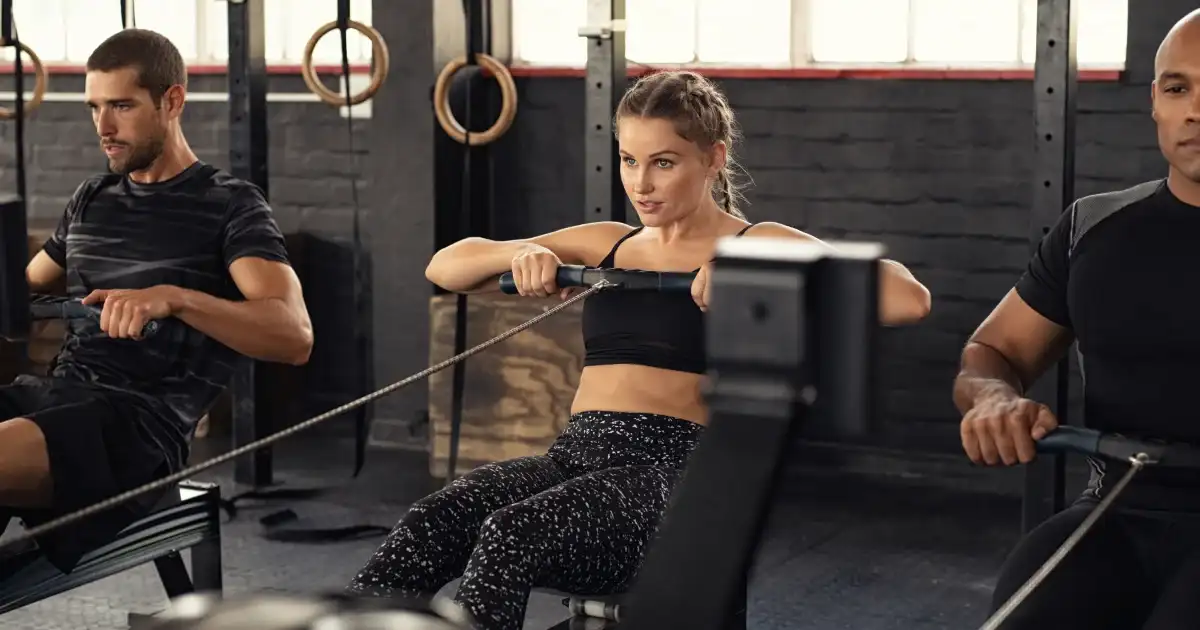
The scale is only one measurement.
A better system uses multiple markers.
Track:
- Strength numbers
- Workout times
- AMRAP rounds
- Pull-up repetitions
- Running pace
- Rowing distance
- Mobility
- Recovery
- Energy levels
- Movement quality
For example, your body weight might remain unchanged while your deadlift increases by 20 kilograms.
That is still meaningful progress.
Similarly, completing a workout with fewer breaks can show improved conditioning even if your weight has not changed.
Conclusion: Stronger Is a Powerful Goal
The modern conversation around crossfit women is increasingly about capability rather than appearance.
That is a positive shift.
CrossFit can help women develop strength, endurance, mobility, coordination, and confidence while providing measurable goals that make progress easier to see.
However, the best results do not come from doing the hardest workout possible.
They come from consistent training, intelligent progression, good nutrition, proper recovery, and realistic expectations.
Learn the movements.
Scale when necessary.
Track your progress.
Challenge yourself without turning every session into a test of willpower.
Most importantly, remember that becoming stronger is not something you need to apologize for.
Frequently Asked Questions About CrossFit Women
Who is the most famous CrossFit female?
Tia-Clair Toomey-Orr is widely regarded as one of the most accomplished and recognizable female CrossFit athletes. She has won the CrossFit Games multiple times and became a major figure in the sport.
Is CrossFit a good workout for women?
Yes. CrossFit can develop strength, endurance, power, coordination, and cardiovascular fitness. The key is appropriate programming, coaching, recovery, and scaling.
Is CrossFit harder than gym?
It depends on the workout and the person. CrossFit can feel more intense because strength and conditioning are often combined, while traditional gym training may allow more controlled rest between sets.
What is a CrossFit body?
There is no single “CrossFit body.” Athletes develop different physiques depending on genetics, training, nutrition, and goals. Many develop noticeable muscle and strong overall athletic ability.
What kind of body will CrossFit give you?
CrossFit can help build a strong, muscular, athletic physique, but results vary. Your diet, genetics, training history, recovery, and workout structure all influence your final body composition.
Whether your goal is your first pull-up, a heavier squat, a faster run, or simply feeling more capable in your own body, strength is a worthwhile goal.
Train for what your body can do—not just for how it looks.
⭐ Make MindLiva Your Preferred Source on Google
Get trusted health, wellness, and lifestyle articles from MindLiva.
Add MindLiva
Samie Babaei is a medical science student at Shahid Beheshti University of Medical Sciences with a strong interest in health, wellness, and medical research. As a health writer and researcher at MindLiva, she focuses on creating clear, evidence-based content that helps readers better understand health and well-being.