



Cindy Crossfit Workout: Tips for Better Performance
Have you ever looked at a workout with only three exercises and thought it would be easy?
The Cindy CrossFit workout is a perfect example of why simple does not always mean easy. This classic benchmark combines pull-ups, push-ups, and air squats in a 20-minute AMRAP, creating a demanding test of muscular endurance, cardiovascular fitness, pacing, and mental strength.
What makes Cindy especially useful is its simplicity. You do not need complicated equipment or a long list of movements. Instead, you need to manage your energy while repeating the same basic exercises again and again.
In this guide, you will learn how Cindy works, how to pace it, how beginners can scale it, how experienced athletes can improve their scores, and which training habits can make a real difference.
What Is the Cindy Crossfit Workout?
The Cindy CrossFit workout is a classic 20-minute AMRAP, meaning “as many rounds and repetitions as possible.”
The standard version consists of:
- 5 pull-ups
- 10 push-ups
- 15 air squats
You repeat that sequence for 20 minutes.
There is no complicated equipment setup. Usually, all you need is a pull-up bar and enough floor space to perform the movements safely.
However, the simplicity of the workout can be misleading.
If an athlete completes 20 rounds, for example, that adds up to 100 pull-ups, 200 push-ups, and 300 air squats. That is a significant amount of work even though none of the exercises uses a heavy external load.
This is why Cindy is such an effective benchmark.
It tests how efficiently you can perform familiar movements while managing accumulating fatigue.
Why Cindy Is Such a Useful Fitness Benchmark
A benchmark workout has value because you can repeat it under similar conditions and compare your performance.
Suppose you complete 12 rounds during your first attempt.
Six months later, you complete 15 rounds using the same movement standards.
That gives you a clear sign that your work capacity has improved.
However, the number alone does not tell the whole story.
Maybe your first score used assisted pull-ups, while your later score used strict pull-ups. In that case, the second performance represents an even greater improvement than the raw numbers suggest.
Therefore, always record:
- Total rounds
- Additional repetitions
- Movement variations
- Load, if applicable
- Rest periods
- How the workout felt
A good training log turns a workout into useful data.
How to Approach the Cindy Crossfit Workout
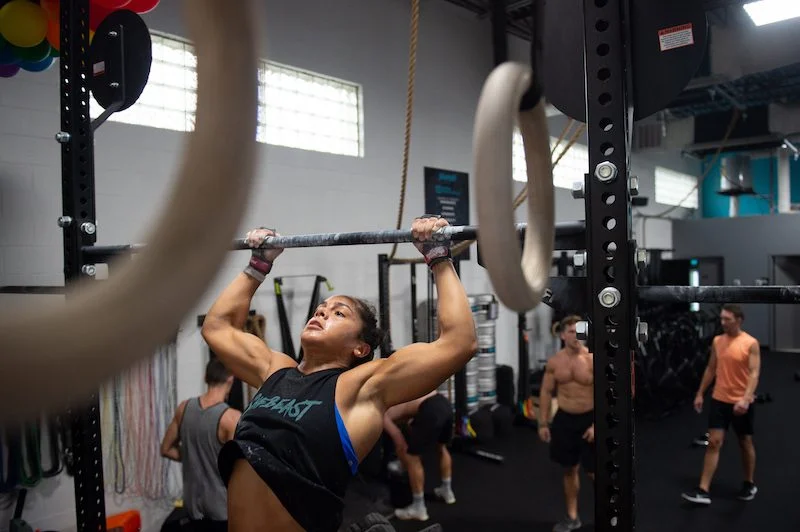
The biggest mistake many athletes make is starting too quickly.
The first few minutes can feel surprisingly comfortable. You perform five pull-ups, ten push-ups, and fifteen squats, and then immediately begin another round.
Everything feels easy.
Then fatigue begins to build.
Your push-ups slow down. Your pull-ups become harder. Your breathing becomes less controlled. Suddenly, a workout that felt easy at minute three feels very different at minute 15.
Start slower than you think
Cindy is not a five-minute sprint.
You need to work for 20 minutes.
A better strategy is to find a pace that feels controlled during the opening rounds.
For example, imagine you can complete one round in 45 seconds when fresh.
It may be tempting to maintain that speed.
However, if that pace causes you to take long breaks later, it may be better to begin closer to 50–55 seconds per round and maintain consistency.
Sustainable speed usually beats an aggressive start.
Cindy Crossfit Workout Pacing Strategies
There is no single pacing strategy that works for everyone.
Your approach should depend on your strongest and weakest movements.
Strategy 1: Unbroken rounds
If you are very comfortable with all three exercises, you may be able to complete each round without stopping.
This can be extremely efficient.
However, it requires enough muscular endurance to prevent early fatigue.
Strategy 2: Planned breaks
If push-ups are your limiting movement, you could break the set before failure.
For example:
5 pull-ups → 5 push-ups → short breath → 5 push-ups → 15 squats
That tiny pause may help you avoid a much longer break later.
Strategy 3: Controlled transitions
Transitions are another place where athletes lose time.
You do not need to sprint between movements.
Instead, move directly and calmly from one exercise to the next.
A few seconds saved every round can become a meaningful amount of time across a 20-minute workout.
How Beginners Can Scale Cindy
You do not need to perform the workout exactly as written when you are new to CrossFit.
Scaling is part of good programming.
The goal is to preserve the basic training effect while making the workout appropriate for your current ability.
Scaling pull-ups
If you cannot perform five standard pull-ups repeatedly, consider:
- Ring rows
- Resistance-band pull-ups
- Assisted pull-ups
- Jumping pull-ups
Choose a variation that allows you to maintain controlled movement.
Scaling push-ups
If ten standard push-ups are too difficult, try:
- Incline push-ups
- Knee push-ups
- Reduced repetitions
- Shorter sets
An incline push-up can be particularly useful because it allows you to practice the basic body position while reducing the amount of resistance.
Scaling air squats
Most beginners can perform air squats, but depth and mobility can still be challenging.
A target such as a box or bench can provide a consistent depth reference while you develop strength and control.
Cindy Crossfit Workout for Intermediate Athletes
Intermediate athletes often have the basic movements but struggle with fatigue management.
At this stage, performance depends heavily on efficiency.
Consider the push-up.
If you can perform 15 push-ups when fresh but start struggling after several rounds, doing every set to failure is unlikely to be the best strategy.
Instead, try smaller sets.
For example:
5 + 5
or
6 + 4
The short break between sets should be intentional rather than an emergency response to complete muscular failure.
This approach may allow you to maintain a more consistent pace throughout the workout.
Improve your movement efficiency
Ask yourself:
- Are my pull-ups controlled?
- Am I wasting energy during transitions?
- Are my push-ups technically consistent?
- Can I relax slightly during the air squats?
- Am I breathing continuously?
Small improvements can become significant over 20 minutes.
Advanced Cindy Training Strategies
For experienced athletes, the challenge becomes more precise.
You may already have the strength to complete every movement.
Now the question becomes:
How efficiently can you repeat them?
At a higher level, athletes can focus on minimizing unnecessary movement, controlling breathing, and maintaining consistent cycle times.
Think about your cycle time
Cycle time is the amount of time needed to complete repetitions and transition to the next movement.
If you reduce your average cycle time by only two seconds per round and complete 20 rounds, that can represent approximately 40 seconds saved.
That difference may be meaningful in a benchmark workout.
However, efficiency should never mean sacrificing movement standards.
A faster repetition that does not meet the required standard does not represent genuine improvement.
Improving Pull-Ups for Cindy
For many athletes, pull-ups become the first major limitation.
If you want to improve your Cindy performance, develop pulling strength outside the benchmark itself.
Useful exercises include:
- Strict pull-ups
- Ring rows
- Scapular pull-ups
- Controlled negatives
- Lat pulldowns
- Dumbbell or cable rows
Build strict strength first
Even if your long-term goal involves kipping pull-ups, strict pulling strength provides a valuable foundation.
You should be able to control your shoulders and maintain good body position.
Practice smaller sets rather than repeatedly training to failure.
For example, if your maximum is six strict pull-ups, performing sets of three may allow you to accumulate useful volume without excessive fatigue.
Improving Push-Ups for Cindy
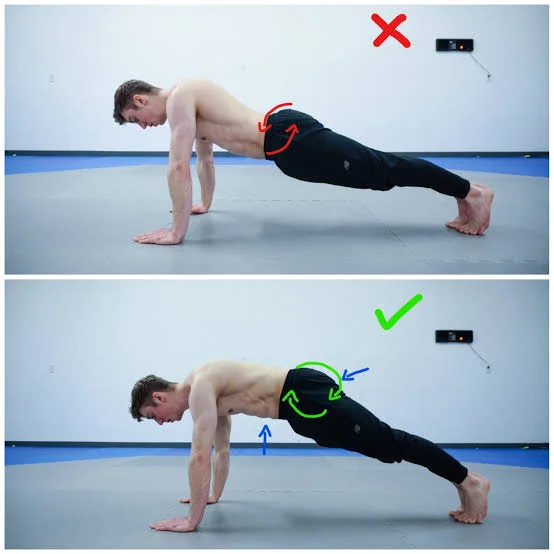
Push-ups may look simple, but they can become the biggest problem during a long AMRAP.
Your chest, shoulders, triceps, and core all contribute to the movement.
A strong push-up begins with a stable body position.
Keep your core engaged and avoid allowing your hips to sag.
Train push-ups with different methods
You can use:
- Standard push-ups
- Tempo push-ups
- Incline push-ups
- Paused push-ups
- Plank variations
- Dumbbell pressing
For example, slow push-ups can improve control and help you become stronger through the movement.
However, do not turn every training session into a test of maximum repetitions.
Quality volume is often more useful.
Improving Air Squats for Cindy
Air squats are usually the highest-repetition movement in Cindy.
Because you perform 15 per round, small inefficiencies can become expensive.
The key is to develop a smooth rhythm.
Your knees should track appropriately with your feet, your torso should remain controlled, and you should reach the required squat depth.
Use breathing to control your pace
Do not hold your breath unnecessarily.
Try to establish a natural breathing rhythm that allows you to move continuously.
When fatigue increases, athletes sometimes rush the squats.
That can make the movement less efficient.
Instead, maintain a consistent tempo.
Cindy and Cardiovascular Fitness
Although Cindy does not involve running or rowing, it can still create a strong cardiovascular challenge.
The reason is continuous work.
Your heart rate rises as you move repeatedly from pull-ups to push-ups to squats.
Over time, your ability to perform muscular work while breathing hard can improve.
However, Cindy should not be your only conditioning method.
A balanced program can include:
- Easy aerobic work
- Running
- Cycling
- Rowing
- Intervals
- Strength training
- Mobility work
This broader approach can improve the physical qualities that support your benchmark performance.
How Women Can Approach Cindy
The CrossFit community includes athletes with very different training histories and goals.
CrossFit women may use Cindy to improve general fitness, prepare for competition, develop endurance, or simply measure progress.
The same principles apply regardless of experience.
Choose appropriate movement standards.
Scale when necessary.
Build strength progressively.
There is no requirement to use a particular version of the workout based solely on gender.
An athlete’s training age, strength, mobility, and goals are much more important factors.
Cindy and the CrossFit Girls Benchmark Culture
Cindy is part of the larger group of named benchmark workouts often associated with the CrossFit Girls.
These workouts have become familiar reference points because they can be repeated and compared.
The benefit is not just competition.
They give athletes a way to see whether their training is producing measurable changes.
For example, your score may improve because:
- Your pull-ups are stronger.
- Your push-ups are more efficient.
- Your squat rhythm has improved.
- Your transitions are faster.
- Your aerobic fitness is better.
- Your pacing is more controlled.
That makes benchmark workouts useful assessment tools.
What Cindy Has in Common With Other CrossFit Training
A well-designed crossfit wod should have a clear purpose.
Cindy focuses heavily on bodyweight endurance and pacing.
Other workouts may target strength, power, or technical skill.
For example, power snatch crossfit training places greater emphasis on explosive force, barbell technique, mobility, and coordination.
That is why you should not judge all workouts by the same standard.
A conditioning workout is not supposed to feel like a maximal strength session.
Likewise, a technical lifting session should not be turned into a race.
Nutrition Before and After Cindy
Training performance is influenced by what you do outside the gym.
If you regularly perform demanding workouts, your body needs adequate energy and nutrients.
Before training
A meal or snack containing carbohydrates and some protein can be useful before exercise.
Examples include:
- Oatmeal with yogurt
- Banana with Greek yogurt
- Rice with lean protein
- Toast with eggs
- Fruit and cottage cheese
The best timing depends on your schedule and digestion.
After training
A balanced meal containing protein and carbohydrates can support recovery.
You do not need a complicated supplement routine.
For most people, consistent nutrition built around whole and minimally processed foods provides a strong foundation.
Recovery Matters More Than You Think
It can be tempting to repeat Cindy frequently because it is measurable.
However, constantly testing the same benchmark can create unnecessary fatigue.
Your body needs time to adapt.
Prioritize:
- Sufficient sleep
- Regular meals
- Hydration
- Rest days
- Light movement
- Mobility
- Appropriate training volume
If your performance continues declining, your body may need more recovery rather than another hard session.
Use Cindy as a test, not your entire program
A smart training plan might use Cindy periodically.
Between tests, train the qualities that influence performance.
For example:
Monday: Strength
Tuesday: Conditioning
Wednesday: Recovery
Thursday: Gymnastics and skill work
Friday: Strength and power
Saturday: Mixed conditioning
Sunday: Rest
The exact schedule depends on your experience and total workload.
Common Mistakes During the Cindy Crossfit Workout
Starting at maximum speed
The opening minutes are not the time to prove how fast you are.
Start at a pace you can maintain.
Going to failure
Repeatedly reaching failure can create long breaks.
Keep some capacity in reserve when possible.
Ignoring movement standards
A faster score is not meaningful if repetitions become incomplete.
Comparing yourself with elite athletes
Elite CrossFit athletes have years of specialized training.
Use their performances for inspiration, not as a direct comparison.
Training only the benchmark
Cindy tests specific qualities.
You still need broader strength, conditioning, mobility, and skill work.
A Four-Week Plan to Improve Your Cindy Performance
If you want to prepare for another test, use a short focused block.
Week 1: Build movement quality
Practice pull-ups, push-ups, and air squats separately.
Focus on technique rather than speed.
Week 2: Increase volume
Use short circuits with manageable sets.
For example:
- 5 pull-ups
- 10 push-ups
- 15 squats
Complete several rounds with adequate recovery.
Week 3: Practice pacing
Try a 10-minute version.
Your goal is to find a pace that feels sustainable rather than chasing the highest possible round count.
Week 4: Test Cindy
Perform the full 20-minute benchmark.
Record your score and compare it with your previous result.
Then analyze why the score changed.
That information is often more valuable than the number itself.
Personal Insight: Performance Is More Than a Score
One of the most useful lessons from benchmark training is that progress does not always appear as a dramatic number.
Imagine you previously completed 14 rounds using assisted pull-ups.
Later, you complete 14 rounds with standard pull-ups.
The score is identical.
Your fitness is not.
Similarly, completing the same score with fewer breaks and better technique is meaningful progress.
That is why I recommend recording movement variations and training notes alongside your score.
Numbers become much more useful when you understand the story behind them.
Conclusion: Turn Cindy Into a Measure of Progress
The Cindy CrossFit workout proves that a workout does not need complicated exercises or heavy equipment to be difficult.
Five pull-ups, ten push-ups, and fifteen air squats may look simple on paper.
After several rounds, however, the combination becomes a serious test of muscular endurance, cardiovascular fitness, movement efficiency, and mental discipline.
The best way to improve is not simply to move faster.
Instead, build the individual movements, develop strength, improve your conditioning, learn to pace yourself, and recover properly.
Moreover, use scaling when you need it and respect movement standards when measuring your results.
Your goal should not be to copy another athlete’s score.
Your goal should be to create a stronger version of your own performance.
Move well. Pace intelligently. Track your progress. Then come back stronger.
Frequently Asked Questions
What is the Cindy CrossFit workout?
The Cindy CrossFit workout is a 20-minute AMRAP consisting of 5 pull-ups, 10 push-ups, and 15 air squats. The goal is to complete as many quality rounds and additional repetitions as possible.
What is a good Cindy score?
There is no universal “good” score because experience and movement standards differ. Your previous performance is usually the most useful benchmark.
Can beginners do Cindy?
Yes. Beginners can scale the pull-ups, push-ups, repetitions, or workout duration. The goal is to create a challenging but manageable session.
How often should I do Cindy?
It is generally more useful as a periodic benchmark than as a workout you constantly repeat. Train the underlying movements and conditioning between testing sessions.
How can I improve my Cindy score?
Improve pull-up and push-up strength, develop squat endurance, practice efficient transitions, and learn to pace yourself. Avoid starting too fast or repeatedly training to failure.
⭐ Make MindLiva Your Preferred Source on Google
Get trusted health, wellness, and lifestyle articles from MindLiva.
Add MindLiva
Samie Babaei is a medical science student at Shahid Beheshti University of Medical Sciences with a strong interest in health, wellness, and medical research. As a health writer and researcher at MindLiva, she focuses on creating clear, evidence-based content that helps readers better understand health and well-being.