



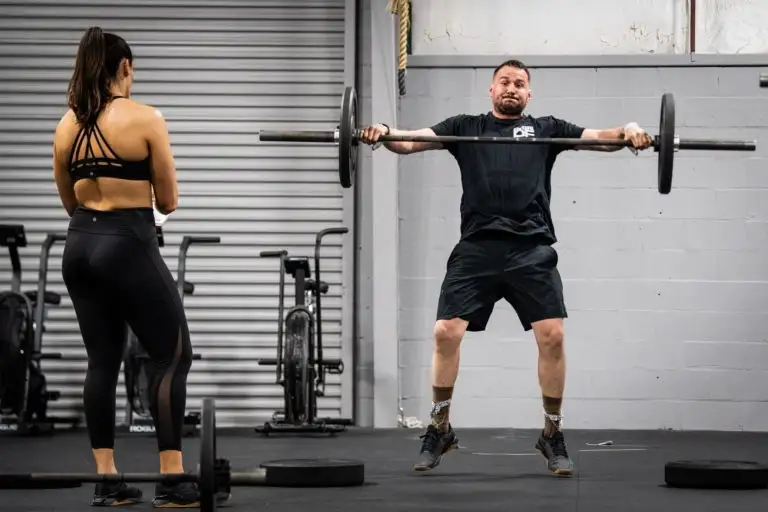
Power Snatch Crossfit: Tips to Increase Strength and Speed
Have you ever watched an experienced lifter move a barbell from the floor to overhead almost instantly and wondered how they make it look so easy?
The answer is usually years of practice with timing, positioning, speed, and technique.
The power snatch crossfit movement is a powerful Olympic-lifting exercise that trains the body to produce force quickly. Unlike a full snatch, the athlete receives the bar in a partial squat rather than catching it in a deep overhead squat. CrossFit describes the power snatch as requiring full hip and knee extension followed by a fast turnover and stable overhead position.
That combination makes it valuable for both strength and conditioning.
In this guide, you will learn how the movement works, how to improve your technique, which drills can help, how to program it into training, and why speed should come before heavier weight.
What Is a Power Snatch?
The power snatch is a barbell movement in which the athlete lifts the bar from the floor to an overhead position in one continuous action.
The key difference between a power snatch and a full snatch is the receiving position.
In a power snatch, the athlete catches the bar with the hips above the knees. In a full snatch, the athlete can descend into a much deeper squat to receive the bar.
That difference may sound small, but it changes the demands of the lift.
Because you cannot rely on a deep squat to get underneath a heavier bar, the power snatch requires stronger upward acceleration and precise timing.
The main phases of the lift
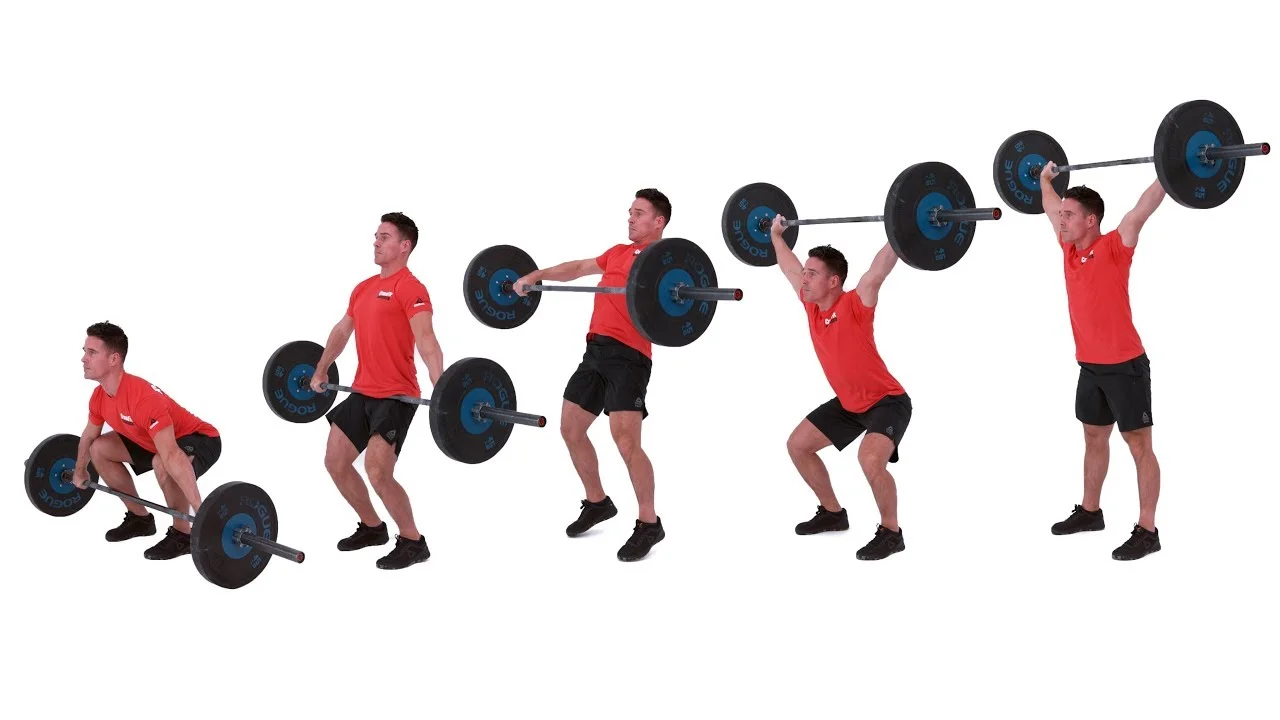
A technically sound repetition can be broken into several stages:
- Set-up: Establish a stable stance, wide snatch grip, neutral spine, and balanced foot pressure.
- First pull: Lift the bar from the floor while keeping it close to the legs.
- Transition: Move the knees and prepare the body for the explosive second pull.
- Second pull: Extend the hips and knees rapidly to accelerate the bar.
- Turnover: Pull yourself under the bar while rotating the arms quickly.
- Catch: Receive the bar overhead in a partial squat.
- Finish: Stand tall with the bar stable overhead.
The movement happens quickly, but each phase has a purpose.
CrossFit’s coaching material also breaks power-snatch learning into progressions such as high-hang power snatches, hang power snatches, and full power snatches.
Power Snatch CrossFit Technique: The Details That Matter
The biggest mistake beginners make is thinking the arms are responsible for lifting the bar.
They are not.
The main source of force comes from the legs and hips. The arms then guide the bar and help complete the turnover.
Start with a strong set-up
Place your feet around hip width and establish a wide grip on the bar.
Your shoulders should sit slightly in front of the bar, while your hips remain positioned so you can create tension through your legs and posterior chain.
Keep your spine neutral.
The goal is to create a position from which you can push against the floor without losing balance.
Keep the bar close
A bar that moves far away from your body becomes harder to control.
As the bar rises, keep it close to your legs and torso.
This does not mean dragging the bar against your body. Instead, think about maintaining an efficient vertical path while allowing your body to move around the bar.
Finish the extension
One of the most common technical problems is an incomplete second pull.
The athlete begins bending the arms before fully extending the hips and knees.
That often reduces bar speed.
Instead, think legs first, then arms.
The powerful extension of the hips and legs creates the upward momentum that allows the bar to rise quickly.
Move under the bar quickly
Once the bar reaches the right height, the athlete must transition from producing upward force to getting into the receiving position.
This is where timing becomes critical.
The arms rotate quickly while the athlete drops underneath the bar.
The goal is not simply to pull the bar higher and higher. It is to move your body around and under the bar efficiently.
Why the Power Snatch Builds Strength and Speed
The power snatch trains several physical qualities at the same time.
CrossFit notes that snatch variations develop power, speed, strength, flexibility, coordination, accuracy, agility, and balance.
That makes the movement useful beyond Olympic lifting itself.
Explosive strength
The lift requires rapid force production through the hips and legs.
This is different from slowly grinding through a heavy squat or deadlift.
You are teaching the body to create force quickly.
Coordination
Your legs, hips, trunk, shoulders, and hands must work together.
A small timing error can change the entire lift.
That is why someone can be very strong in traditional weightlifting exercises and still struggle with a relatively light snatch.
Overhead stability
The final position requires control of the bar overhead.
Your shoulders and upper back need to create a stable platform while your core keeps your torso organized.
Mobility
Good snatch mechanics require useful mobility in areas such as the shoulders, hips, ankles, and upper back.
However, mobility alone does not fix a poor lift.
You also need strength and control in the available range of motion.
Power Snatch Workout CrossFit: How to Program It
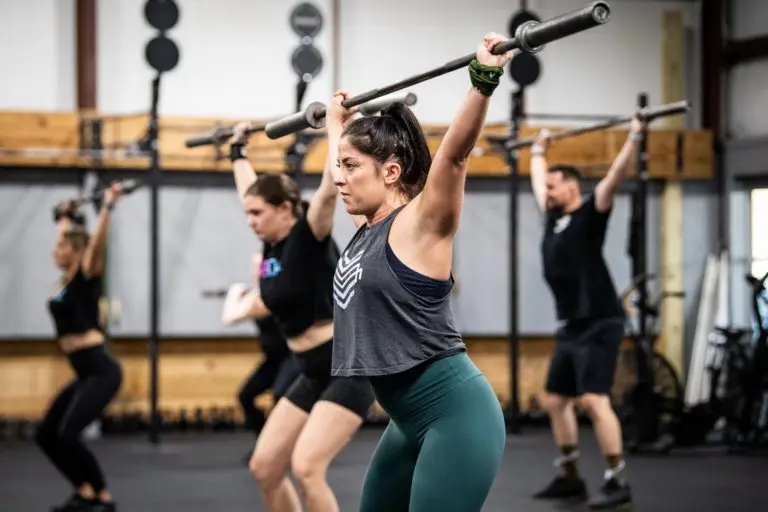
A power snatch workout crossfit session should reflect the athlete’s skill level.
The movement is technical enough that adding excessive fatigue too early can make technique deteriorate.
For beginners, low repetitions and lighter loads are usually more useful than high-repetition sets.
For example:
5 sets × 3 power snatches
Rest between sets and focus on making every repetition technically consistent.
For an intermediate athlete, you could use:
6 sets × 2 power snatches
The goal could be to gradually increase load while maintaining speed and position.
More advanced athletes may use heavier singles or doubles.
However, the goal should not be to turn every session into a one-repetition maximum test.
A simple programming rule
Use heavier loads when the objective is strength and power.
Use lighter loads when the objective is speed, technique, or conditioning.
That distinction can make a major difference in training quality.
Power Snatch WOD Ideas for Different Levels
A power snatch wod can be designed in many ways, but the movement should fit the purpose of the session.
Beginner example
Every 2 minutes for 5 rounds:
- 3 light power snatches
- 6 air squats
- 6 ring rows
The athlete gets enough recovery to focus on technique.
Intermediate example
10-minute AMRAP:
- 3 power snatches
- 6 burpees
- 9 air squats
Use a light enough bar that the snatches remain technically sound.
Advanced example
For time:
- 21 power snatches
- 21 toes-to-bar
- 15 power snatches
- 15 toes-to-bar
- 9 power snatches
- 9 toes-to-bar
This type of workout demands both technical consistency and pacing.
The exact load should depend on the athlete and the intended stimulus.
A workout is not automatically better because the bar is heavier.
How to Increase Your Power Snatch Weight
If your power snatch has stopped improving, adding more weight every session may not be the answer.
Instead, examine the weak point.
1. Improve your first pull
A strong first pull creates the position needed for the explosive phase.
Practice controlled deadlifts and snatch pulls while keeping the bar close.
2. Train the hang position
Hang power snatches remove some of the complexity of starting from the floor.
They can help you focus on the transition and explosive extension.
CrossFit’s coaching guidance describes the hang power snatch as a full-body movement involving the hips, legs, shoulders, back, and core.
3. Practice high-hang work
High-hang snatches are excellent for learning the final extension and turnover.
Because there is less distance for the bar to travel, you can focus closely on speed and timing.
4. Strengthen supporting movements
Useful exercises can include:
- Front squats
- Overhead squats
- Snatch pulls
- Romanian deadlifts
- Push presses
- Overhead carries
- Pulling variations
These movements can strengthen positions that support the full lift.
However, supporting exercises should complement technical practice rather than replace it.
Common Power Snatch CrossFit Mistakes
Even strong athletes can develop technical habits that limit progress.
Pulling with the arms too early
If your elbows bend before the hips and legs finish extending, you may lose valuable bar speed.
Fix: Think about finishing the lower-body extension before aggressively pulling under.
Letting the bar swing away
A bar that moves forward forces you to chase it.
Fix: Keep the bar close and maintain control through the first and second pulls.
Catching too deep
A power snatch should be caught in a partial squat.
If you repeatedly drop into a very deep position, you may actually be performing a full snatch rather than a power snatch.
Jumping forward
If your feet or body move significantly forward during the catch, balance is being lost.
Fix: Practice lighter repetitions and focus on receiving the bar over the middle of your body.
Adding weight too quickly
Heavy weight magnifies technical mistakes.
If your movement becomes slow or unstable, reduce the load.
A lighter technically strong lift is more valuable than a heavier ugly lift.
Power Snatch CrossFit and Conditioning
The movement can also appear in a fast-paced crossfit workout.
However, conditioning changes the technical challenge.
When your heart rate rises and your muscles become tired, it becomes harder to maintain precise positions.
This is why high-repetition snatches should generally use loads that the athlete can control.
The dumbbell version is another common option. CrossFit describes the dumbbell power snatch as a single-arm movement that develops power, speed, coordination, balance, and stamina.
That unilateral variation can also add a different coordination challenge.
What the 25.1 CrossFit Open Workout Teaches About Pacing
The 25.1 crossfit open workout from the 2025 season is a useful example of why conditioning strategy matters, even though it did not use the power snatch.
The official workout was a 15-minute AMRAP involving lateral burpees over a dumbbell, dumbbell hang clean-to-overheads, and 30-foot walking lunges. The repetitions of the burpees and hang clean-to-overheads increased by three each round.
That structure creates a clear pacing problem.
If an athlete moves too quickly early in the workout, the rising repetition count can make the later rounds extremely difficult.
The lesson applies to Olympic lifting workouts too: control your early effort so you can preserve movement quality later.
How Beginners Can Learn the Movement Safely
You do not need to start with a loaded barbell.
In fact, beginning with a PVC pipe or empty bar can make learning easier.
A useful progression might be:
- Learn the snatch grip.
- Practice the overhead position.
- Learn the high-hang movement.
- Add the hang position.
- Practice the pull from the floor.
- Combine the phases into a full power snatch.
- Gradually add weight.
A coach can provide feedback on bar path, receiving position, foot movement, and timing.
This is especially useful because the power snatch happens so quickly that athletes often cannot identify their own technical errors.
Power Snatch vs. Full Snatch
The two movements look similar, but the receiving position changes the demands.
| Power Snatch | Full Snatch |
| Caught in a partial squat | Caught in a deep squat |
| Requires strong upward bar acceleration | Allows more movement under the bar |
| Useful for power development | Demands greater squat mobility |
| Often easier to learn initially | More technically demanding |
| Can be used in conditioning | Common in Olympic lifting strength work |
Neither variation is automatically better.
They serve different purposes.
For athletes who struggle to receive the bar in a deep squat, the power variation can be a useful training tool while mobility and technique continue to develop.
What About Cindy and Other CrossFit Benchmarks?
Benchmark workouts can provide useful context for CrossFit athletes.
For example, the cindy crossfit workout is based on repeated rounds of pull-ups, push-ups, and air squats.
It does not involve Olympic lifting, but it demonstrates an important training principle: simple movements can become extremely demanding when repeated at intensity.
Likewise, cindy crossfit scores can be tracked over time to measure changes in conditioning and pacing.
The wider family of crossfit girls benchmark workouts has become part of CrossFit’s training culture, giving athletes familiar tests they can revisit.
For crossfit women, these workouts can be scaled just like any other training session. The correct load and movement standard should reflect the athlete’s ability, not assumptions about gender.
Personal Insight: Speed Should Come Before Ego
One of the most useful lessons when learning Olympic lifting is that speed is a skill.
Athletes often want to add weight because the number on the bar feels like the clearest measure of progress.
But with a technical lift, a better question is often:
Can I move this weight faster and with better control?
If the answer is yes, you are probably developing the qualities that will eventually allow you to lift more.
That is why I would rather see an athlete perform five crisp repetitions with a manageable load than five slow repetitions where the bar drifts forward and the catch becomes unstable.
Strength matters.
But strength without timing does not produce an efficient snatch.
A Practical Weekly Power Snatch Plan
If you want to improve the movement, practice it consistently without turning every session into a maximum effort.
A simple weekly structure could look like this:
Day 1 — Technique
- High-hang power snatch: 5 × 3
- Overhead squat: 3 × 5
- Snatch pull: 3 × 5
- Mobility work
Day 2 — Strength
- Front squat: 4 × 5
- Romanian deadlift: 3 × 8
- Pull-ups or rows: 3 × 8
Day 3 — Power
- Power snatch: 6 × 2
- Box jumps: 4 × 3
- Short conditioning session
Day 4 — Recovery
- Walking
- Easy cycling
- Mobility
- Light technique work
The exact program should be adjusted to your experience and total training load.
If you are already doing several high-intensity sessions each week, you may need less additional work rather than more.
Conclusion: Build Power Before You Chase Weight
The power snatch crossfit movement rewards patience.
It looks explosive because it is explosive, but the speed comes from precise positions, strong leg and hip extension, an efficient bar path, and a fast turnover.
If you want to improve, resist the temptation to measure every session by the number on the bar.
Instead, build the movement one phase at a time.
Practice the high-hang position. Learn the hang. Strengthen your pulls. Improve your overhead stability. Then bring everything together with controlled repetitions.
Moreover, use conditioning workouts carefully. When fatigue rises, technique becomes even more important.
In short, strength gets the bar moving, but timing and speed make the lift efficient.
Master those qualities first, and heavier weights will become a result of better training rather than a substitute for it.
Frequently Asked Questions
What muscles does the power snatch work?
The movement trains the legs, hips, glutes, hamstrings, back, shoulders, arms, and core. Because these areas work together rapidly, the exercise is considered a full-body power movement.
Is the power snatch good for beginners?
Yes, but beginners should learn it progressively. Starting with a PVC pipe or light bar allows you to learn positioning and timing before adding meaningful weight.
How often should I practice power snatches?
For many recreational athletes, one to two focused sessions per week can provide useful practice. The right frequency depends on your overall training volume and recovery.
Why am I struggling to increase my power snatch?
Common reasons include poor bar path, early arm pull, weak extension, limited mobility, or insufficient practice. Video analysis and coaching can help identify the specific problem.
Should I power snatch heavy or light?
Both have a place in training. Heavier work can develop strength, while lighter work allows you to focus on speed and technique. The load should match the goal of the session.
⭐ Make MindLiva Your Preferred Source on Google
Get trusted health, wellness, and lifestyle articles from MindLiva.
Add MindLiva
Samie Babaei is a medical science student at Shahid Beheshti University of Medical Sciences with a strong interest in health, wellness, and medical research. As a health writer and researcher at MindLiva, she focuses on creating clear, evidence-based content that helps readers better understand health and well-being.