



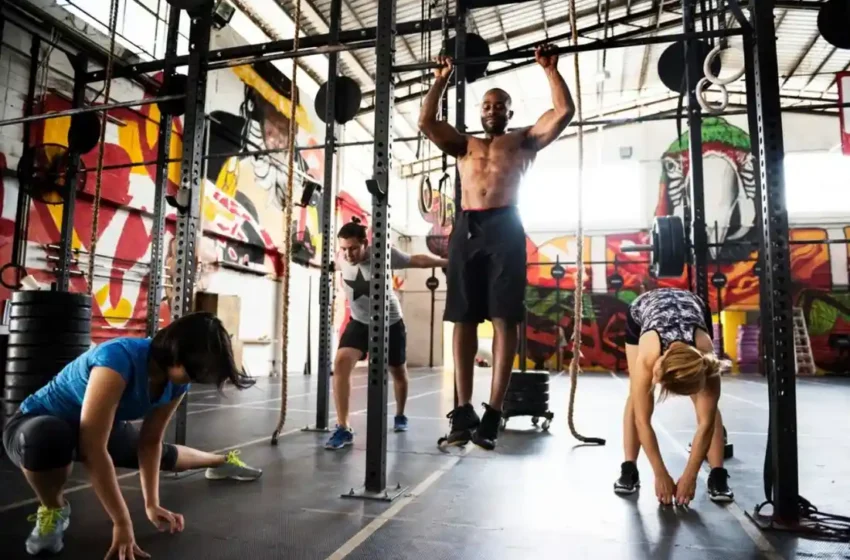
Improve Your Fitness with Cindy Crossfit: Tips & Strategies
Have you ever looked at a workout containing only three exercises and thought, “That looks easy”?
Cindy quickly changes that impression.
The cindy crossfit benchmark workout uses three basic movements: 5 pull-ups, 10 push-ups, and 15 air squats. The standard workout lasts 20 minutes, and the goal is to complete as many rounds and repetitions as possible.
There are no complicated machines or long exercise lists. Instead, the challenge comes from repeating simple movements while managing fatigue.
That simplicity is what makes Cindy so useful.
It can test cardiovascular fitness, upper-body endurance, leg stamina, core control, and pacing in one short session. Moreover, because the movements are easy to recognize, athletes can repeat the workout later and compare their results.
This guide explains how to approach Cindy, how to scale it, and how to turn a familiar benchmark into a powerful training tool.
Why Cindy CrossFit Remains a Popular Benchmark
Some workouts become popular because they are difficult. Others remain popular because they are easy to understand and easy to measure.
Cindy belongs to the second group.
The workout requires only three movements, yet each one places a different demand on the body.
- Pull-ups: Upper-body pulling strength and muscular endurance.
- Push-ups: Chest, shoulder, triceps, and core endurance.
- Air squats: Leg endurance, mobility, and movement control.
Together, they create a balanced conditioning challenge.
The workout also rewards athletes who understand pacing. Someone may complete the first few rounds very quickly, but if that early speed causes their push-ups to fail later, the strategy may produce a lower final score.
Therefore, Cindy is not simply a test of how hard you can work.
It is a test of how well you can manage effort.
How the Cindy CrossFit Workout Works
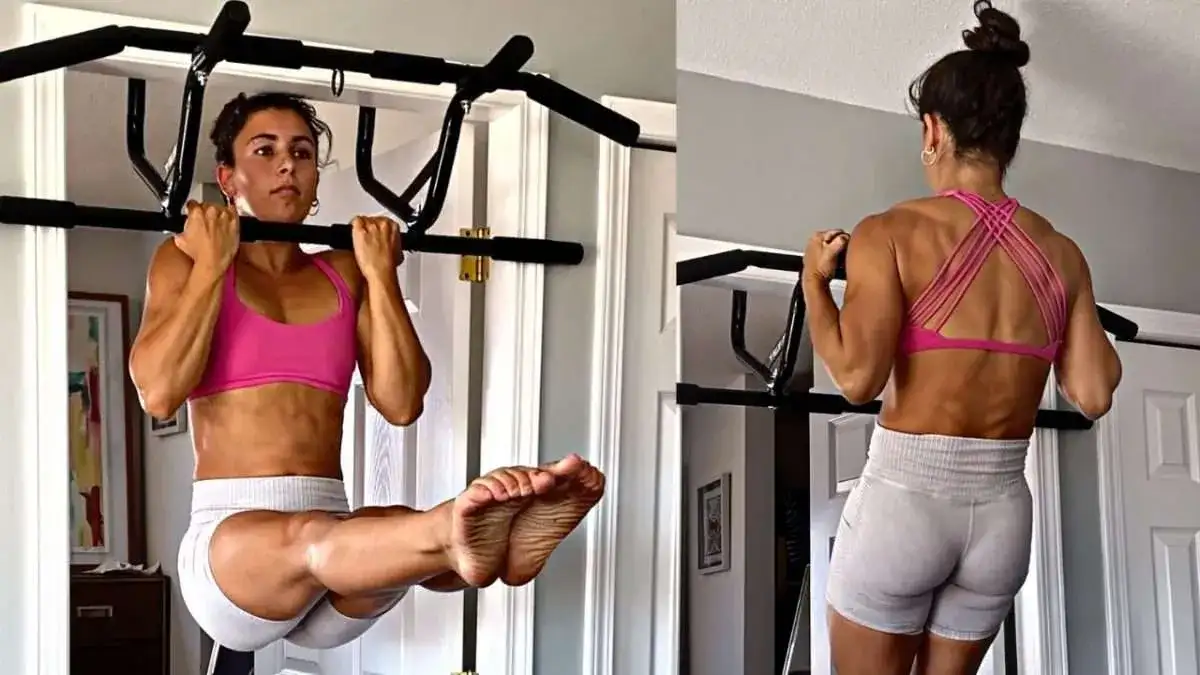
The basic structure is straightforward.
For 20 minutes, complete as many rounds as possible of:
- 5 pull-ups
- 10 push-ups
- 15 air squats
After completing the air squats, immediately return to the pull-ups.
There is no prescribed rest between movements.
That means the athlete must decide when to slow down, when to break a set, and when to push harder.
A simple example
Imagine an athlete completes:
- Round 1: 45 seconds
- Round 2: 48 seconds
- Round 3: 52 seconds
- Round 4: 55 seconds
The pace is gradually slowing.
That is not necessarily a problem.
A small reduction in speed can be more sustainable than trying to maintain a sprint pace and then taking long breaks.
For example, an athlete who maintains roughly 55-second rounds may ultimately outperform someone who completes early rounds in 40 seconds but spends large amounts of time resting later.
Consistency often beats a fast start.
Cindy CrossFit and the Importance of Pacing
Pacing is arguably the most important strategy in this workout.
Because the movements are relatively simple, athletes may feel tempted to perform every round as quickly as possible.
However, Cindy lasts 20 minutes.
That is long enough for fatigue to accumulate significantly.
Think in terms of sustainable effort
Instead of asking, “How fast can I do this round?” ask:
“What pace can I maintain for the next 10 minutes?”
That small change in thinking can completely alter your performance.
A useful approach is to begin slightly below your maximum effort.
Once you understand how your body responds, you can increase the pace during the final few minutes.
Break before you have to
Strategic breaks can be useful.
For example, instead of performing 10 push-ups until your arms completely fail, you might perform 6, take a very short breath, and complete 4 more.
The goal is to keep the break short.
Long rests destroy momentum.
Short planned pauses can help you avoid the much longer rest that often follows muscular failure.
How Beginners Can Scale Cindy
One of the biggest misconceptions about CrossFit is that everyone has to perform the workout exactly as written.
That is incorrect.
Scaling allows an athlete to preserve the training stimulus while changing the difficulty.
For beginners, the full workout may be too demanding, particularly if pull-ups are still developing.
Beginner pull-up options
You could replace pull-ups with:
- Ring rows
- Resistance-band pull-ups
- Jumping pull-ups
- Assisted pull-ups
Choose an option that allows you to perform repeated quality repetitions.
Beginner push-up options
If standard push-ups are difficult, try:
- Incline push-ups
- Knee push-ups
- Reduced repetitions
An elevated surface can make the movement more manageable while still training the same basic pushing pattern.
Beginner squat options
Air squats are already relatively accessible.
However, someone with limited mobility may use a target such as a box or bench to develop consistent depth and control.
The important point is that scaling is not cheating.
It is a method of making the workout appropriate for your current fitness level.
Cindy CrossFit for Intermediate Athletes
Intermediate athletes often face a different challenge.
They can complete the movements, but fatigue begins to affect their technique and pace.
At this stage, the focus should shift toward efficiency.
For example, examine your pull-up technique.
Are you wasting energy by creating excessive movement?
Are your push-ups controlled?
Can you move smoothly through the air squats without unnecessary pauses?
Small improvements can add up over 20 minutes.
Use repeatable sets
Suppose your push-ups become difficult after several rounds.
Instead of repeatedly attempting 10 unbroken repetitions and failing, try a consistent strategy such as:
6 + 4
or
5 + 5
with a very short break.
The best strategy depends on your current capacity.
The important idea is to avoid reaching complete failure too early.
Advanced Cindy CrossFit Strategies
For experienced athletes, the workout becomes less about simply completing the movements and more about optimizing transitions and energy use.
At a high level, a few seconds saved per round can create a meaningful difference over 20 minutes.
Minimize unnecessary transitions
Move directly from one movement to the next.
However, do not confuse efficiency with rushing.
A controlled transition that prevents fatigue may be better than jumping immediately into the next movement and losing pace later.
Consider movement standards
Benchmark scores only have value when the repetitions meet the required standards.
For pull-ups, the athlete needs to meet the required range of motion.
For push-ups, the chest should reach the appropriate depth while maintaining the required body position.
For air squats, the required squat depth must be achieved.
If your score increases because your movement becomes shorter or less controlled, you have not necessarily become fitter.
Standards make comparisons meaningful.
How to Improve Your Cindy Score
If you want a better score, do not simply perform Cindy every few days.
Instead, identify the movement that limits you.
If pull-ups are the problem
Build pulling strength with exercises such as:
- Strict pull-ups
- Ring rows
- Scapular pull-ups
- Controlled negatives
- Lat pulldowns
Developing strict strength can make repeated kipping or controlled pull-ups easier.
If push-ups are the problem
Focus on:
- Strict push-ups
- Tempo push-ups
- Plank variations
- Dumbbell pressing
- Triceps work
However, do not overlook technique.
A strong plank position can make each repetition more efficient.
If air squats are the problem
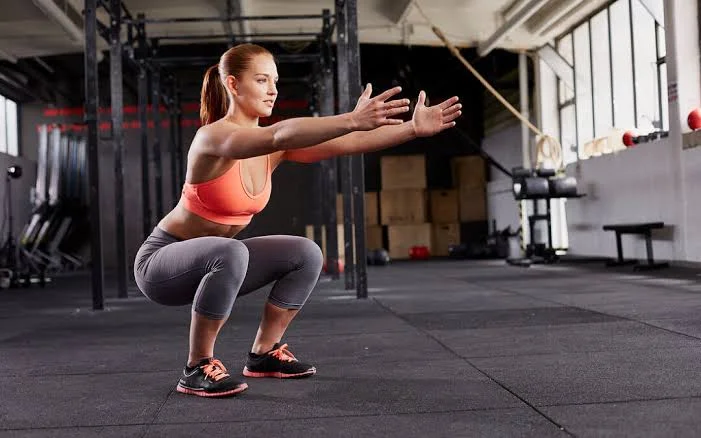
Squats usually become difficult because of fatigue rather than maximal strength.
Improve your:
- Squat depth
- Ankle mobility
- Hip control
- Breathing
- Movement rhythm
The goal is to make every repetition feel almost automatic.
Why Air Squats Matter More Than You Think
It is easy to overlook the 15 air squats because they use no external weight.
That would be a mistake.
Fifteen repetitions per round can become a significant workload.
If an athlete completes 20 rounds, that equals 300 air squats, alongside 100 pull-ups and 200 push-ups.
That example shows why the workout becomes challenging even though none of the exercises requires a barbell.
The lesson is simple:
Repetition volume matters.
A movement does not need heavy resistance to create substantial fatigue.
Cindy CrossFit vs. Other Benchmark Workouts
Cindy is part of a larger family of named CrossFit benchmark workouts.
Some focus heavily on running. Others involve barbells, Olympic lifting, kettlebells, or gymnastics.
For example, a workout that includes a power snatch crossfit movement places much greater emphasis on explosive strength and technical lifting than Cindy does.
Cindy, by comparison, is more accessible from an equipment perspective.
| Cindy | Technical Barbell WOD |
| Minimal equipment | Usually requires a barbell |
| Bodyweight-focused | External load |
| High muscular endurance | Greater power demand |
| Simple movements | More technical movements |
| Easy to repeat | Requires more technical consistency |
This does not mean one workout is better.
They simply measure different qualities.
What Cindy Can Teach You About a CrossFit WOD
A good crossfit wod should have a clear purpose.
Cindy is a strong example because the simplicity makes the training stimulus easy to understand.
You need pulling endurance.
You need pushing endurance.
You need lower-body stamina.
You also need the ability to keep moving while tired.
That combination makes Cindy useful for athletes who want to understand their conditioning without relying on complicated equipment.
Moreover, the workout highlights an important CrossFit principle: functional movements performed repeatedly can create a serious physical challenge.
How Women Can Approach Cindy
The CrossFit community includes athletes with a wide range of backgrounds, body types, ages, and goals.
The term crossfit women can describe competitive athletes, recreational participants, beginners, and experienced lifters.
The same training principle applies to everyone: use the version of the movement that matches your ability.
Women do not need a special version of Cindy simply because they are women.
However, individual scaling may be appropriate.
For example, an athlete who has strong lower-body endurance but is still developing upper-body pulling strength may scale the pull-ups while keeping the other movements unchanged.
Cindy and the CrossFit Girls
Cindy is also part of the broader culture surrounding crossfit girls, a group of named benchmark workouts that athletes use to test and track performance.
These workouts have become familiar reference points in the CrossFit community.
Their value comes from repeatability.
When the same workout is performed months later under similar standards, the result can provide useful information about fitness changes.
Cindy CrossFit Workout: How Often Should You Do It?
Repeating a benchmark can be useful.
Repeating it too often can reduce its value.
If you perform the workout every week, you may become better specifically at pacing Cindy without making proportional improvements in your overall fitness.
Instead, use it periodically as a test.
Between benchmark attempts, train the qualities that influence performance.
For example:
- Improve pull-up strength.
- Build push-up endurance.
- Develop squat capacity.
- Perform aerobic conditioning.
- Practice efficient transitions.
- Improve recovery.
Then return to Cindy and see whether your score has changed.
This approach makes the workout a measurement tool rather than the entire training program.
Common Cindy Mistakes to Avoid
Starting too fast
This is probably the most common mistake.
The first few rounds feel easy, so the athlete sprints.
Later, fatigue arrives suddenly.
Better approach: Start at a controlled pace and build gradually.
Going to failure
Failure can create a long recovery period.
Instead, stop a set before complete muscular failure when possible.
Ignoring breathing
Holding your breath unnecessarily can make the workout feel harder.
Develop a steady breathing rhythm, particularly during air squats.
Taking long transitions
Every unnecessary pause adds up.
Keep your equipment and space organized before starting.
Chasing someone else’s score
A competitive environment can be motivating.
However, someone else’s score may not be a useful target if they have a different training history.
Compare yourself with your own previous results.
A Sample Cindy Preparation Plan
If you want to prepare specifically for the benchmark, you can spend several weeks building the required qualities.
Week 1: Establish capacity
Focus on controlled sets.
- Pull-ups: 4 × manageable repetitions
- Push-ups: 4 × manageable repetitions
- Air squats: 4 × 15
- Easy aerobic conditioning
Week 2: Build endurance
Increase total volume while keeping good form.
Add short circuits that combine the three movements.
Week 3: Practice pacing
Use a shorter 10-minute version.
Focus on finding a pace that you could realistically maintain for longer.
Week 4: Test
Perform the full 20-minute workout.
Record:
- Total rounds
- Additional repetitions
- Movement scaling
- Break strategy
- Overall feeling
Then use that information to guide your next training block.
Personal Insight: The Best Cindy Score Is Not Always the Highest One
A useful way to judge progress is to look beyond the final number.
Suppose your previous score was 15 rounds, but you had to stop repeatedly because your push-ups failed.
Later, you score 15 rounds again but finish every round with controlled movement and fewer breaks.
That can represent meaningful progress.
Similarly, if you move from 12 rounds with scaled pull-ups to 12 rounds with strict pull-ups, the number may remain unchanged while your physical ability has improved.
The score tells part of the story. The movement quality tells the rest.
That is why experienced coaches look at both performance and technique.
Conclusion: Make Cindy a Fitness Benchmark, Not Just a Workout
Cindy CrossFit remains popular because it strips training down to three familiar movements and one simple goal: keep moving for 20 minutes.
Yet the workout is far more demanding than it appears.
Pull-ups challenge the upper body. Push-ups test pressing endurance. Air squats accumulate lower-body fatigue. Together, they create a demanding test of strength, stamina, pacing, coordination, and mental discipline.
The smartest way to improve is not simply to repeat the workout more often.
Instead, strengthen your weak movements, practice efficient technique, control your opening pace, use sensible scaling, and track your results.
Moreover, remember that a benchmark score is only useful when the movement standards remain consistent.
Whether you are a beginner completing your first scaled version or an experienced athlete chasing a personal best, Cindy can give you valuable information about your fitness.
Start controlled, move well, and let consistency drive the score upward.
Frequently Asked Questions About Cindy CrossFit
What is Cindy in CrossFit?
Cindy is a 20-minute AMRAP benchmark consisting of 5 pull-ups, 10 push-ups, and 15 air squats. Athletes complete as many rounds and additional repetitions as possible.
Is Cindy suitable for beginners?
Yes. Beginners can scale pull-ups, push-ups, or the workout duration. The goal is to preserve the basic movement pattern while choosing a difficulty you can perform safely.
What is a good Cindy score?
There is no single score that defines a good performance. Your score should be considered alongside your movement standards, experience, scaling, and previous results.
How can I get better at Cindy?
Improve the three main movements separately, then practice pacing and transitions. Building upper-body endurance and learning to avoid early muscular failure can make a major difference.
Can I do Cindy every week?
You can, but it may not be necessary. Periodic testing is often more useful because it lets you train the underlying fitness qualities between benchmark attempts.
⭐ Make MindLiva Your Preferred Source on Google
Get trusted health, wellness, and lifestyle articles from MindLiva.
Add MindLiva
Samie Babaei is a medical science student at Shahid Beheshti University of Medical Sciences with a strong interest in health, wellness, and medical research. As a health writer and researcher at MindLiva, she focuses on creating clear, evidence-based content that helps readers better understand health and well-being.