




Breast Cancer Immunotherapy: New Hope in 2026
What if doctors could help a patient’s own immune system recognize breast cancer cells that once escaped detection?
That idea is already influencing modern oncology. Breast cancer immunotherapy has become an important option for certain patients, particularly those with triple-negative breast cancer, or TNBC. However, it is not a universal treatment for every breast cancer subtype.
The field is also moving quickly. On June 24, 2026, the FDA approved a new first-line combination of sacituzumab govitecan and pembrolizumab for certain patients with advanced PD-L1-positive TNBC. The decision added another option to a treatment landscape that has changed dramatically over the past several years.
This article explains which patients may benefit, how immune checkpoint drugs work, why biomarkers matter, possible side effects, and the new research shaping future breast cancer care.
Why Breast Cancer Immunotherapy Matters in 2026
Breast cancer remains one of the most commonly diagnosed cancers in the United States. SEER estimates 321,910 new cases of female breast cancer and about 42,140 deaths in 2026.
However, breast cancer is not one disease.
Doctors divide tumors into groups based on important features such as hormone receptors and HER2. These biological differences help determine whether a patient is more likely to benefit from hormone therapy, HER2-directed treatment, chemotherapy, antibody-drug conjugates, or immune-based medicine.
The strongest established role for immune checkpoint treatment in breast cancer is currently in triple-negative breast cancer.
TNBC does not have estrogen receptors, progesterone receptors, or excess HER2. Because common hormone and HER2-targeted medicines do not work against these tumors in the usual way, researchers have worked hard to find additional treatment strategies.
That search has made immune-based therapy increasingly important.
How Does Breast Cancer Immunotherapy Work?
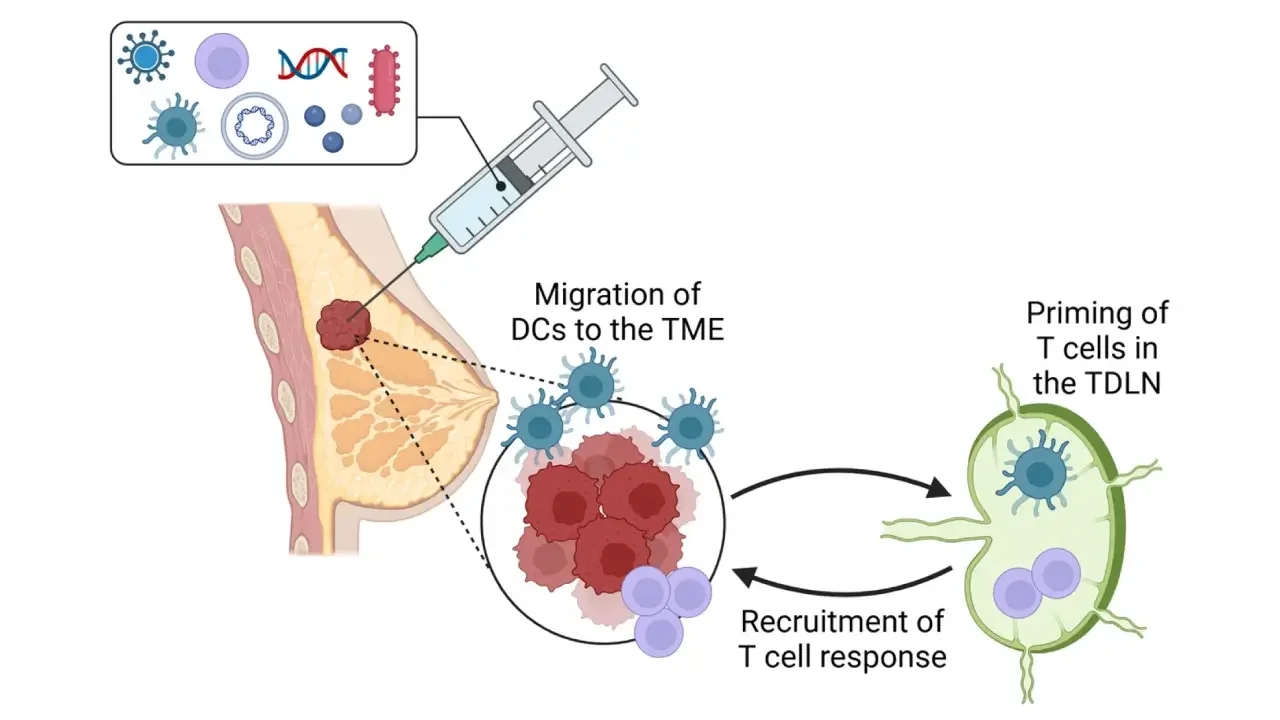
Cancer develops from the body’s own cells, which makes it surprisingly good at avoiding immune detection.
Some tumors can use biological signals to tell immune cells to slow down or stop attacking. One important pathway involves PD-1, a protein found on immune cells, and PD-L1, which may be expressed by tumor cells and other cells around a tumor.
Checkpoint medicines can interfere with this interaction.
Pembrolizumab, for example, blocks PD-1. By releasing this immune “brake,” it can help T cells maintain their ability to recognize and attack tumor cells.
People often search how does immunotherapy work expecting it to simply strengthen the entire immune system. That description is incomplete.
A better explanation is that the treatment changes specific immune signals so cancer-fighting cells can work more effectively.
Why chemotherapy may be added
Checkpoint drugs are often combined with chemotherapy in TNBC.
Chemotherapy directly damages cancer cells. As tumor cells die, they can release material that may make the cancer easier for the immune system to recognize. Combining the two approaches may therefore produce stronger effects than either strategy would in some patients.
Importantly, the exact chemotherapy and checkpoint regimen depends on whether the disease is early-stage, locally recurrent, unresectable, or metastatic.
Breast Cancer Immunotherapy for Early Triple-Negative Disease
One of the biggest changes in breast cancer care has been the movement of checkpoint treatment into early-stage high-risk TNBC.
Pembrolizumab can be combined with chemotherapy before surgery and then continued after surgery for patients with high-risk early-stage TNBC.
This approach was studied in the large KEYNOTE-522 trial.
Patients received pembrolizumab plus chemotherapy before surgery, followed by continued pembrolizumab afterward. The trial demonstrated improvements in important outcomes, including event-free survival, compared with chemotherapy alone.
Why treatment before surgery matters
Giving medicine before breast surgery is called neoadjuvant therapy.
Doctors can then examine the tissue removed during surgery to see how much cancer remains.
If no invasive cancer is found in the breast or lymph nodes after treatment, this is known as a pathologic complete response, or pCR.
Achieving a pCR after preoperative treatment is considered an important favorable sign in TNBC, although it does not guarantee that cancer can never return.
For patients, this means treatment before surgery is doing more than simply shrinking a lump. It can also provide valuable information about how the tumor responds to therapy.
Treatment for Advanced Triple-Negative Breast Cancer
Immune checkpoint therapy has also changed treatment for locally recurrent unresectable and metastatic TNBC.
Pembrolizumab plus chemotherapy is an established option for certain patients whose tumors express PD-L1 with a Combined Positive Score, or CPS, of at least 10.
In the KEYNOTE-355 trial, patients with PD-L1 CPS of 10 or higher who received pembrolizumab plus chemotherapy had a median overall survival of 23.0 months, compared with 16.1 months among those treated with chemotherapy plus placebo.
Those results showed why biomarker testing matters.
Two patients can both have metastatic TNBC yet receive different recommendations because one tumor meets the PD-L1 requirement and another does not.
A Major 2026 FDA Approval Changes the First-Line Picture
A particularly important development arrived on June 24, 2026.
The FDA approved sacituzumab govitecan in combination with pembrolizumab as first-line treatment for adults with unresectable locally advanced or metastatic TNBC whose tumors have PD-L1 CPS ≥10.
Sacituzumab govitecan is an antibody-drug conjugate. It is designed to deliver a potent chemotherapy payload to cells expressing the target Trop-2.
The new approval was supported by the ASCENT-04/KEYNOTE-D19 trial, which included 443 patients with previously untreated advanced PD-L1-positive TNBC. The study compared sacituzumab govitecan plus pembrolizumab with chemotherapy plus pembrolizumab.
On the same date, the FDA also approved sacituzumab govitecan alone as first-line treatment for certain patients with advanced TNBC who are not candidates for PD-1 or PD-L1 inhibitor-based treatment.
This provides an important lesson for readers: the breast cancer treatment story in 2026 is not simply about adding more drugs. It is increasingly about matching the right combination to the biology of the tumor and the needs of the patient.
Why PD-L1 Testing Can Change the Treatment Plan
Biomarker testing has become central to advanced TNBC treatment.
PD-L1 testing looks at the level of this immune-related marker in and around the tumor. For certain pembrolizumab-based metastatic TNBC regimens, an FDA-authorized test is used to identify patients whose tumors have a CPS of at least 10.
A positive result does not promise that treatment will work.
Likewise, a lower PD-L1 result does not mean there are no effective treatments available. Instead, the test helps doctors determine whether a specific checkpoint-based treatment fits the evidence and FDA indication.
Other tumor features may also matter when planning breast cancer care, including:
- Estrogen and progesterone receptor status
- HER2 status
- BRCA1 or BRCA2 changes
- PIK3CA pathway alterations
- Disease stage
- Previous treatments
- Where cancer has spread
Therefore, treatment plans increasingly depend on both traditional pathology and molecular testing.
Does Immune Therapy Work for Every Breast Cancer Subtype?
No.
Most established checkpoint-based breast cancer treatment currently focuses on TNBC.
Hormone receptor-positive breast cancers often rely heavily on endocrine therapy, sometimes combined with drugs that target pathways involved in cancer-cell growth. HER2-positive cancers have several HER2-targeted therapies available.
For example, in July 2026 the FDA approved gedatolisib with fulvestrant, with or without palbociclib, for a specific group of patients with HR-positive, HER2-negative advanced breast cancer. This is a targeted-treatment strategy rather than checkpoint therapy.
This distinction is important.
A newly diagnosed patient should not assume that a newer treatment is automatically better than hormone therapy, targeted therapy, chemotherapy, or surgery. The best treatment is the one that fits the tumor’s biology and stage.
What Are the Main Types of Immunotherapy?
When readers research the types of immunotherapy, they may encounter several very different treatments.
Checkpoint inhibitors are the most established immune-based option in breast cancer, but cancer research includes other approaches.
Immune checkpoint inhibitors
These medicines block signals such as PD-1, PD-L1, or CTLA-4 that normally help control immune activity.
Pembrolizumab is the key checkpoint medicine with established breast cancer indications in the United States.
Cancer vaccines
Researchers are studying vaccines designed to teach immune cells to recognize proteins or mutations found in tumors.
Personalized vaccine trials are also being studied in breast cancer, including approaches that combine a patient-specific tumor vaccine with checkpoint medicines. These remain experimental and should not be confused with routine approved care.
T-cell therapies
Scientists are also investigating ways to collect, select, expand, or modify a patient’s T cells so they can attack cancer more effectively.
These approaches have transformed treatment for certain blood cancers, but their role in breast cancer remains largely investigational.
Why Some Patients Respond Better Than Others
One of the most frustrating parts of immunotherapy for cancer is that response can vary greatly between patients.
A tumor may contain many immune cells and respond well to checkpoint blockade. Another tumor may have an environment that keeps immune cells out or prevents them from working properly.
Researchers are studying several possible predictors, including:
- PD-L1 expression
- Tumor mutations
- Tumor-infiltrating lymphocytes
- Immune-gene signatures
- Previous treatment
- Cancer subtype
- The tumor microenvironment
However, no single marker perfectly predicts response.
That is why oncologists combine pathology, approved biomarker tests, clinical history, disease stage, and evidence from clinical trials when making treatment decisions.
Can Breast Cancer Immunotherapy Cure Stage 4 Disease?

Patients understandably search can immunotherapy cure stage 4 cancer after hearing stories of long-lasting responses.
For metastatic breast cancer, treatment is generally aimed at controlling disease, extending life, reducing symptoms, and protecting quality of life rather than promising a cure.
However, some patients can experience long periods during which cancer remains controlled.
For PD-L1-positive metastatic TNBC, clinical trials have shown meaningful survival improvements from pembrolizumab-based treatment, but not every patient responds and disease can still progress.
Therefore, discussions about treatment should focus on realistic goals for the individual patient rather than dramatic results seen in isolated cases.
Possible Side Effects Patients Should Understand
The immunotherapy approach can produce side effects that are different from those caused by traditional chemotherapy.
Checkpoint medicines remove some of the natural controls on immune activity. As a result, immune cells can occasionally attack healthy tissue.
Common checkpoint-inhibitor side effects include rash, diarrhea, and fatigue. Less common but potentially serious reactions can involve inflammation of the lungs, liver, bowel, thyroid, pituitary gland, heart, kidneys, skin, or other organs.
Symptoms that deserve prompt medical attention may include:
- New or worsening shortness of breath
- Persistent cough
- Severe diarrhea
- Significant abdominal pain
- Yellowing of the skin or eyes
- Unusual weakness
- Severe headaches
- Vision changes
- Chest pain
- Major changes in heart rate
The exact risk depends on the drug, combination therapy, dose, general health, and other factors.
For comparison, people searching side effects of immunotherapy for lung cancer may see many of the same immune-related reactions, but treatment combinations and underlying health risks can differ between lung and breast cancer.
How Breast Cancer Treatment Differs From Other Cancers
Immune treatment is highly cancer-specific.
For example, immunotherapy for lung cancer has become central to treatment in several stages and molecular settings of non-small cell and small cell lung cancers.
Likewise, immunotherapy for liver cancer may involve checkpoint-based combinations for selected people with hepatocellular carcinoma.
Breast cancer follows a different pathway because hormone receptors, HER2 status, and the TNBC subtype have major effects on treatment selection.
Even oral immunotherapy refers to something completely different in allergy medicine, where controlled exposure to a food allergen may be used to raise a patient’s reaction threshold.
The same word can therefore describe very different medical approaches.
What New Breast Cancer Research Could Change Next?
The 2026 treatment landscape shows a clear trend toward combination therapy and greater personalization.
Researchers are testing checkpoint inhibitors alongside antibody-drug conjugates, targeted drugs, cancer vaccines, and other immune strategies. NCI trials are also investigating new ways to treat high-risk TNBC after preoperative therapy and to use circulating tumor DNA to identify patients who may need more—or possibly less—treatment.
This matters because adding more treatment is not always the goal.
Sometimes the next advance may involve identifying patients who can safely receive less therapy, reducing unnecessary side effects while maintaining strong cancer control.
From a patient perspective, that may be just as important as discovering a new drug.
Questions to Ask Your Oncologist

Before starting immune-based breast cancer treatment, consider asking:
- What exact subtype of breast cancer do I have?
- Has my tumor been tested for PD-L1?
- What is my PD-L1 CPS result?
- Why is this treatment recommended for my stage?
- Will it be given before surgery, after surgery, or for advanced disease?
- What other medicines will I receive with it?
- What benefits were seen in patients similar to me?
- Which side effects require an urgent call?
- Could an autoimmune condition affect my treatment?
- Is there a clinical trial worth considering?
These questions can make a complex oncology visit easier to understand and help patients take an active role in shared decision-making.
Conclusion
Breast cancer immunotherapy has moved from an experimental idea to an important part of treatment for selected patients, particularly those with triple-negative disease.
For high-risk early TNBC, pembrolizumab can be used with chemotherapy before surgery and continued afterward. For certain PD-L1-positive advanced tumors, checkpoint-based combinations have improved outcomes. Moreover, the June 24, 2026 FDA approval of sacituzumab govitecan plus pembrolizumab has expanded first-line options again.
However, immune treatment is not automatically the best approach for every breast cancer.
Tumor subtype, stage, PD-L1 results, previous treatment, overall health, and personal goals all matter.
The encouraging change is not simply that doctors have more medicines. They have more ways to match treatment to the biology of each patient’s cancer, which is where much of the progress in modern breast oncology is now happening.
FAQs
Which breast cancer responds best to immune therapy?
The clearest established role is in triple-negative breast cancer. Pembrolizumab-based treatment is used in specific early high-risk and advanced PD-L1-positive settings.
What is PD-L1 in breast cancer?
PD-L1 is a protein involved in controlling immune responses. Testing its expression can help determine whether certain patients with advanced TNBC are candidates for pembrolizumab-based treatment.
Can immune therapy be given before breast cancer surgery?
Yes. In high-risk early-stage TNBC, pembrolizumab can be combined with chemotherapy before surgery and then continued after surgery.
Is immune-based treatment better than chemotherapy?
Not in every case. The two are often used together in TNBC. The best approach depends on cancer subtype, stage, biomarkers, previous therapy, and individual health factors.
⭐ Make MindLiva Your Preferred Source on Google
Get trusted health, wellness, and lifestyle articles from MindLiva.
Add MindLiva
Samie Babaei is a medical science student at Shahid Beheshti University of Medical Sciences with a strong interest in health, wellness, and medical research. As a health writer and researcher at MindLiva, she focuses on creating clear, evidence-based content that helps readers better understand health and well-being.