

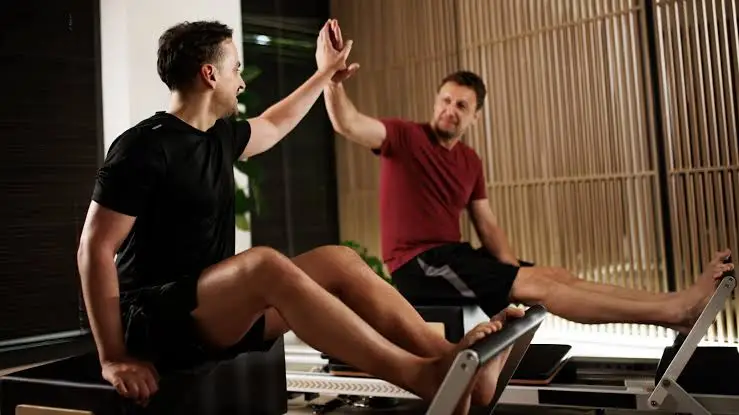
Why Pilates for Men Is the Secret to Better Muscle Tone
Have you ever finished a hard gym session but still felt stiff, tight, or disconnected from the way your body moves?
That is where Pilates for Men can make a surprisingly useful difference. Although Pilates is sometimes associated with gentle stretching, modern Pilates can be physically demanding. It challenges the deep muscles of the core, hips, shoulders, back, and legs while requiring control through every movement.
Moreover, Pilates can complement traditional strength training rather than replace it. Research has found benefits for muscular endurance, balance, flexibility, and physical conditioning, although the evidence varies depending on the outcome and population studied.
In this guide, we will look at how Pilates works for men, what it can do for muscle tone and posture, how it compares with gym training, and how to build it into a realistic weekly routine.
What Makes Pilates for Men Different?
Pilates is a mind-body exercise system built around controlled movement, core stability, breathing, posture, precision, and muscle control. It can be performed on a mat or with equipment such as a reformer.
Unlike conventional bodybuilding, the goal is not simply to move the greatest amount of weight.
Instead, you are asked to control the position of your body throughout the entire exercise.
For example, a slow leg raise may look easy from across the room. However, when you perform it correctly—keeping your pelvis stable, controlling your breathing, and resisting unwanted movement—the exercise can become much harder.
That attention to control is one reason Pilates can work well alongside resistance training.
A man who regularly squats, deadlifts, benches, or performs pull-ups may have considerable strength but still lack mobility or control in certain positions. Pilates can help address those gaps.
Pilates for Men and the Modern Fitness Approach
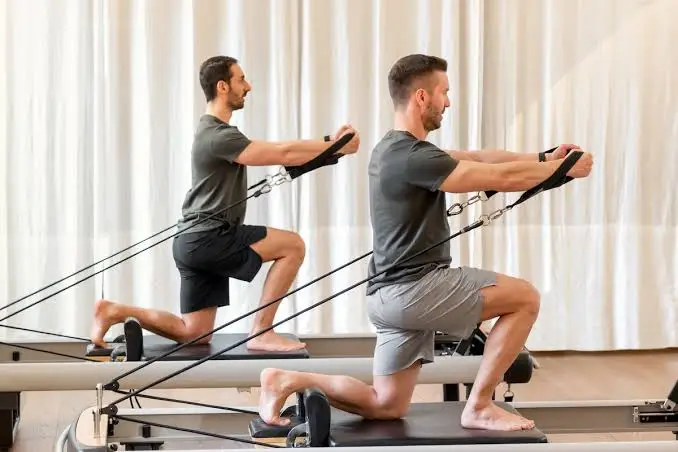
Today’s fitness culture is increasingly moving away from the idea that every workout needs to leave you exhausted.
Instead, people are paying more attention to mobility, recovery, movement quality, injury prevention, and long-term performance.
That shift makes Pilates particularly relevant.
A recreational runner might use it to improve trunk control. A weightlifter might use it to work on mobility. Someone who spends eight hours at a desk might use it to strengthen the muscles responsible for maintaining good posture.
In short, Pilates can be adapted to very different fitness goals.
How Pilates for Men Can Improve Muscle Tone
When people talk about getting “toned,” they usually mean developing more visible muscle while reducing excess body fat.
Pilates can contribute to the first part by challenging muscles through repeated, controlled contractions. It can also support better posture, which can change how your physique looks even before significant changes in body composition occur.
A systematic review and meta-analysis found that Pilates improved abdominal muscular endurance compared with no exercise, with the researchers reporting an average improvement equivalent to about 10 additional abdominal curls in a one-minute test in the included studies.
However, there is an important distinction.
Pilates is not magic for building large amounts of muscle mass.
Progressive resistance training remains a highly effective tool for increasing maximal strength and muscle size. Pilates is better viewed as another training stimulus—especially useful for muscular endurance, core control, mobility, and movement quality.
The Muscles Pilates Can Challenge
Depending on the exercise and equipment, Pilates can place meaningful demands on:
- Deep abdominal muscles
- Glutes and hip stabilizers
- Hamstrings
- Lower back muscles
- Chest and shoulders
- Upper back
- Hip flexors
- Muscles that support spinal stability
For example, exercises such as the plank, side plank, single-leg stretch, teaser, swimming, and leg circles can demand significant trunk and hip control.
The result is often a stronger feeling of connection between the brain and the muscles doing the work.
Pilates Body vs Gym Body: Is There Really a Difference?
The phrase Pilates Body vs Gym Body suggests that you have to choose one training style.
You don’t.
A gym-focused physique may emphasize muscle size, maximal strength, or power. Pilates tends to emphasize controlled movement, muscular endurance, posture, flexibility, and stability.
The two approaches can work extremely well together.
| Goal | Pilates | Traditional Gym Training |
| Core control | Excellent | Good, depending on exercises |
| Muscle size | Moderate potential | Excellent with progressive resistance |
| Mobility | Strong focus | Depends on program |
| Muscular endurance | Strong | Strong |
| Maximal strength | Limited compared with heavy lifting | Excellent |
| Balance | Strong | Variable |
| Movement control | Major emphasis | Depends on exercise selection |
| Cardiovascular fitness | Limited to moderate | Highly variable |
A practical combination might be three resistance-training sessions and one or two Pilates sessions per week.
That gives you exposure to heavy resistance while also developing the movement qualities that traditional lifting may not fully address.
Pilates for Men Can Support Better Posture and Mobility
Modern lifestyles are not particularly kind to posture.
Hours spent sitting at a desk, driving, looking at a phone, or working from a laptop can mean very little movement through the hips and spine.
Pilates does not simply tell you to “sit up straight.”
Instead, many exercises train the muscles involved in maintaining controlled alignment while your limbs move.
That distinction matters.
For example, a controlled Pilates exercise might require you to keep your pelvis steady while moving one leg. Your body has to learn how to stabilize one area while another area moves.
This is similar to what happens during real-life activities and sports.
Why Mobility Matters for Strength Training
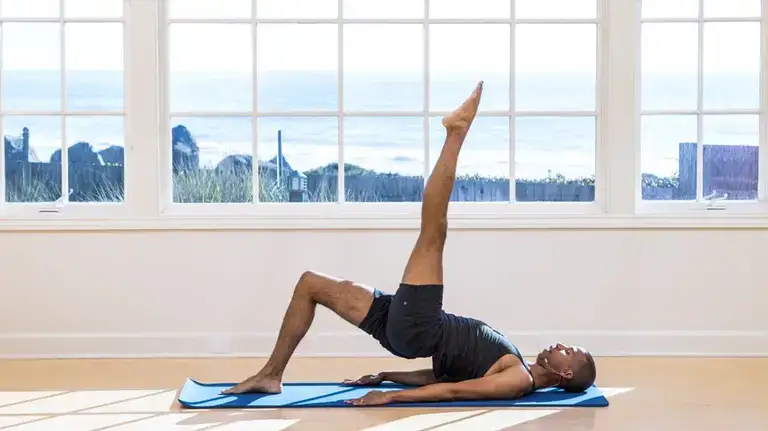
Imagine two men who can both squat the same weight.
One has excellent ankle, hip, and thoracic mobility. The other compensates because certain joints do not move well.
Their numbers may look identical, but their movement quality can be very different.
Pilates can provide a useful environment for improving body awareness and controlled range of motion.
Research reviews have reported benefits involving flexibility and dynamic balance, although researchers also note limitations in the quality and consistency of the available evidence.
That is the important takeaway: Pilates shows promise, but it should not be marketed as a cure-all.
Pilates for Men and Core Strength: More Than Six-Pack Abs
The word “core” is often reduced to visible abdominal muscles.
In reality, the core is a much broader system involving muscles around the trunk and pelvis that help stabilize and transfer force.
This matters when you lift, run, jump, rotate, or even carry groceries.
A strong core allows the body to create and transfer force more efficiently.
For example, during a deadlift, your trunk needs to remain stable while your hips and legs generate force. During a tennis serve, your body transfers force through multiple segments. During a sprint, your trunk helps control movement as the arms and legs rapidly alternate.
Pilates trains many of these stabilizing demands through controlled movements.
A Stronger Core Can Change How You Move
One of the most valuable benefits may not be visible in the mirror.
You may notice that you can:
- Hold a plank with better alignment.
- Control your pelvis during single-leg movements.
- Maintain posture during long periods of activity.
- Perform certain gym exercises with greater body awareness.
- Move through a larger comfortable range of motion.
These improvements are not necessarily dramatic overnight.
Instead, they tend to accumulate through consistent practice.
Where Pelvic Pilates Fits Into a Men’s Fitness Routine
The pelvic region plays an important role in trunk stability, hip movement, posture, and everyday function.
Pelvic Pilates is sometimes used as a search term for exercises focused on pelvic control and related muscles.
For men, pelvic-focused exercises may be relevant to general movement quality and body awareness. However, people dealing with pelvic pain, urinary symptoms, or other medical concerns should not assume an online Pilates routine is an appropriate treatment.
In those situations, assessment by a qualified healthcare professional or pelvic-health physiotherapist is more appropriate.
For general fitness, the larger lesson is simple: the pelvis is part of the movement system, not an isolated body part.
Pilates for Men Can Be Useful for Athletes
You do not need to be a Pilates enthusiast to benefit from it.
Many athletes use complementary training to improve qualities that their primary sport does not fully develop.
Consider a basketball player.
Basketball requires jumping, landing, cutting, acceleration, and rapid changes in direction. Pilates can provide additional work on balance, trunk control, hip stability, and movement awareness.
A cyclist has a different challenge. Cycling involves repetitive movement in a relatively fixed position. Pilates may help provide movement in other planes while strengthening areas that support posture and trunk control.
Similarly, a golfer may benefit from exercises that emphasize controlled rotation and stability.
The goal is not to make Pilates your entire training program.
The goal is to use it strategically.
How Hard Is Pilates for Men?
This is one of the biggest misconceptions.
A beginner may enter a Pilates class expecting gentle stretching and discover that holding a technically demanding position for 30 seconds is surprisingly difficult.
Intensity depends on:
- Exercise selection
- Repetition speed
- Resistance
- Range of motion
- Rest periods
- Equipment
- Instructor programming
- Your current fitness level
A reformer session, for example, can provide substantial resistance and coordination demands.
Meanwhile, an advanced mat session can be challenging without any external weights.
That is why judging Pilates by how an exercise looks can be misleading.
A Simple Beginner Example
A beginner might start with:
- Five minutes of controlled breathing and mobility.
- Glute bridges.
- Dead-bug variations.
- Modified planks.
- Side-lying leg work.
- Bird-dog exercises.
- Gentle spinal mobility.
- Five minutes of cool-down work.
The session does not need to be exhausting.
The objective is to establish control before complexity.
Pilates for Men vs. Weight Training
The better question is not whether Pilates is better than lifting weights.
It is: What does your current program lack?
If you want maximum muscle growth, progressive resistance training should remain a major part of your program.
If you want better movement quality, core endurance, balance, and mobility, Pilates may fill important gaps.
For many men, the strongest approach is a hybrid program.
For example:
Monday: Upper-body resistance training
Tuesday: Pilates
Wednesday: Lower-body resistance training
Thursday: Rest or light walking
Friday: Full-body resistance training
Saturday: Pilates or mobility
Sunday: Rest
This structure also fits broader physical-activity guidance. The World Health Organization recommends that adults perform muscle-strengthening activities involving major muscle groups on at least two days per week, alongside regular aerobic activity.
Popular Pilates Trends You May See Online
The Pilates world has expanded rapidly, and social media has introduced countless variations and branded concepts.
You may encounter searches for Be Fit Modern Pilates, Jetset Pilates, or Pilates Habitat.
You may also see newer movement trends such as Somatic Pilates, which combines Pilates-style movement with ideas around body awareness and nervous-system regulation.
These terms can describe different studios, programs, or approaches, so the name alone does not tell you whether a particular class is high quality.
Instead, look for:
- Qualified instructors
- Clear exercise demonstrations
- Appropriate progressions
- Good technique
- Realistic claims
- Modifications for beginners
- A focus on safety
Be cautious of programs promising dramatic physical changes in a few days.
A search such as 28 Day Wall Pilates Challenge Free may look attractive, but a short challenge is not automatically better than a well-designed long-term program.
Can Pilates Create a Complete Body Transformation?
A Pilates Body Transformation is possible in the sense that consistent exercise can improve strength, movement, posture, fitness, and body composition.
But transformation should be understood realistically.
Your results depend on training consistency, nutrition, sleep, genetics, starting fitness level, and total physical activity.
Pilates alone cannot guarantee a specific body shape.
An umbrella review of Pilates research found promising effects across several health outcomes, including body composition measures, balance, pain, and disability, but it also emphasized that the certainty of evidence ranged from very low to moderate and that more high-quality research is needed.
That balanced view is important.
Good fitness advice should explain both what an exercise can do and where its limits are.
How to Get Better Results From Pilates for Men
If you are starting Pilates, consistency matters more than chasing advanced exercises immediately.
Try these principles:
1. Start With Technique
Do not rush through repetitions.
A slower, controlled movement performed correctly can be more useful than a fast movement performed with poor alignment.
2. Progress Gradually
Once an exercise becomes easy, increase the challenge through resistance, range of motion, leverage, repetitions, or a more advanced variation.
3. Combine Pilates With Resistance Training
If muscle growth is a major goal, keep progressive strength training in your program.
Pilates can complement it.
4. Track More Than Your Appearance
Measure progress through:
- Strength
- Balance
- Mobility
- Exercise control
- Training consistency
- Recovery
- Energy levels
Photos and body measurements can be useful too, but they are only part of the picture.
5. Give It Time
Research involving healthy adults has found improvements after programs lasting several weeks, particularly when Pilates was performed consistently two to three times per week.
That does not mean everyone needs exactly the same frequency.
It means that regular practice is more meaningful than occasional sessions.
What I Would Recommend for a Beginner
If you have never tried Pilates, I would not begin with the hardest online challenge you can find.
Start with two sessions per week for 20–40 minutes.
Focus on breathing, spinal control, hip stability, core endurance, and basic mobility.
After three or four weeks, assess how your body feels.
Can you control exercises better? Has your balance improved? Are certain movements easier? Do you feel less stiff after sitting?
Those practical changes are often more useful indicators than whether you suddenly look like a fitness model.
If you already lift weights, add Pilates rather than replacing your entire program.
That combination can create a more rounded fitness base.
Final Takeaway: Should Men Try Pilates?
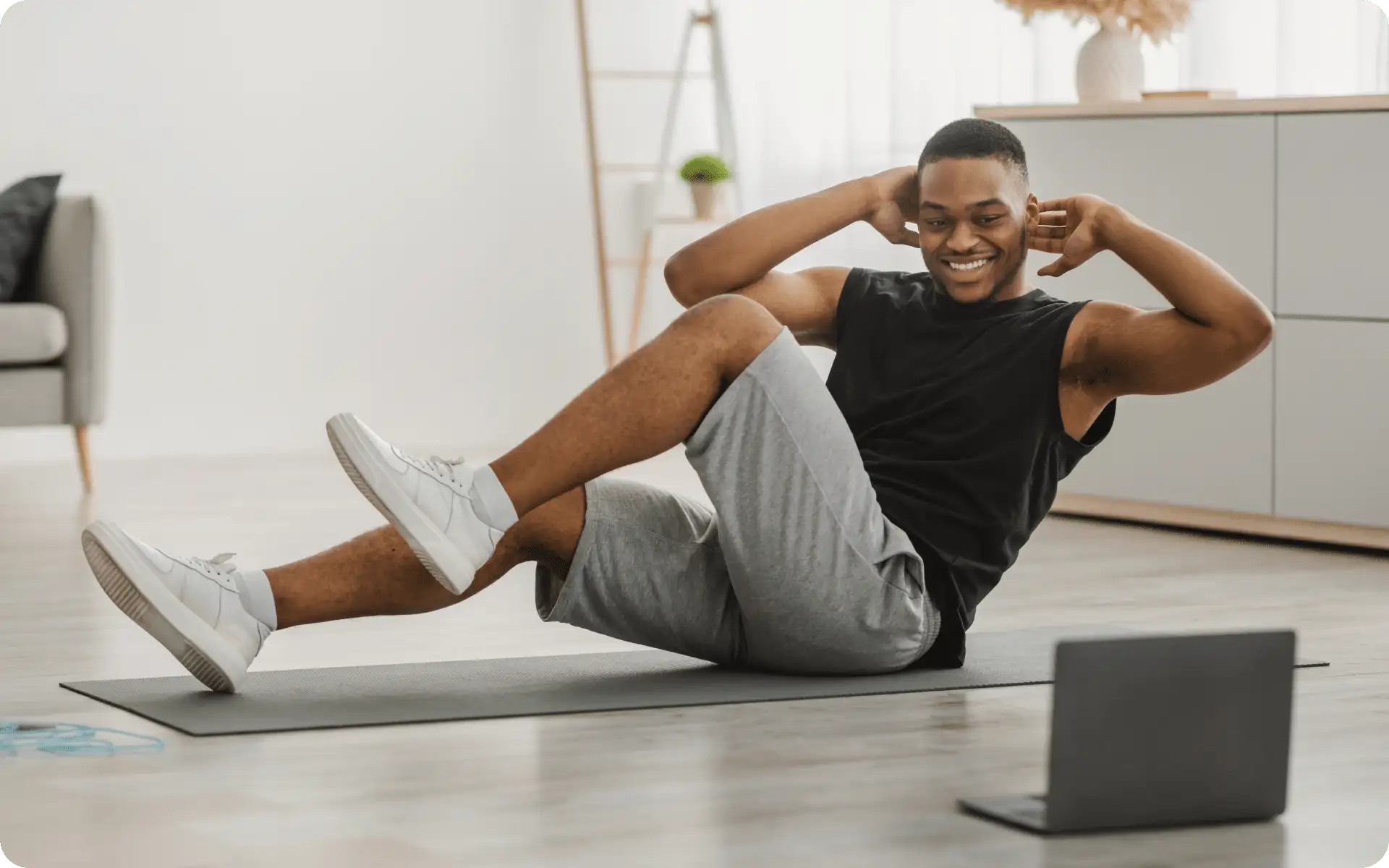
Absolutely—provided you understand what Pilates is designed to do.
Pilates for Men can be an effective way to develop core endurance, movement control, balance, flexibility, posture, and muscular endurance. It can also complement strength training and provide a different physical challenge.
However, Pilates should not be presented as a replacement for every other form of exercise.
If your goal is maximum muscle size, progressive resistance training remains important. If your goal is better overall movement and a more balanced fitness routine, Pilates can be an excellent addition.
The most effective program is rarely the one with the trendiest name.
It is the one you can perform consistently, progress safely, and combine intelligently with the rest of your lifestyle.
In short, Pilates is not “too easy” for men. Done with proper technique and progressive difficulty, it can expose weaknesses that conventional workouts sometimes overlook.
And that may be its greatest advantage.
FAQs About Pilates for Men
Is Pilates good for men who lift weights?
Yes. Pilates can complement weight training by emphasizing core control, mobility, balance, and muscular endurance. It can be especially useful when a strength-focused routine lacks movement variety.
Can Pilates build muscle?
Pilates can strengthen muscles and improve muscular endurance, particularly in the core and stabilizing muscles. However, traditional progressive resistance training is generally better suited to maximizing muscle size and maximal strength.
How often should men do Pilates?
For beginners, two sessions per week is a practical starting point. Research has found benefits from programs performed two to three times weekly, although the ideal frequency depends on your overall training schedule and goals.
Can Pilates help men improve flexibility?
It can. Research has reported improvements in flexibility and dynamic balance, although results vary between studies and populations.
Is Pilates better than going to the gym?
Not necessarily. They serve different purposes. Pilates is excellent for controlled movement, core stability, mobility, and muscular endurance, while gym-based resistance training is highly effective for building strength and muscle mass. Combining both can provide a more complete fitness program.
⭐ Make MindLiva Your Preferred Source on Google
Get trusted health, wellness, and lifestyle articles from MindLiva.
Add MindLiva
Samie Babaei is a medical science student at Shahid Beheshti University of Medical Sciences with a strong interest in health, wellness, and medical research. As a health writer and researcher at MindLiva, she focuses on creating clear, evidence-based content that helps readers better understand health and well-being.