

AI-Driven Healthcare Innovations Enhancing Treatment Plans
Imagine visiting a doctor who can instantly analyze your medical history, compare it with millions of similar cases, and recommend the treatment most likely to work for you. Just a few years ago, this sounded like science fiction. Today, it is becoming a reality thanks to ai-driven healthcare innovations.
Artificial intelligence is reshaping healthcare at an incredible pace. Hospitals, clinics, research centers, and even wearable devices are using AI to improve patient care. Instead of replacing healthcare professionals, AI acts as a powerful assistant that helps doctors make better decisions based on large amounts of medical data.
Patients also benefit from shorter waiting times, earlier disease detection, personalized treatment plans, and more accurate diagnoses. As healthcare systems continue facing growing patient numbers and increasing costs, intelligent technologies are becoming essential rather than optional.
In this article, you’ll learn how AI is changing treatment planning, the technologies driving this transformation, practical examples from hospitals worldwide, current challenges, and what the future holds for patients and medical professionals alike.
Why AI-Driven Healthcare Innovations Matter More Than Ever
Healthcare generates enormous amounts of information every day. Electronic health records, laboratory results, medical images, genetic reports, wearable devices, and patient monitoring systems all produce valuable data. The challenge is turning that information into useful clinical decisions.
This is where ai-driven healthcare innovations make a significant difference.
Artificial intelligence can analyze complex medical information within seconds. Instead of spending hours reviewing patient records, physicians receive intelligent insights that help them focus on delivering quality care. These technologies recognize patterns that humans might miss while reducing unnecessary delays.
Healthcare organizations are increasingly investing in intelligent software because patient expectations are changing. People want quicker diagnoses, personalized care, and better treatment outcomes. AI helps healthcare providers meet those expectations without sacrificing quality.
Several factors are accelerating AI adoption:
- Growing healthcare costs
- Aging populations
- Physician shortages
- Increasing chronic diseases
- Larger volumes of medical data
- Improved computing power
Rather than replacing doctors, AI allows healthcare professionals to spend more time communicating with patients while technology handles repetitive analytical work.
How Artificial Intelligence Improves Treatment Planning
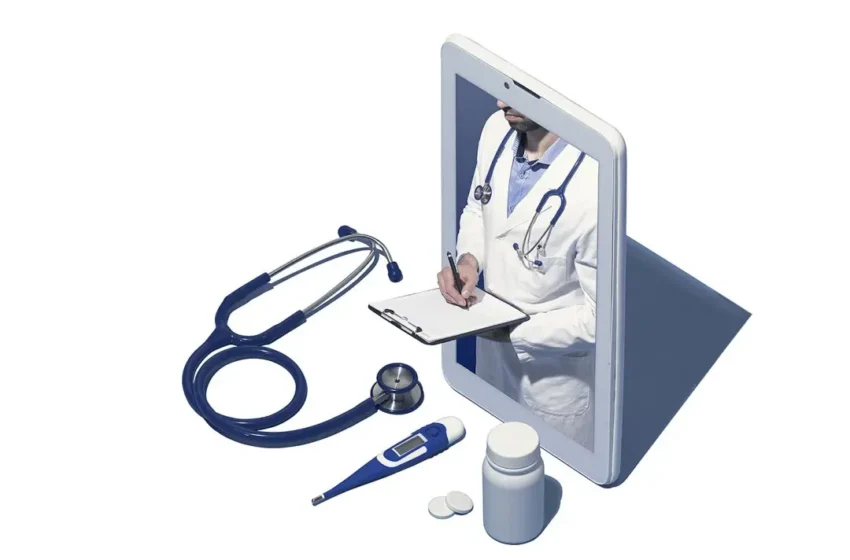
Creating an effective treatment plan requires more than identifying a disease. Physicians must consider age, lifestyle, genetics, allergies, medications, previous illnesses, imaging studies, laboratory values, and countless other factors.
Artificial intelligence brings all these pieces together.
Instead of reviewing information separately, AI integrates multiple data sources into one comprehensive picture of the patient’s health.
For example, a physician treating breast cancer can receive recommendations based on:
- Medical imaging
- Tumor genetics
- Family history
- Previous treatments
- Clinical research
- Current medications
- Laboratory findings
This approach allows doctors to choose therapies that have the highest probability of success for each individual patient.
Treatment planning becomes more personalized instead of relying only on generalized clinical guidelines.
Patients often respond differently to the same medication. AI helps predict those differences before treatment even begins, improving safety while reducing unnecessary side effects.
Machine Learning: The Brain Behind Modern Healthcare
Machine learning is one of the most important technologies driving artificial intelligence in medicine.
Unlike traditional software that follows fixed rules, machine learning learns from experience. It studies millions of medical cases, identifies patterns, and continuously improves its predictions as more information becomes available.
Imagine teaching a child to recognize dogs. Instead of memorizing one picture, the child learns by seeing thousands of different dogs.
Machine learning works similarly.
It analyzes enormous datasets containing:
- X-rays
- MRI scans
- CT images
- Blood test results
- Pathology reports
- Medical histories
- Clinical outcomes
After reviewing enough examples, the system becomes highly skilled at recognizing diseases and predicting treatment responses.
Hospitals increasingly rely on machine learning because it can process information much faster than humans while maintaining impressive accuracy.
The Growing Role of Predictive Analytics
Traditional healthcare often reacts after illness develops.
Predictive analytics changes this approach completely.
Rather than waiting until patients become seriously ill, artificial intelligence estimates future health risks before symptoms become severe.
Healthcare providers now use predictive models to identify patients who may develop:
- Heart disease
- Diabetes complications
- Kidney failure
- Stroke
- Sepsis
- Hospital readmission
For example, subtle changes in heart rate, oxygen levels, blood pressure, and laboratory values may indicate a patient is becoming critically ill several hours before doctors would normally recognize the warning signs.
Those extra hours can save lives.
Hospitals using predictive analytics often respond faster to emergencies while improving patient outcomes.
AI in Medical Imaging and Diagnosis
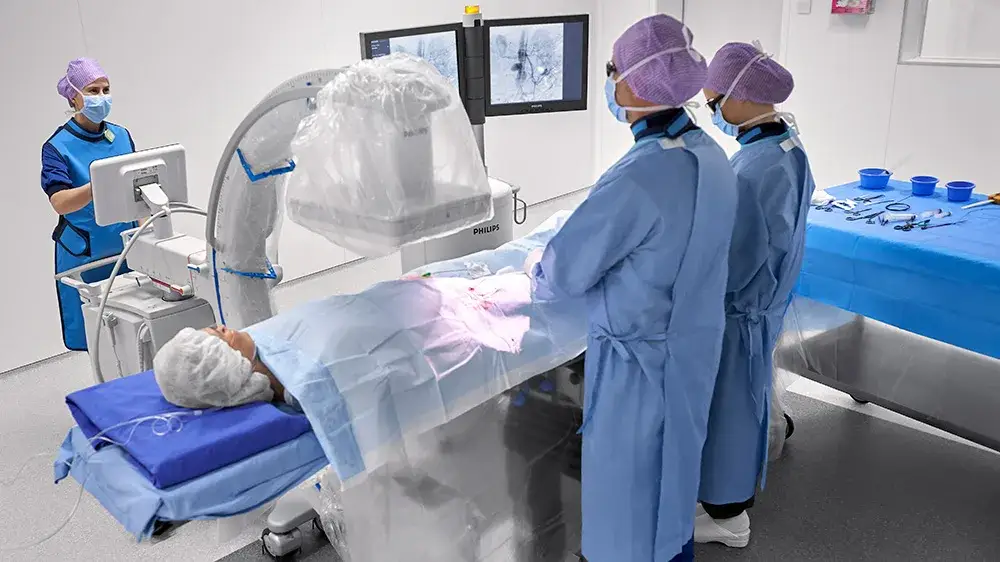
Medical imaging represents one of artificial intelligence’s most successful applications.
Radiologists analyze hundreds of images every day, making fatigue a genuine concern.
Artificial intelligence works like a second pair of expert eyes.
It quickly reviews:
- X-rays
- CT scans
- MRI images
- Mammograms
- Ultrasounds
- PET scans
AI identifies suspicious abnormalities that deserve closer attention.
Many healthcare providers now combine physician expertise with intelligent software because research shows that together they often achieve higher diagnostic accuracy than either could alone.
One important example is ai-driven healthcare diagnostics, where AI supports clinicians by detecting diseases such as breast cancer, lung cancer, diabetic retinopathy, and stroke earlier than traditional methods alone.
Instead of replacing radiologists, AI increases confidence while reducing missed diagnoses.
Real-World Examples of AI Transforming Patient Care
The benefits of artificial intelligence are already visible in hospitals around the world.
Emergency departments use AI to prioritize patients requiring immediate treatment.
Cardiologists rely on intelligent ECG analysis to identify abnormal heart rhythms.
Dermatologists use image recognition software to evaluate suspicious skin lesions.
Pathologists analyze digital microscope slides with machine learning assistance.
Meanwhile, wearable devices monitor heart rate, sleep quality, oxygen levels, and physical activity, allowing physicians to detect health changes between clinic visits.
These practical applications demonstrate that artificial intelligence has moved beyond experimental research into everyday healthcare.
Patients receive faster diagnoses, physicians gain better decision support, and hospitals improve efficiency without compromising quality of care.
Emerging AI Technologies Shaping Modern Treatment
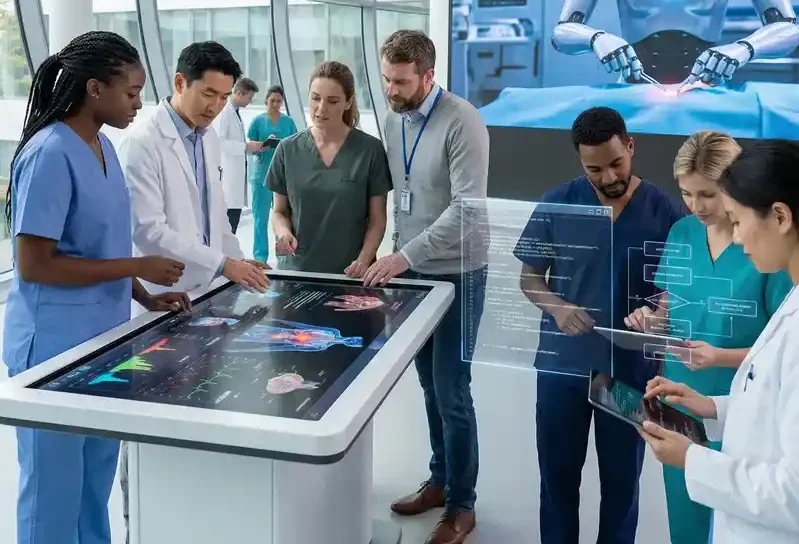
Healthcare is evolving rapidly as artificial intelligence becomes more advanced. New technologies are helping physicians make quicker decisions while improving patient safety and treatment quality. Instead of relying on one source of information, AI combines medical records, imaging, laboratory data, wearable devices, and genetic information to create a complete picture of a patient’s health.
One exciting development is the use of digital twins. A digital twin is a virtual model of a patient that allows doctors to predict how different treatments may work before they are given in real life. Although this technology is still developing, early research suggests it could significantly improve personalized care.
Natural Language Processing (NLP) is another innovation changing healthcare. Every day, doctors write thousands of clinical notes. NLP allows computers to understand these notes, organize important information, and identify useful patterns without requiring physicians to manually review every document.
Remote patient monitoring is also becoming increasingly popular. Smart watches, wearable ECG monitors, glucose sensors, and blood pressure devices continuously collect health data. AI analyzes this information in real time and alerts healthcare providers if something unusual occurs.
These innovations help move healthcare away from reactive treatment and toward proactive prevention.
Benefits of AI-Driven Healthcare Innovations for Patients
The biggest advantage of ai-driven healthcare innovations is improved patient care. Healthcare professionals gain valuable support, but patients experience the greatest benefits.
Some of the most important advantages include:
1. Faster Diagnosis
AI can analyze medical information within seconds, allowing doctors to begin treatment sooner.
2. More Accurate Decisions
Artificial intelligence helps identify subtle patterns that may be difficult for humans to detect.
3. Personalized Treatment
Every patient is different. AI considers genetics, lifestyle, medical history, and current health conditions when recommending therapies.
4. Better Preventive Care
Predictive algorithms identify risks before diseases become severe, allowing earlier intervention.
5. Reduced Medical Errors
Decision-support systems help physicians double-check medications, allergies, laboratory findings, and diagnoses.
6. Greater Access to Specialists
Patients living in rural or underserved communities benefit from AI-assisted healthcare that supports local physicians with expert recommendations.
Together, these improvements create safer, faster, and more efficient healthcare experiences.
AI Applications Across Medical Specialties
Artificial intelligence is making an impact across nearly every branch of medicine.
| Medical Specialty | How AI Helps | Patient Benefit |
| Radiology | Image interpretation | Earlier disease detection |
| Cardiology | ECG analysis | Faster heart disease diagnosis |
| Oncology | Tumor analysis | Personalized cancer treatment |
| Neurology | Brain imaging | Quicker stroke recognition |
| Dermatology | Skin image evaluation | Early melanoma detection |
| Ophthalmology | Retinal screening | Prevention of vision loss |
| Pathology | Digital slide analysis | Improved laboratory accuracy |
| Emergency Medicine | Patient triage | Faster emergency response |
These applications continue expanding as artificial intelligence becomes more sophisticated.
Healthcare Professionals and AI: Working Together
One common misconception is that artificial intelligence will replace doctors.
In reality, AI performs best when it works alongside healthcare professionals.
Physicians provide clinical experience, emotional intelligence, communication, and ethical judgment. AI contributes speed, pattern recognition, and data analysis.
This partnership creates stronger decision-making than either could achieve independently.
Doctors remain responsible for diagnosis, treatment decisions, and patient communication, while AI serves as a powerful decision-support tool.
This collaborative model represents the future of medicine.
The Future of AI in Healthcare
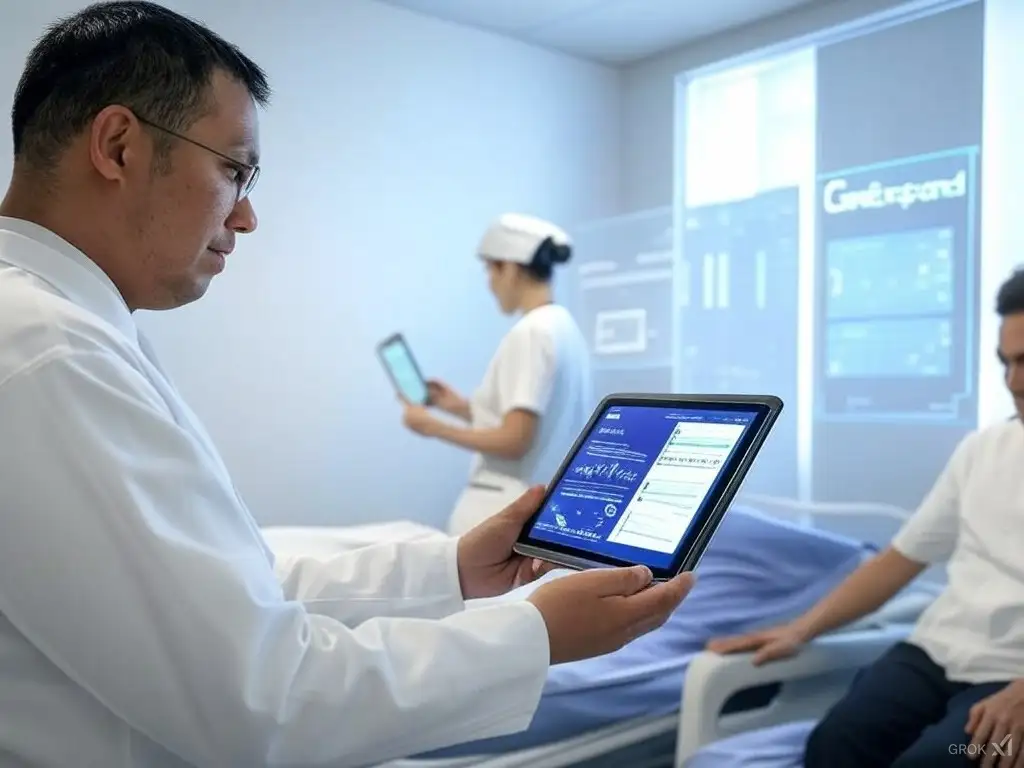
Experts believe the next decade will bring even more impressive advancements.
Future developments may include:
- AI-assisted robotic surgery planning
- Earlier prediction of chronic diseases
- Faster drug discovery
- Personalized preventive healthcare
- Improved genomic medicine
- Smart hospitals with automated workflows
- Better integration of wearable devices
Healthcare organizations are also investing in ai-driven healthcare solutions that connect multiple technologies into unified clinical platforms.
Researchers continue developing top-rated systems for ai-driven healthcare tasks, allowing physicians to analyze medical images, laboratory data, and patient histories within a single intelligent environment.
The broader movement toward ai driven healthcare reflects a healthcare system focused on prediction, prevention, personalization, and precision rather than simply treating illness after it occurs.
Expert Insight
Dr. Eric Topol, one of the world’s leading experts in digital medicine, has emphasized that artificial intelligence should enhance—not replace—the physician-patient relationship. By automating repetitive analytical work, AI gives healthcare professionals more time to focus on communication, empathy, and personalized care.
This balanced approach is becoming the foundation of modern healthcare.
Conclusion
AI-driven healthcare innovations are transforming treatment plans by helping healthcare professionals make faster, smarter, and more personalized decisions. From predictive analytics and medical imaging to personalized medicine and remote patient monitoring, artificial intelligence is improving nearly every aspect of patient care.
Although challenges such as privacy, transparency, and regulation remain important, the overall direction is clear. AI is becoming an essential partner in modern healthcare rather than a replacement for medical professionals.
As technology continues to advance, patients can expect earlier diagnoses, more effective treatments, and healthcare systems that focus increasingly on prevention instead of reaction. The future of medicine will be built on collaboration between human expertise and intelligent technology, creating better outcomes for everyone.
Frequently Asked Questions
1. What are AI-driven healthcare innovations?
They are artificial intelligence technologies that help improve diagnosis, treatment planning, patient monitoring, and healthcare management by analyzing medical data more efficiently.
2. How does AI improve treatment plans?
AI reviews medical records, imaging, laboratory results, and patient history to recommend personalized treatments that are more likely to succeed.
3. Is AI replacing doctors?
No. AI supports healthcare professionals by providing decision assistance, while doctors continue making final clinical decisions and caring for patients.
4. What are the biggest benefits of AI in healthcare?
Major benefits include earlier disease detection, improved accuracy, personalized medicine, reduced medical errors, faster diagnosis, and lower healthcare costs.
5. What does the future of AI in healthcare look like?
Future developments include predictive medicine, digital twins, advanced robotic surgery, smarter hospitals, personalized therapies, and broader use of intelligent healthcare systems that improve patient outcomes.
⭐ Make MindLiva Your Preferred Source on Google
Get trusted health, wellness, and lifestyle articles from MindLiva.
Add MindLiva
Samie Babaei is a medical science student at Shahid Beheshti University of Medical Sciences with a strong interest in health, wellness, and medical research. As a health writer and researcher at MindLiva, she focuses on creating clear, evidence-based content that helps readers better understand health and well-being.