



How to Relieve Constipation in Babies Quickly: Top Tips
Is your baby grunting, turning red, or pulling their legs toward their stomach without producing a bowel movement? It is easy to assume that something is blocked, especially when your baby appears uncomfortable.
However, learning how to relieve constipation in babies quickly begins with checking whether the stool is truly hard. Young babies often strain while passing perfectly soft stool because they are still learning to coordinate their abdominal and pelvic muscles.
This guide explains safe, age-based steps that may help, including feeding checks, gentle movement, formula preparation, and suitable foods for babies already eating solids. Moreover, it covers the treatments parents should avoid and the warning signs that need prompt medical attention.
Medical safety note: Babies under three months, premature babies, and infants with feeding or growth concerns should be assessed more cautiously. Contact a pediatrician before giving water, juice, medicine, suppositories, or herbal products.
How to Relieve Constipation in Babies Quickly and Safely
There is no safe method that can guarantee an immediate bowel movement. The quickest responsible approach is to check the baby’s age, stool texture, feeding pattern, wet diapers, and general behavior.
Start with these steps:
- Confirm that the stool is hard or painful.
- Check that the baby is feeding normally.
- Prepare formula using the exact instructions.
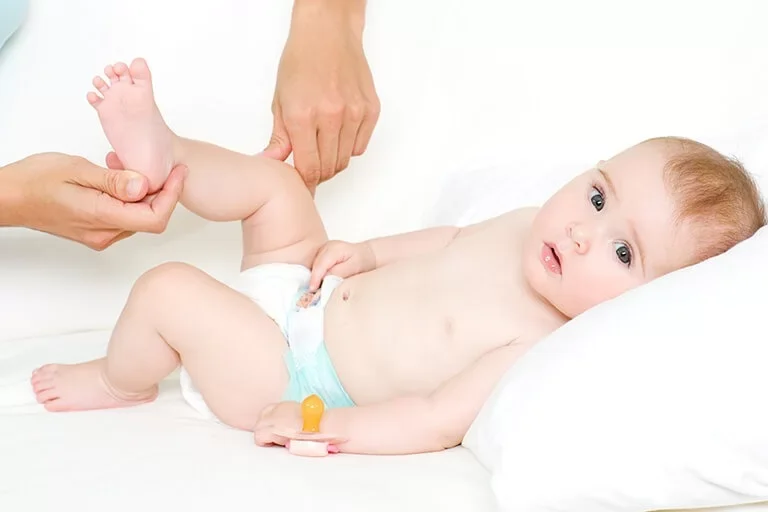
- Try gentle bicycle-leg movements.
- Call a pediatric professional when the baby is very young or symptoms continue.
- Seek urgent care when warning signs appear.
A baby who strains for a few minutes and then passes soft stool may not need treatment. By contrast, dry pellets, blood on a firm stool, repeated unsuccessful straining, and a swollen abdomen deserve closer attention.
Understanding Constipation Symptoms in Babies

Stool frequency varies widely during infancy. Some babies have several bowel movements each day, while others go a day or more between stools.
For that reason, texture and comfort often matter more than the calendar. Signs of a genuine problem may include:
- Dry, firm, or pellet-like stool
- Crying during a bowel movement
- More than 10 minutes of unsuccessful straining
- A firm or swollen stomach
- Reduced appetite
- Blood linked to hard stool
- A clear change from the baby’s normal pattern
AAP guidance notes that young infants may grunt, turn red, draw up their legs, or appear to work hard while passing stool. This can be normal when the final stool is soft and the baby otherwise feeds and behaves normally.
Normal Straining Versus a Real Problem
Newborns must learn to increase pressure in the abdomen while relaxing the muscles at the bottom of the digestive tract. At first, those actions may not happen at the same time.
As a result, a healthy baby may grunt and cry briefly before passing soft stool. This pattern is sometimes called infant dyschezia, although parents do not need to diagnose it themselves.
Do not repeatedly stimulate the rectum in an attempt to “teach” the baby how to go. In most cases, normal coordination develops naturally.
Age Matters More Than Any Quick Remedy
Advice for an eight-month-old cannot automatically be used for an eight-week-old. Babies’ fluid needs, feeding patterns, and digestive development change quickly during the first year.
Newborns and Babies Under Eight Weeks
A very young baby should be managed carefully. During the first month, infrequent stool in a breastfed baby may sometimes mean the baby is not receiving enough milk.
The NHS advises parents to seek professional guidance when a baby younger than eight weeks has not passed stool for two or three days. For a breastfed baby between four days and six weeks, no stool for 24 to 48 hours can justify a feeding review, especially when wet diapers or weight gain are also concerning.
Check whether the baby:
- Latches and feeds actively
- Seems satisfied after feeding
- Has their usual number of wet diapers
- Is gaining weight as expected
- Appears alert during normal wake periods
Do not give a newborn plain water, solid food, an enema, or an over-the-counter laxative. Call the pediatrician or feeding-support professional instead.
Babies Under Six Months Who Drink Milk Only
Breast milk or correctly prepared infant formula should remain the main source of nutrition and fluid. Do not dilute formula or provide extra drinks unless a clinician gives age-specific instructions.
Current AAP feeding guidance advises against routine fruit juice during the first year. Although some older symptom-management guidance discusses small amounts of apple or pear juice after one month, these recommendations should not be applied without pediatric advice.
This difference is important. A doctor may occasionally recommend a specific treatment for a symptom, but that does not make juice a routine drink for infants.
Babies Around Six Months and Older
Once a baby is developmentally ready and has started solid foods, food choices may help soften firm stool.
Suitable options can include age-appropriate portions of:
- Puréed pears
- Mashed or puréed prunes
- Peaches
- Peas
- Beans or lentils prepared to a safe texture
- Oatmeal
- Soft vegetables
Add new foods one at a time. Moreover, use a texture that matches the baby’s feeding skills to reduce choking risk.
NIDDK notes that no standard fiber target exists for infants under one year. Parents should therefore discuss major food or formula changes with the child’s healthcare professional.
Gentle Methods That May Help a Baby Poop
These techniques may support relaxation and normal digestive movement. They should feel comfortable and should never involve strong pressure.
Try Bicycle-Leg Movements

Place the baby on their back on a safe, flat surface. Hold the lower legs gently and move them in a slow cycling pattern.
Continue briefly while watching the baby’s face and body. Stop when the baby seems distressed, resists strongly, or cries as though in pain.
The NHS includes gentle bicycle movements among its home-care suggestions for babies having difficulty passing stool.
Use a Very Gentle Tummy Massage
When the baby is calm, place warm hands on the abdomen and make light circular movements. The touch should be soft enough that the skin moves slightly without deep pressure.
Avoid massage immediately after feeding because it may increase spitting up. Also, stop if the abdomen feels unusually swollen, hard, or painful.
A practical point worth emphasizing is that more pressure is not more effective. Deep pushing can hurt a baby and will not safely remove an obstruction.
Offer a Comfortably Warm Bath
A warm bath can help a tense baby relax. Support the head and neck, test the water carefully, and remain within arm’s reach at all times.
The bath is a comfort measure rather than a guaranteed treatment. It will not correct poor milk intake, dehydration, illness, or a structural bowel condition.
Continue Normal Milk Feeds
Offer breast milk or formula according to the baby’s usual feeding plan. Poor feeding can reduce fluid intake and may make stools firmer.
However, forcing an unusually large feed is not helpful. Watch the baby’s hunger and fullness cues.
Contact the pediatrician when the baby is feeding less, vomiting repeatedly, producing fewer wet diapers, or becoming unusually sleepy.
Check Formula Preparation Carefully
Incorrectly mixed formulas can contribute to health problems. Too little water makes the feed overly concentrated, which can place extra demand on the baby’s kidneys and digestive system and may cause dehydration.
Always:
- Wash your hands and clean the preparation area.
- Use safe water.
- Measure the water first.
- Add the exact number of level scoops stated on the container.
- Use only the scoop supplied with that formula.
- Never add extra powder, cereal, sugar, or another ingredient.
The CDC advises following the container’s precise water-to-powder ratio. It also notes that babies younger than two months require extra precautions because powdered formula is not sterile.
Do not add extra water to make the formula “lighter.” Excess dilution may prevent the baby from receiving enough energy and nutrients.
Moreover, avoid homemade formula. It may contain unsafe levels of nutrients or harmful bacteria.
What Causes Constipation in Babies?
The likely reason often depends on age and feeding stage.
Possible triggers include:
- Changing from breast milk to formula
- Formula prepared with too much powder
- Low milk intake
- Illness or reduced feeding
- Dehydration
- Starting solid foods
- Eating several low-fiber foods after weaning
- Certain prescribed medicines or supplements
- Rare thyroid, nerve, or structural bowel conditions
In older babies, stool may become firmer when solid foods replace some milk feeds. For example, a baby eating large amounts of low-fiber cereal without enough fruit, vegetables, or suitable fluid may have more difficulty.
Rarely, an underlying condition such as Hirschsprung disease or hypothyroidism can interfere with bowel function. A doctor considers these possibilities based on the baby’s history, examination, growth, and other symptoms.
What Not to Do When a Baby Is Constipated
The desire to provide fast comfort is understandable. However, several popular home methods can injure a baby or delay the correct diagnosis.
Do Not Use the “7-Second Poop Trick”
There is no standard pediatric treatment in the cited clinical guidance called the 7-second poop trick. The term usually refers to social-media videos involving massage, leg positioning, pressure, or rectal stimulation.
Gentle bicycle movements may be reasonable, but no technique can safely promise a bowel movement in seven seconds. Do not press hard on the abdomen or force the legs against the body.
Do Not Pull Stool Out
When a firm stool is visible at the opening, do not pull it with fingers, tweezers, cotton swabs, or another object.
This can tear delicate tissue, cause bleeding, or push stool farther inward. Contact the pediatrician for instructions, especially when the baby is crying, bleeding, or repeatedly unable to pass the stool.
Avoid Rectal Stimulation
Do not repeatedly insert a thermometer, cotton swab, soap, or another item to trigger a bowel movement.
Rectal stimulation can cause injury and may make it harder to understand why the baby cannot pass stool naturally. It should be performed only when a clinician provides a specific medical reason and clear instructions.
Never Give Adult Medicines
Do not give stimulant laxatives, enemas, mineral oil, herbal teas, magnesium products, or adult stool softeners.
NIDDK states that children should not receive a laxative unless a doctor recommends it. The correct treatment and dose depend on age, weight, symptoms, and the possible cause.
Do Not Start Solids Too Early
Prunes, pears, oatmeal, and vegetables may be useful after a baby is ready for complementary foods. They are not treatments for a newborn or a milk-only young infant.
Starting solids before the baby is developmentally ready can replace important breast milk or formula and create feeding risks.
Why Adult Digestive Advice Does Not Apply
General searches may produce pages about constipation during pregnancy, constipation relief for adults, or a high-fiber foods chart for constipation. Those recommendations may include large glasses of water, exercise, coffee, fiber supplements, or adult medicines.
Parents may also encounter questions such as does iron cause constipation or do steroids cause constipation. These relate to specific medicines and require a review of the individual patient’s treatment.
Similarly, articles targeting what helps with constipation, how to relieve constipation, and broad constipation relief may not separate newborns from toddlers.
Baby care must be based on exact age, milk intake, feeding stage, wet diapers, growth, stool texture, and medical symptoms. Never scale down an adult remedy and assume it is safe for an infant.
When to Call the Pediatrician

Contact a healthcare professional when:
- A baby under eight weeks has not passed stool for two or three days
- Stool is repeatedly dry, hard, or pellet-like
- The baby strains for more than 10 minutes without success
- Blood appears with hard stool
- Feeding becomes weaker or less frequent
- Wet diapers decrease
- The problem keeps returning
- You are considering juice, medicine, or a suppository
- The baby is not gaining weight normally
Keeping a short feeding and diaper record can make the consultation more useful. Record feed times, formula preparation, wet diapers, stool appearance, vomiting, and changes in behavior.
A doctor may examine the abdomen, check hydration and growth, review medicines, and decide whether testing or prescribed treatment is necessary.
Warning Signs That Need Urgent Care
Seek urgent medical help when difficult stool passage occurs with:
- A swollen or very firm abdomen
- Green vomit
- Repeated vomiting
- Refusal to feed
- Extreme sleepiness or weakness
- Breathing difficulty
- A large amount of blood
- Signs of dehydration
- Severe, constant pain
- A baby who appears seriously unwell
NIDDK recommends prompt medical assessment when a child has blood, abdominal swelling, constant pain, vomiting, or weight loss.
Fever in a Baby Under Three Months
A rectal temperature of 100.4°F or 38°C or higher in a baby younger than three months requires immediate contact with a pediatrician, even when the baby has no other obvious symptoms.
Do not wait for the fever to disappear. Also, do not give fever medicine to a young baby unless a healthcare professional provides specific instructions.
A Practical Age-Based Action Plan
For a Newborn
- Check feeding and wet diapers.
- Look at stool texture rather than frequency alone.
- Continue normal milk feeds.
- Try only gentle leg movement when the baby is comfortable.
- Contact the pediatrician early.
- Do not give water, juice, solids, or medicine independently.
For a Milk-Fed Older Infant
- Confirm correct formula preparation.
- Continue normal breast milk or formula feeds.
- Use gentle bicycle movements and light massage.
- Ask the pediatrician before using any oral remedy.
- Watch for changes in feeding, wet diapers, and behavior.
For a Baby Eating Solids
- Offer age-safe pears, prunes, peaches, peas, oatmeal, or legumes.
- Provide a varied diet rather than relying on one food.
- Offer small amounts of water with meals according to pediatric feeding guidance.
- Keep breast milk or formula as an important part of the diet.
- Seek advice when symptoms persist or recur.
Conclusion
Understanding how to relieve constipation in babies quickly is less about finding a miracle trick and more about choosing the safest step for the baby’s age.
For many babies, checking feeding, preparing formula correctly, moving the legs gently, and introducing suitable foods after solids begin may help. However, newborns and young infants need a more cautious approach.
In short, focus on stool texture, feeding, wet diapers, and behavior. Avoid forceful massage, rectal stimulation, adult medicines, and unapproved drinks. When symptoms persist or the baby seems unwell, contacting a pediatrician is the quickest safe decision.
Frequently Asked Questions
What Is the 7 Second Poop Trick?
It is a social-media term rather than a recognized pediatric treatment. Gentle leg movement may support relaxation, but no safe method can guarantee that a baby will poop within seven seconds.
What Is a Natural Laxative for Babies?
Breast milk naturally supports soft stools in young infants. For babies eating solids, age-safe pears or prunes may help, but newborns should not receive foods, juice, or herbal remedies without medical advice.
What Not to Do When a Baby Is Constipated?
Do not give adult laxatives, enemas, mineral oil, herbal tea, unapproved juice, or extra formula powder. Avoid forceful abdominal pressure and inserting objects into the rectum.
What to Do if Baby Poop Is Stuck?
Do not pull visible stool out or insert a tool. Keep the baby calm and call the pediatrician for guidance, especially when there is bleeding, severe crying, swelling, or vomiting.
How to Help a Baby Poop Quickly?
Check feeding, prepare formula correctly, try gentle bicycle movements, and use age-suitable foods only after solids begin. Seek medical advice promptly for newborns, persistent symptoms, or warning signs.
⭐ Make MindLiva Your Preferred Source on Google
Get trusted health, wellness, and lifestyle articles from MindLiva.
Add MindLiva
Samie Babaei is a medical science student at Shahid Beheshti University of Medical Sciences with a strong interest in health, wellness, and medical research. As a health writer and researcher at MindLiva, she focuses on creating clear, evidence-based content that helps readers better understand health and well-being.