



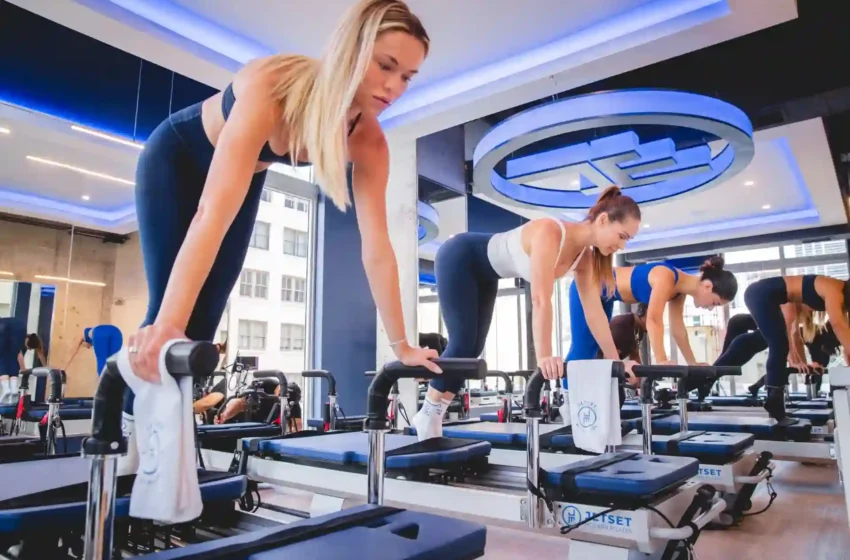
Jet Set Pilates: Your Ultimate Guide to Stylish Fitness
Have you noticed how Pilates has moved from a quiet studio workout into one of the most talked-about fitness trends?
Jet Set Pilates is part of that shift. Its modern approach to reformer-based training combines controlled movements with a polished studio atmosphere and a strong focus on consistency.
However, the appeal is not simply about stylish studios or social media.
Reformer Pilates can challenge the core, legs, arms, posture, balance, and muscular endurance while keeping movements controlled and low impact. That combination makes it attractive to people who want a demanding workout without relying entirely on heavy weights or high-impact exercise.
In this guide, we will explore what Jet Set Pilates is, how its workouts work, who can benefit, what beginners should know, and how reformer Pilates compares with other popular fitness options.
What Is Jet Set Pilates?
Jet Set Pilates is a boutique Pilates concept centered around reformer-style workouts.
The format reflects a broader change in boutique fitness. Instead of simply providing exercise equipment, modern studios often create a complete experience around the workout.
That experience may include:
- Instructor-led sessions
- Music
- Structured class formats
- Group training
- Modern studio design
- Repeatable workout routines
- A strong community element
The reformer itself remains central.
It allows instructors to use resistance and controlled movement to create exercises that challenge different muscle groups.
Why is the concept attracting attention?
Modern consumers increasingly want workouts that feel efficient.
A busy professional may not want to spend 90 minutes at a traditional gym.
A reformer class can provide a focused session with a clear beginning, middle, and end.
Moreover, the group setting can create accountability.
When you book a class, you have a specific time to show up. That simple commitment can make exercise easier to maintain.
How a Jet Set Pilates Workout Works
A typical reformer class involves a series of movements performed on specialized equipment.
The carriage moves along a track while springs provide resistance.
Depending on the exercise, you may push the carriage with your feet, pull straps with your arms, stabilize your body, or maintain a challenging position while the carriage moves.
The workout may target several areas in one session.
For example, a sequence might include:
- Lower-body exercises
- Core movements
- Glute-focused work
- Upper-body resistance
- Balance exercises
- Mobility work
The exact structure depends on the studio, instructor, and class format.
However, the central idea remains controlled resistance and precise movement.
Jet Set Pilates and the Rise of Reformer Fitness
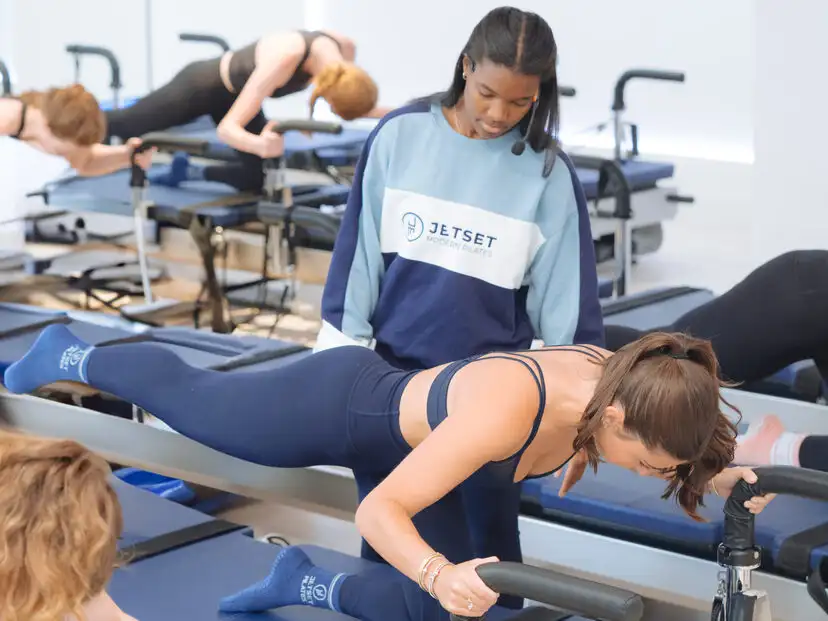
Reformer Pilates is not new.
The equipment has been associated with Pilates training for decades.
What has changed is the way modern fitness companies present it.
Today, reformer workouts are often positioned as boutique experiences rather than simply rehabilitation or traditional Pilates sessions.
This has expanded the audience.
People who might never have considered Pilates may now discover it through social media, fitness influencers, or friends.
The social side matters
Exercise adherence is influenced by more than the physical workout.
Enjoyment, convenience, routine, and social connection can all affect whether someone continues exercising.
That is one reason boutique classes can be effective for some people.
The class becomes an appointment rather than another task on a long to-do list.
What Are the Benefits of Jet Set Pilates?
The main benefits come from reformer-based Pilates itself.
1. Stronger core control
Pilates places significant attention on trunk stability.
Many exercises require you to maintain control through the torso while the arms or legs move.
This can improve your ability to stabilize your body during exercise.
2. Muscular endurance
Reformer exercises can create sustained tension.
You may not use extremely heavy resistance, but repeated controlled movements can make muscles work hard.
This is particularly noticeable in the legs and glutes.
3. Improved body awareness
Pilates requires attention to alignment and movement.
You have to notice where your pelvis, ribs, shoulders, and feet are positioned.
Over time, that awareness can help you become more conscious of movement quality.
4. Low-impact exercise
Reformer Pilates is generally low impact.
There is less repetitive jumping and landing than in many traditional cardio workouts.
That can make it appealing to people who prefer controlled movement.
However, low impact does not mean low intensity.
A well-designed class can be surprisingly challenging.
5. Balance and coordination
The moving carriage adds an element of instability.
You must control your body while the equipment moves beneath you.
That can create a useful coordination challenge.
Jet Set Pilates for Beginners
If you have never used a reformer, the equipment can look intimidating.
There are straps, springs, bars, a carriage, and several moving parts.
Fortunately, you do not need to understand everything before your first class.
A good beginner session should introduce the equipment gradually.
What should beginners focus on?
Do not worry about matching the most experienced person in the room.
Instead, focus on:
- Learning the equipment
- Understanding resistance
- Following instructor cues
- Moving slowly
- Controlling your breathing
- Keeping good alignment
- Asking questions when something is unclear
The first few sessions are about learning.
Your body will become more efficient as you repeat the movements.
Start with realistic expectations
You may feel muscles working that you rarely notice during everyday activities.
That does not mean every exercise should cause extreme soreness.
A productive Pilates session should challenge you without turning every workout into a test of endurance.
What Should You Wear to Jet Set Pilates?
Comfortable, fitted clothing usually works well for reformer Pilates.
Loose clothing can sometimes get in the way of straps or equipment.
Many people choose:
- Leggings
- Fitted shorts
- Supportive tops
- Grip socks
Grip socks can provide additional traction and are commonly used in Pilates studios.
Your main goal is simple: wear something that allows you and your instructor to see your alignment.
How Often Should You Do Jet Set Pilates?
There is no single frequency that works for everyone.
For a beginner, two sessions per week can be a reasonable starting point.
If your recovery is good, you may eventually increase your training frequency.
For example:
Monday: Reformer Pilates
Tuesday: Walking
Wednesday: Rest
Thursday: Reformer Pilates
Friday: Strength training
Saturday: Light cardio
Sunday: Rest or mobility
This approach gives your body variety.
Moreover, Pilates does not have to replace other forms of exercise.
It can complement strength training and cardiovascular activity.
Jet Set Pilates vs. Traditional Gym Training
The question is not necessarily which one is better.
It is more useful to ask what you want from your training.
| Reformer Pilates | Traditional Gym |
| Controlled movements | Wide range of training styles |
| Strong core focus | Greater emphasis on progressive loading |
| Low impact | Can include high or low impact |
| Guided classes | Often self-directed |
| Coordination and stability | Strength, hypertrophy, cardio |
| Group environment | Flexible individual training |
Someone trying to build maximum muscle mass may benefit greatly from conventional resistance training.
Someone seeking core control, mobility, muscular endurance, and a structured class may prefer reformer Pilates.
Many people can benefit from combining both.
Jet Set Pilates and Reformer Equipment
The equipment is one of the most important parts of the experience.
Traditional Pilates Reformers use a carriage, springs, straps, footbar, and other components to provide resistance and support different exercises.
The design allows instructors to modify movements for different fitness levels.
What about the Aero Pilates Reformer?
The Aero Pilates Reformer is another example of equipment aimed at bringing reformer-style exercise into the home.
Home reformers can be useful for people who enjoy Pilates but cannot regularly attend a studio.
However, equipment quality varies.
Before buying a home machine, check:
- Frame stability
- Carriage size
- Resistance system
- Weight capacity
- User height limits
- Warranty
- Storage requirements
Do not choose equipment based solely on appearance.
Jet Set Pilates vs. Home Reformer Training
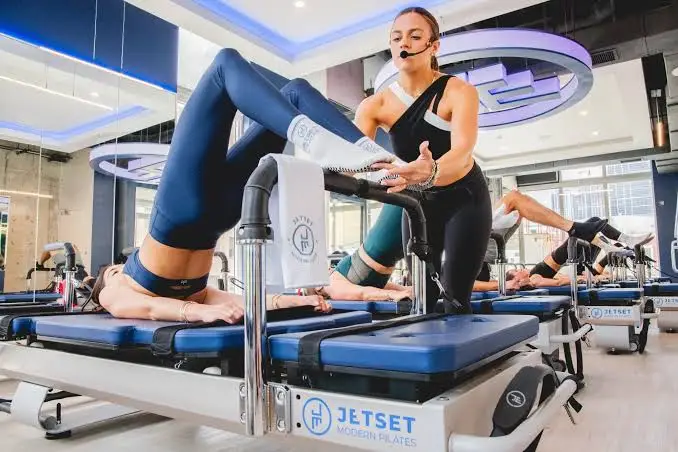
Studio training offers something home workouts cannot fully reproduce: a live instructor.
An instructor can demonstrate movements, give verbal corrections, and change the workout based on the class.
Home training offers flexibility.
You can exercise whenever you want and avoid travel time.
A Portable Pilates Reformer can make home training more practical for people with limited space.
However, beginners should consider learning the fundamentals with qualified guidance before attempting complex exercises independently.
What Does a Pilates Reformer Workout Feel Like?
A Pilates Reformer Workout can feel different from conventional strength training.
You may not lift a heavy barbell.
Instead, you may hold a position while your muscles work continuously against spring resistance.
That can create a deep muscular fatigue.
For example, a series of controlled leg movements may initially feel easy.
After several repetitions, however, your muscles may begin to shake.
This is one reason beginners sometimes underestimate reformer Pilates.
The movements may look small.
The effort is not necessarily small.
Core Strength and the Pilates Roll Up
The Pilates Roll Up is a classic mat movement that demonstrates the type of control Pilates aims to develop.
It requires the practitioner to move from lying to sitting while controlling the spine and trunk.
Although it is not a reformer exercise, skills developed through reformer Pilates can complement this type of mat work.
The key lesson is important:
Control matters more than speed.
That principle applies across many Pilates exercises.
Pilates Ring Exercises and Reformer Training
Small props can add variety to a Pilates routine.
Pilates Ring Exercises can challenge the inner thighs, arms, chest, glutes, and core.
For example, squeezing a ring between the thighs during a controlled exercise can add an extra resistance challenge.
However, props are optional.
You do not need a collection of equipment to benefit from Pilates.
A well-designed program can be effective with a reformer or simply a mat.
How Jet Set Pilates Can Support a Balanced Fitness Plan
Pilates works best when it is part of a broader approach to health and fitness.
A balanced routine can include:
Resistance training
Strength training helps build and maintain muscle and can support bone health.
Cardiovascular exercise
Walking, running, cycling, swimming, and other activities can improve cardiovascular fitness.
Mobility work
Mobility exercises can help you move comfortably through different ranges of motion.
Recovery
Rest days give your body time to adapt.
In short, Pilates should complement your overall fitness strategy rather than become your only form of movement.
Is Jet Set Pilates Good for Weight Loss?
This is one of the most common questions about modern Pilates.
The answer requires some context.
Pilates can increase physical activity and support muscle endurance. However, fat loss primarily depends on maintaining an appropriate energy balance over time.
Your daily movement, nutrition, sleep, stress, and exercise habits all matter.
For example, attending three Pilates classes each week is useful.
But if you remain inactive for the rest of the week, your total energy expenditure may still be relatively low.
A practical strategy is to combine Pilates with regular walking and, when appropriate, resistance or cardiovascular training.
Can Jet Set Pilates Build Muscle?
Pilates can improve muscular strength and endurance.
This is especially true for beginners and people who are new to resistance-based exercise.
However, muscle growth has limits.
If your primary goal is maximizing muscle size, conventional progressive resistance training may provide more options for increasing load over time.
Pilates can still play an important supporting role.
It can improve control, stability, movement quality, and muscular endurance.
How Boutique Pilates Studios Create Community
The fitness industry has learned that people often return to places where they feel connected.
Boutique studios can create this feeling through small classes, familiar instructors, regular schedules, and shared goals.
That community can become a motivation tool.
For example, if you know your instructor and regularly see the same people in class, skipping a workout may feel less appealing.
However, community should support your fitness goals rather than pressure you into exercising beyond your ability.
Common Jet Set Pilates Mistakes
Trying to keep up with everyone
Different bodies have different training histories.
Focus on your own technique.
Using too much resistance
More resistance does not automatically mean a better workout.
The right resistance allows you to maintain control.
Ignoring modifications
Modifications exist for a reason.
Use them when an exercise is too difficult or uncomfortable.
Treating soreness as the goal
Soreness is not a reliable measure of workout quality.
A productive session can challenge you without leaving you unable to move comfortably the next day.
Neglecting recovery
More classes are not always better.
Your body needs time to adapt.
Personal Insight: The Best Part May Be the Routine
One of the most useful things about boutique Pilates is not necessarily a particular exercise.
It is the routine.
When a workout is scheduled, structured, and enjoyable, it becomes easier to repeat.
That consistency is often more valuable than searching for the “perfect” exercise.
Fitness results are usually built through months of reasonable training rather than one intense week.
Therefore, choose a format you can realistically maintain.
If a studio atmosphere motivates you, group reformer classes may be ideal.
If convenience matters more, home Pilates may make more sense.
Safety Tips for Jet Set Pilates
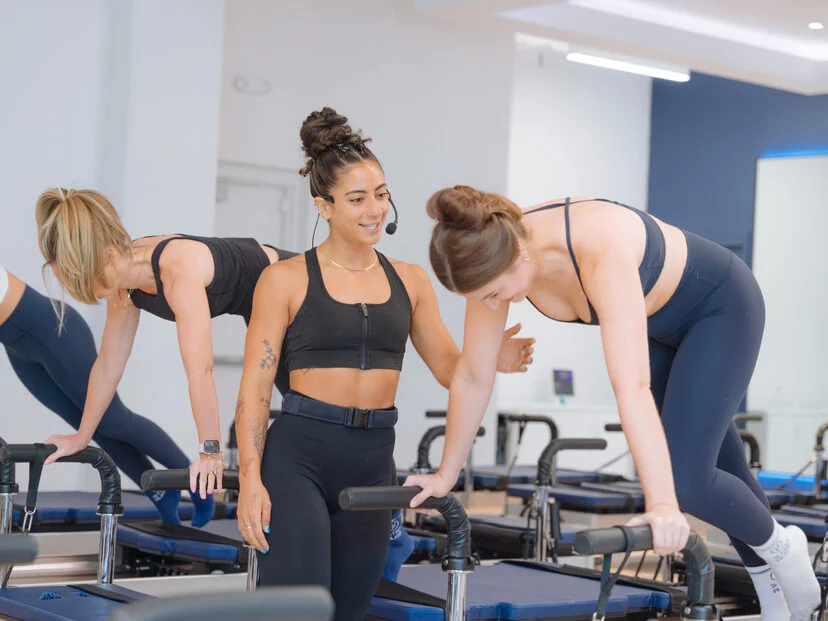
Pilates is generally considered a controlled form of exercise, but technique still matters.
During a class:
- Listen carefully to the instructor.
- Start with manageable resistance.
- Maintain controlled movements.
- Do not force a joint into an uncomfortable position.
- Ask for a modification when necessary.
- Tell the instructor about relevant physical limitations.
- Stop if you experience sharp or unusual pain.
If you have an injury or medical condition, speak with an appropriate healthcare professional before beginning a new exercise program.
Conclusion
Jet Set Pilates represents a modern version of boutique reformer fitness that combines structured exercise, instructor guidance, community, and a polished studio experience.
Its popularity makes sense.
Reformer Pilates can challenge the core, legs, arms, balance, coordination, and muscular endurance while keeping movements controlled and relatively low impact.
However, the best workout is not necessarily the trendiest one.
It is the one that fits your body, schedule, goals, and preferences.
If you enjoy the energy of a boutique studio, Jet Set Pilates may make exercise feel more engaging and consistent. If you prefer privacy and flexibility, home equipment can provide another route.
In short, use Pilates as a tool—not a trend you feel pressured to follow.
Start at an appropriate level, learn proper technique, progress gradually, and combine Pilates with other forms of movement when appropriate.
That is how a stylish workout can become a sustainable fitness habit.
FAQs About Jet Set Pilates
What is Jet Set Pilates?
Jet Set Pilates is a boutique Pilates concept centered on reformer-based workouts. It combines structured Pilates exercises with an instructor-led studio experience.
Is Jet Set Pilates suitable for beginners?
Yes. Beginners can participate when they choose an appropriate class level and follow instructor guidance. Learning the equipment and basic movements should be the first priority.
How many times a week should I do Jet Set Pilates?
Two sessions per week can be a practical starting point. More experienced participants may train more often, depending on their recovery and overall fitness routine.
Can Jet Set Pilates help with weight loss?
It can contribute to your overall physical activity, but weight loss depends on many factors, including nutrition, total activity, energy balance, sleep, and consistency.
Is Jet Set Pilates better than going to the gym?
Not necessarily. Pilates and gym training serve different purposes. Pilates emphasizes controlled movement, stability, and muscular endurance, while gym training offers more options for heavy resistance and muscle development.
⭐ Make MindLiva Your Preferred Source on Google
Get trusted health, wellness, and lifestyle articles from MindLiva.
Add MindLiva
Samie Babaei is a medical science student at Shahid Beheshti University of Medical Sciences with a strong interest in health, wellness, and medical research. As a health writer and researcher at MindLiva, she focuses on creating clear, evidence-based content that helps readers better understand health and well-being.