

Cognitive-behavioral therapy (CBT): A comprehensive overview
Have you ever caught yourself thinking, “I’m not good enough” or “Nothing ever works out for me”? Almost everyone experiences negative thoughts from time to time. However, when these thoughts become constant, they can affect emotions, decisions, relationships, and overall quality of life.
This is where cognitive-behavioral therapy becomes valuable. Rather than focusing only on past experiences, CBT teaches practical skills to recognize unhealthy thinking patterns and replace them with healthier, more realistic ones. It is a structured, goal-oriented form of psychotherapy supported by decades of scientific research.
In this guide, you’ll learn how CBT works, the conditions it can treat, common techniques used by therapists, and practical ways these strategies improve everyday life. You’ll also discover expert insights, examples, and the latest developments in this evidence-based approach to mental wellness.
Why Cognitive-Behavioral Therapy Matters
Mental health challenges are becoming more common worldwide. Anxiety, depression, stress, and burnout affect people of every age and profession.
Fortunately, treatment has evolved significantly over the past several decades. Today, CBT is considered one of the first-line psychological treatments for many emotional and behavioral conditions because it offers practical solutions instead of simply discussing problems.
Moreover, many healthcare organizations recommend CBT because its benefits continue long after therapy sessions end.
A Brief History of CBT
Modern CBT was developed during the 1960s by psychiatrist Dr. Aaron T. Beck. While treating patients with depression, he noticed that many experienced automatic negative thoughts that influenced their emotions.
Rather than accepting every thought as true, Beck encouraged patients to examine the evidence behind those beliefs. This simple but powerful idea became the foundation of modern CBT.
Today, therapists worldwide continue using these principles while adapting them to different cultures, age groups, and mental health needs.
What Is Cognitive-Behavioral Therapy?
Many people ask, what is cognitive behavioral therapy?
Simply put, CBT is a structured type of psychotherapy that helps people understand how their thoughts, feelings, and behaviors influence one another.
Instead of changing difficult situations immediately, CBT focuses on changing the way people respond to those situations.
For example:
Situation: A student receives a lower exam score than expected.
Negative thought: “I’m a complete failure.”
Emotion: Sadness and anxiety.
Behavior: Stops studying altogether.
Through CBT, the student learns to replace that thought with something more balanced:
“I didn’t perform well this time, but I can improve with better preparation.”
As a result, motivation returns, anxiety decreases, and healthier behaviors follow.
The CBT Triangle: Thoughts, Feelings, and Behaviors
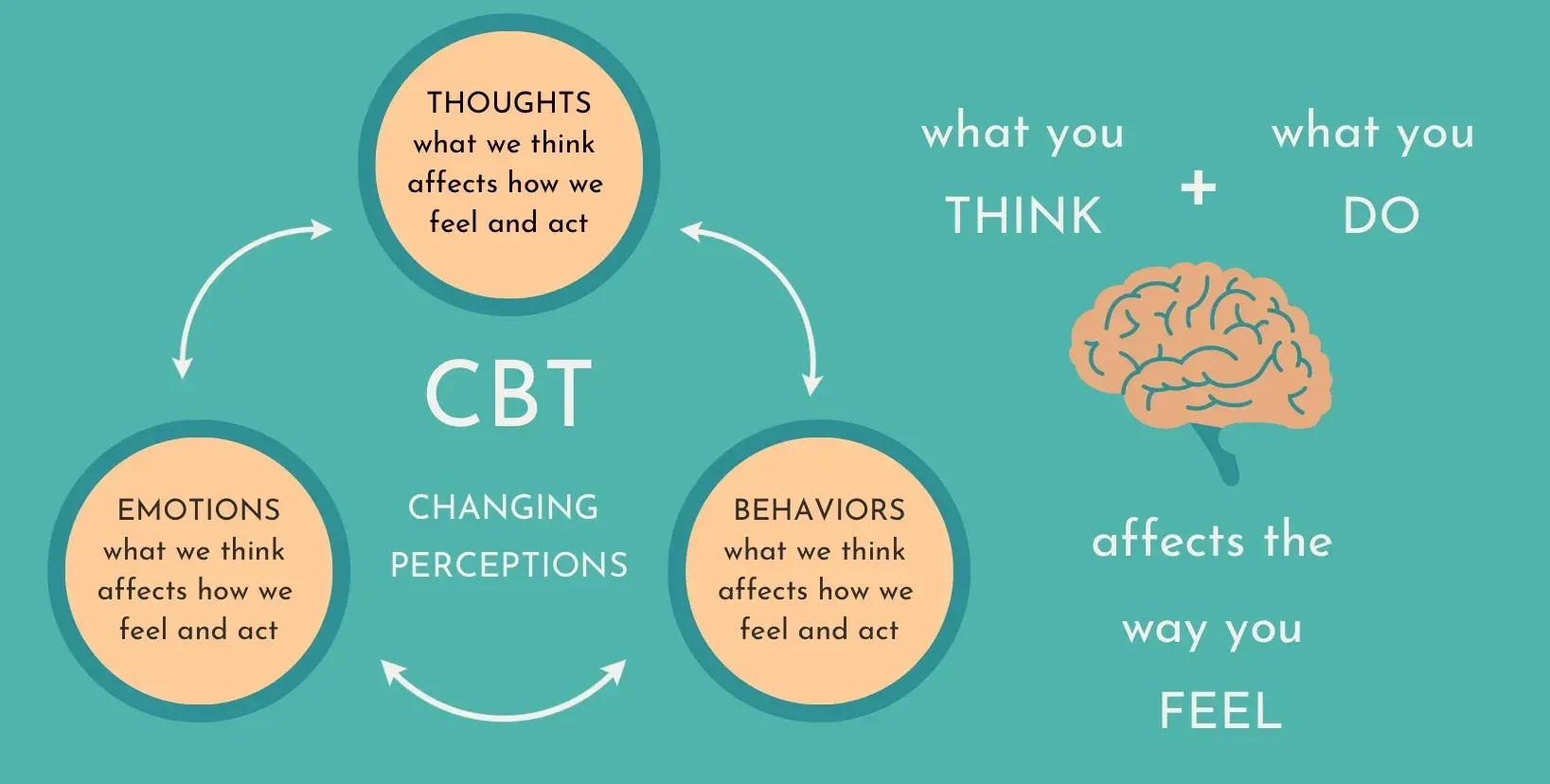
One of the easiest ways to understand CBT is through its famous triangle.
Every experience involves three connected parts:
- Thoughts
- Feelings
- Behaviors
Each influences the others.
For example:
Negative Cycle
Thought:
“Nobody likes me.”
↓
Feeling:
Lonely and anxious.
↓
Behavior:
Avoids social situations.
↓
Result:
More isolation, which reinforces the original thought.
Healthier Cycle
Thought:
“Some people enjoy spending time with me.”
↓
Feeling:
More hopeful.
↓
Behavior:
Accepts invitations and talks to friends.
↓
Result:
Positive experiences strengthen healthier beliefs.
This simple model explains why changing thoughts often changes emotions and actions as well.
How Cognitive-Behavioral Therapy Works
Unlike some therapies that explore years of personal history, CBT focuses primarily on present-day challenges.
Therapists help clients identify thinking habits that create emotional distress and then practice healthier alternatives.
Common CBT Steps
Most therapy sessions include:
- Identifying current problems.
- Recognizing automatic thoughts.
- Evaluating evidence.
- Replacing distorted beliefs.
- Practicing healthier behaviors.
- Reviewing progress.
Each session builds practical skills that clients continue using between appointments.
Conditions Treated With Cognitive-Behavioral Therapy
One reason CBT has become so popular is its flexibility.
Research shows that CBT can help people experiencing many different psychological and physical health conditions.
Common Mental Health Conditions
- Anxiety disorders
- Depression
- Panic disorder
- Social anxiety
- Obsessive-compulsive disorder (OCD)
- Post-traumatic stress disorder (PTSD)
- Eating disorders
- Phobias
Other Health Challenges

CBT may also support people living with:
- Chronic pain
- Insomnia
- Stress-related illnesses
- Irritable bowel syndrome
- Chronic fatigue
- Substance use recovery
Although CBT is not a cure for every condition, it often improves coping skills and overall quality of life.
Core Principles of Cognitive-Behavioral Therapy
Every CBT program follows several important principles.
1. Thoughts Influence Emotions
People often react more strongly to their interpretation of an event than to the event itself.
For example, two coworkers may receive the same critical feedback.
One thinks:
“I can learn from this.”
The other believes:
“I’m terrible at my job.”
Although the situation is identical, their emotional responses differ dramatically.
2. Thoughts Can Be Examined
CBT teaches clients to question negative beliefs instead of automatically accepting them.
Helpful questions include:
- Is this thought completely true?
- What evidence supports it?
- What evidence challenges it?
- What would I tell a friend in the same situation?
These questions encourage balanced thinking rather than emotional reactions.
3. Behaviors Reinforce Thoughts
Avoiding uncomfortable situations may reduce anxiety temporarily.
However, long-term avoidance often strengthens fear.
Instead, CBT encourages gradual, manageable exposure to difficult situations while building confidence.
Common Cognitive Distortions
Our brains naturally simplify information. Sometimes these shortcuts become inaccurate thinking patterns called cognitive distortions.
Recognizing them is one of CBT’s most valuable skills.
All-or-Nothing Thinking
Viewing situations as complete success or complete failure.
Example:
“If I make one mistake, I’m useless.”
Catastrophizing
Expecting the worst possible outcome.
Example:
“If I make a presentation mistake, everyone will laugh at me forever.”
Mind Reading
Assuming we know what others think.
Example:
“My coworker didn’t smile today. They must dislike me.”
Overgeneralization
Using one negative event to predict every future outcome.
Example:
“I failed one interview, so I’ll never get a job.”
Learning to identify these patterns helps people develop more realistic perspectives.
Popular CBT Techniques
Therapists use many practical exercises to help clients change thinking and behavior.
Thought Records
Clients write:
- Situation
- Thoughts
- Feelings
- Evidence
- Balanced replacement thought
Over time, this exercise makes healthy thinking more automatic.
Behavioral Experiments
Instead of assuming a belief is true, clients test it.
For example, someone afraid of speaking in meetings may gradually contribute one idea and observe what actually happens.
Often, the feared outcome never occurs.
Exposure Therapy
For anxiety disorders and phobias, therapists sometimes use gradual exposure.
Rather than avoiding feared situations forever, clients face them step by step in a safe, controlled way.
As confidence grows, anxiety usually decreases.
Activity Scheduling
Depression often reduces motivation.
CBT encourages planning enjoyable and meaningful activities throughout the week, helping people rebuild positive routines and increase emotional well-being.
Cognitive-Behavioral Therapy for Anxiety
Anxiety is one of the most common reasons people seek CBT. Excessive worry often begins with automatic thoughts that predict danger, failure, or rejection, even when there is little evidence.
CBT helps people recognize these thought patterns and replace them with more realistic perspectives. As a result, anxiety often becomes easier to manage.
How CBT Helps Reduce Anxiety
A therapist may encourage clients to:
- Identify anxiety triggers.
- Challenge unrealistic fears.
- Practice breathing and relaxation techniques.
- Gradually face feared situations.
- Build confidence through repeated practice.
For example, someone who fears public speaking may begin by speaking in front of a trusted friend before presenting to a larger audience. This gradual approach helps reduce fear over time.
Using Cognitive-Behavioral Therapy for Depression
Depression often changes the way people think about themselves, others, and the future.
Common thoughts include:
- “Nothing will ever get better.”
- “I’m a burden.”
- “I’m not capable.”
CBT teaches individuals to question these beliefs rather than accept them as facts.
Moreover, therapists encourage behavioral activation, a strategy that helps people reconnect with enjoyable and meaningful activities even when motivation feels low.
Behavioral Activation in Daily Life
Simple activities may include:
- Taking a short walk.
- Calling a friend.
- Reading for 15 minutes.
- Preparing a healthy meal.
- Spending time outdoors.
Although these actions seem small, they often improve mood gradually when practiced consistently.
How CBT Helps Manage Stress
Stress is a normal part of life. However, chronic stress can affect sleep, relationships, physical health, and work performance.
CBT helps people respond to stressful situations more effectively instead of reacting automatically.
Healthy Stress Management Techniques
Many therapists recommend:
- Identifying controllable versus uncontrollable problems.
- Setting realistic goals.
- Practicing mindfulness.
- Improving time management.
- Using positive self-talk.
- Developing healthy routines.
Consequently, people often feel more prepared to handle everyday challenges.
Cognitive-Behavioral Therapy for Children and Teenagers
Children and adolescents experience emotional challenges differently from adults.
CBT for younger people often includes games, storytelling, drawing, and age-appropriate exercises that make learning easier.
Parents are frequently involved in treatment to reinforce healthy coping skills at home.
Conditions Commonly Treated
CBT may help young people experiencing:
- School anxiety
- Social anxiety
- Depression
- Obsessive-compulsive disorder
- Anger management difficulties
- Low self-esteem
Teaching emotional skills early can improve resilience throughout life.
CBT for Older Adults

Mental health remains important at every stage of life.
Older adults may benefit from CBT when facing:
- Retirement adjustments
- Chronic illness
- Grief
- Loneliness
- Sleep difficulties
- Anxiety about health
Therapists often adapt CBT techniques to match each person’s physical abilities, cognitive needs, and life experiences.
Online Cognitive-Behavioral Therapy
Technology has expanded access to mental healthcare.
Today, many licensed therapists offer CBT through secure video appointments, making treatment more convenient for people with busy schedules or limited transportation.
Advantages of Online CBT
Online therapy can:
- Improve accessibility.
- Reduce travel time.
- Offer flexible scheduling.
- Increase privacy.
- Expand access to specialists.
However, online treatment works best when provided by qualified mental health professionals using secure platforms.
Benefits of Cognitive-Behavioral Therapy
CBT has earned widespread recognition because it combines scientific evidence with practical strategies.
Major Benefits
- Evidence-based treatment
- Goal-oriented sessions
- Practical coping skills
- Improved emotional awareness
- Better problem-solving abilities
- Reduced symptoms of anxiety and depression
- Long-term self-management skills
Moreover, many people continue using CBT techniques years after therapy ends.
Limitations of Cognitive-Behavioral Therapy
Although CBT is highly effective, it is not the perfect solution for everyone.
Some individuals may benefit from combining CBT with medication, family therapy, or other evidence-based treatments.
Possible Challenges
- Requires active participation.
- Homework exercises take commitment.
- Progress may feel gradual.
- Severe mental illnesses sometimes require additional treatment approaches.
Working with a qualified therapist helps determine the most appropriate treatment plan.
The Future of Cognitive-Behavioral Therapy
Researchers continue improving CBT through innovation and technology.
Several exciting developments include:
Artificial Intelligence Support
AI tools are beginning to assist therapists by tracking mood patterns and helping clients complete homework between sessions.
Importantly, these tools are designed to support—not replace—professional care.
Virtual Reality Exposure Therapy
Virtual reality allows people to safely practice confronting fears in controlled environments.
For example, someone with a fear of flying may experience a simulated airplane environment before taking an actual flight.
Personalized Treatment Plans
Modern CBT increasingly considers each person’s lifestyle, culture, strengths, and individual goals, making therapy more tailored than ever before.
Expert Perspective
Mental health professionals consistently describe CBT as one of the most practical forms of psychotherapy because it teaches skills that people can use independently throughout life.
From an educational perspective, one of CBT’s greatest strengths is its focus on empowering individuals rather than creating dependence on therapy. Clients learn to become their own problem-solvers by recognizing unhelpful thinking patterns and replacing them with healthier alternatives.
This practical, evidence-based approach explains why CBT continues to be recommended by healthcare organizations around the world.
Conclusion
Cognitive-behavioral therapy has transformed the way mental health professionals help people manage anxiety, depression, stress, and many other emotional challenges. By understanding the connection between thoughts, feelings, and behaviors, individuals can develop healthier responses to life’s difficulties.
While progress takes time and practice, the skills learned through CBT often provide lifelong benefits. Whether delivered in person or online, CBT offers practical tools that encourage resilience, confidence, and emotional well-being.
The most important lesson is that thoughts are not always facts. With guidance, practice, and patience, people can learn to challenge negative thinking, build healthier habits, and improve their quality of life.
Frequently Asked Questions
What is an example of cognitive behavioral therapy?
A common example is keeping a thought record. A person writes down a stressful situation, identifies negative thoughts, evaluates the evidence, and replaces them with more balanced thinking.
How to do CBT for anxiety?
CBT for anxiety involves recognizing anxious thoughts, challenging unrealistic beliefs, practicing relaxation techniques, and gradually facing feared situations instead of avoiding them.
What is the CBT therapy?
CBT is a structured form of psychotherapy that helps people change unhealthy thought patterns and behaviors to improve emotional well-being and daily functioning.
What are the five steps of CBT?
The five basic steps are identifying problems, recognizing automatic thoughts, examining evidence, replacing negative thoughts with balanced ones, and practicing healthier behaviors.
What are the 7 pillars of CBT?
Although different models exist, the seven commonly discussed pillars include awareness, cognitive restructuring, behavioral change, emotional regulation, problem-solving, mindfulness, and relapse prevention.
⭐ Make MindLiva Your Preferred Source on Google
Get trusted health, wellness, and lifestyle articles from MindLiva.
Add MindLiva
Samie Babaei is a medical science student at Shahid Beheshti University of Medical Sciences with a strong interest in health, wellness, and medical research. As a health writer and researcher at MindLiva, she focuses on creating clear, evidence-based content that helps readers better understand health and well-being.