



How Supergoop Sunscreen Keeps Your Skin Safe & Glowing
Have you ever avoided daily SPF because it felt greasy, left a pale film, or made your makeup slide? Many people understand the need for sun protection but struggle to find a formula they enjoy wearing.
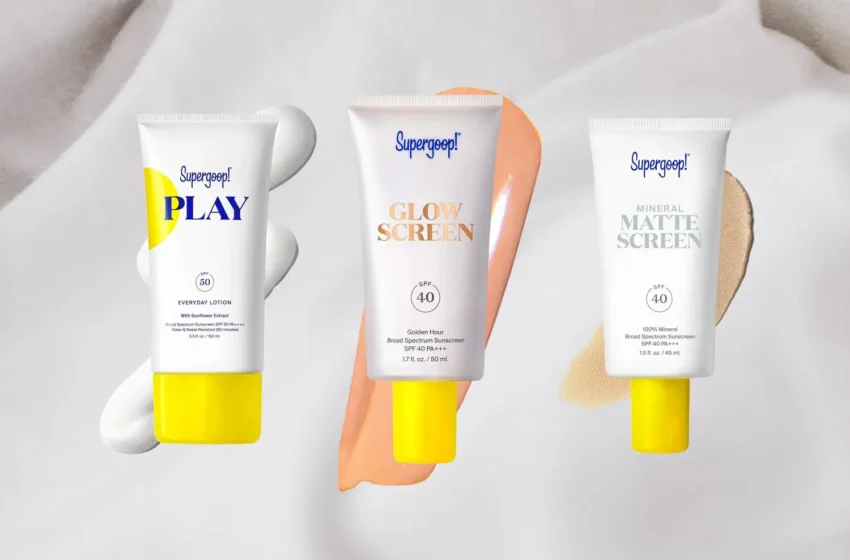
That is where supergoop sunscreen has attracted attention. The American sun-care brand creates products that combine broad-spectrum protection with primer-like textures, tinted finishes, hydration, and shine control. Supergoop says it has developed more than 40 dermatologist-tested formulas since 2005, with the goal of making SPF part of everyday life rather than something used only at the beach.
However, the range can feel confusing. This guide explains the main formulas, their finishes, who may benefit from each option, how to apply them properly, and what shoppers should know about recent regulatory and legal developments.
Why Supergoop Sunscreen Became a Modern Beauty Staple
Traditional sun-care products often focused almost entirely on protection. While protection remains the main goal, modern consumers also expect a pleasant texture, good makeup performance, and a finish that works with their skin type.
Supergoop built its identity around this change. Instead of offering one basic lotion, the brand created clear gels, glowing primers, tinted products, sticks, creams, oils, sprays, and powders.
Its official website describes the company’s goal as moving SPF “out of the beach bag” and into daily life. The company also says its products are designed for different ages, skin tones, skin types, and stages of a beauty routine.
Protection That Does More Than One Job
A facial product is easier to use regularly when it fits naturally into a morning routine. For example, a primer-style formula can reduce the need for a separate makeup base.
Likewise, a tinted option may add glow, while a matte option can help reduce the look of shine. These extra benefits do not replace proper UV protection, but they can make daily application feel less like a chore.
My practical view is simple: the most useful SPF is rarely the one with the fanciest packaging. It is the one you can apply generously, tolerate for several hours, and remember to reapply when needed.
Which Supergoop Sunscreen Formula Is Right for You?
The brand’s products vary greatly in texture and finish. Therefore, choosing by popularity alone may lead to disappointment.
Your decision should depend on:
- Skin type
- Preferred finish
- Makeup habits
- Sensitivity
- Climate
- Outdoor activity
- Need for water resistance
Unseen SPF 50 for an Invisible Finish
Unseen SPF 50 is one of the brand’s best-known facial products. The current formula is a clear, scentless gel designed to feel weightless and work as a makeup primer.
According to Supergoop, it provides broad-spectrum SPF 50 protection, creates no white cast, and is suitable for normal, dry, combination, oily, sensitive, and acne-prone complexions. The brand also describes it as non-acnegenic and says it holds the Skin Cancer Foundation Seal of Recommendation.
This formula may suit you when:
- You dislike visible residue.
- You want a natural-looking finish.
- You wear foundation or concealer.
- You prefer a silicone-like primer texture.
- You want a product that works across skin tones.
The clear finish is especially appealing for deeper complexions, where pale residue can be highly noticeable.
Glowscreen SPF 40 for a Luminous Look
Glowscreen is designed for people who want protection with a radiant, makeup-ready finish. It combines broad-spectrum SPF 40 with light-reflecting pigments, hyaluronic acid, and niacinamide.
The company recommends it mainly for normal, combination, and dry skin. It can be worn alone or beneath makeup and is available in multiple tinted shades.
Glowscreen may work well when:
- Your complexion looks dull or dry.
- You prefer a dewy finish.
- You want to skip a separate illuminating primer.
- You wear light or glowing makeup.
- You want a tinted rather than fully clear product.
However, the luminous finish may appear too shiny on very oily skin. Moreover, the tint should be tested in natural daylight because the final shade can vary across different complexions.
Mineral Mattescreen for Shine Control
People with sensitive skin or a preference for zinc-based protection may consider Mineral Mattescreen SPF 40. It is a tinted mineral sunscreen designed to blur pores, control the appearance of shine, and act as a makeup primer.
A matte formula may be helpful when:
- Your forehead and nose become shiny quickly.
- You prefer a soft-focus effect.
- You want a tinted mineral option.
- Rich creams feel too heavy.
- You need a smoother base under foundation.
Still, matte products can emphasize dry patches. Apply a light moisturizer first if parts of your face feel tight or flaky.
Supergoop Sunscreen for Different Skin Types
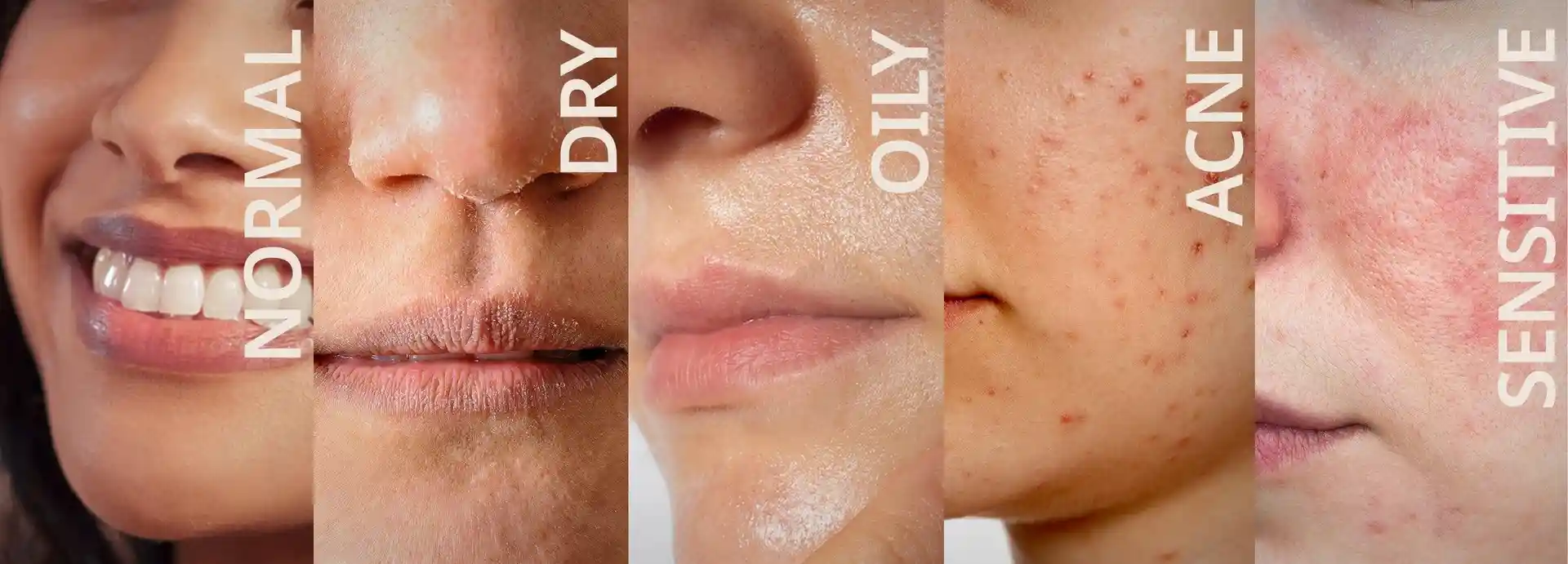
Skin type should guide your choice, but it should not be the only factor. Weather, product layering, and the amount applied can change how a formula performs.
Oily and Combination Complexions
For people searching for sunscreen for oily skin, Unseen SPF 50 or Mineral Mattescreen may be the most logical starting points.
Unseen offers a clear, natural finish, while Mattescreen is designed to reduce the appearance of oil and blur pores. Supergoop also offers an Unseen stick that the brand says helps reduce shine and can glide over makeup.
However, no facial SPF can completely stop natural oil production. A light moisturizer, fewer morning layers, and a small amount of setting powder may improve wear.
Dry Skin
Dry complexions often benefit from creamy or glowing formulas. Glowscreen contains hydrating ingredients and produces a luminous finish, making it a more natural match than a strongly mattifying product.
Still, SPF should not be expected to repair severe dryness by itself. Apply a suitable moisturizer underneath, especially during cold weather or when using retinoids and exfoliating acids.
Sensitive Skin
Sensitive skin can react to either organic filters, mineral filters, fragrances, botanical extracts, or inactive ingredients. Therefore, words such as “gentle” do not guarantee a reaction-free experience.
Patch-test a small amount near the jaw for several days. Stop using the product if you develop continued burning, swelling, itching, or a rash.
People comparing Supergoop with beauty of joseon sunscreen should remember that the formulas use different filter systems, textures, and supporting ingredients. The better choice depends on personal tolerance rather than online popularity.
Deeper Skin Tones
Clear formulas such as Unseen were developed to avoid a white cast. Supergoop says its current Unseen SPF 50 is invisible across skin tones, while the brand’s consumer study found that 100% of 106 participants agreed that the tested product worked for their skin tone after one application.
Other brands, including black girl sunscreen, have also helped push the beauty industry toward products that consider darker complexions and visible residue.
Nevertheless, tinted mineral products should always be tested carefully. A tint may disappear beautifully on one person but look orange, pink, grey, or too pale on another.
How to Apply Supergoop Sunscreen Correctly
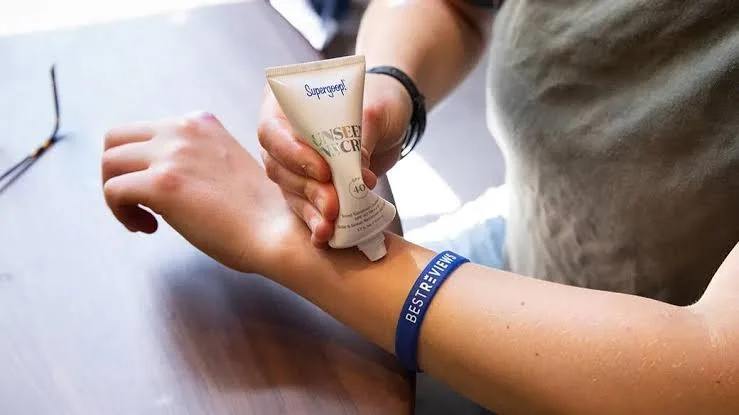
Even an elegant formula will provide less protection when applied too thinly. Many people use only enough to create a smooth finish rather than enough to reach the labeled protection level.
The American Academy of Dermatology recommends choosing broad-spectrum, water-resistant SPF 30 or higher. It advises applying the product about 15 minutes before outdoor exposure and reapplying roughly every two hours, as well as after swimming or sweating.
A Simple Morning Order
Use this routine:
- Cleanse or rinse your face.
- Apply treatment serum.
- Add moisturizer when needed.
- Allow thick layers to settle.
- Apply SPF generously to the face and neck.
- Wait briefly before adding makeup.
Do not forget your ears, hairline, jaw, upper chest, and the sides and back of your neck.
Apply More Than a Decorative Layer
A tiny amount may spread easily, but it may not deliver the protection shown on the label. Apply a generous, even layer rather than dotting a few small spots across the face.
For easier blending, divide the amount into two passes. Apply the first layer, allow it to settle, and then add the second.
Reapply During Outdoor Exposure
Reapplication is essential when you are outdoors for several hours. Sweat, water, touching the face, and towel drying can remove part of the protective layer.
Some products are water resistant for either 40 or 80 minutes, but none is truly waterproof. Always check the individual label because water-resistance claims vary between formulas. The FDA confirms that “waterproof” protection does not exist and that resistance claims indicate a limited tested period.
Does Supergoop Prevent Tanning?
The question does sunscreen prevent tanning cannot be answered with a simple yes or no. Correct application can greatly reduce UV exposure and lower the chance of developing a tan, but no topical product blocks every ray.
You may still tan when:
- You apply too little.
- You fail to reapply.
- You miss parts of your face or body.
- You spend many hours outside.
- You sweat heavily.
- You rely on SPF without shade or clothing.
A tan is evidence that the skin has responded to ultraviolet exposure. Therefore, it should not be treated as a sign of healthy protection.
For better results, combine broad-spectrum protection with a hat, sunglasses, shade, and tightly woven clothing.
Is Supergoop the Best Sunscreen for Face?
There is no universal best sunscreen for face because skin needs differ. Supergoop’s main advantage is variety: buyers can select clear, matte, tinted, glowing, mineral, or hydrating finishes.
However, it may not be the best fit when:
- You have known reactions to its active filters.
- You dislike silicone-rich textures.
- You want a low-cost family-sized product.
- You need 80-minute water resistance.
- You prefer a simple fragrance-free zinc cream.
- A tint does not match your complexion.
Moreover, price and availability matter. A product used daily must fit your budget because underapplying an expensive formula defeats its purpose.
Is Supergoop Suitable for Children?
Parents looking for the best sunscreen for kids should focus on broad-spectrum protection, SPF 30 or higher, water resistance, easy application, and a formula the child tolerates.
The American Academy of Dermatology says children six months and older can use broad-spectrum, water-resistant SPF 30 or higher on exposed skin. For infants younger than six months, shade and protective clothing should be the main defenses, with medical guidance used when necessary.
Check the exact Supergoop product label rather than assuming every formula is intended for all ages. Also, avoid applying sprays directly near a child’s face.
Natural, Chemical, and Mineral Formulas
The term natural sunscreen sounds reassuring, but it does not provide enough information to judge effectiveness or safety. “Natural” is often a marketing description rather than a precise measure of broad-spectrum performance.
Instead, check:
- Active ingredients
- SPF level
- Broad-spectrum claim
- Water-resistance period
- Directions
- Warnings
- Expiration date
Organic-filter formulas commonly use ingredients such as avobenzone, octisalate, homosalate, and octocrylene. Zinc oxide and titanium dioxide are commonly used mineral filters.
The FDA regulates products sold with sun-protection claims as over-the-counter drugs or drug-cosmetic combinations in the United States.
Does Sunscreen Cause Cancer?

Online posts asking does sunscreen cause cancer often confuse ingredient absorption with proof of harm. Detecting an ingredient in the body does not automatically establish that it causes disease.
At the same time, the FDA continues to examine safety data for active filters. Its guidance states that absorption findings make further research important, not that consumers should stop protecting their skin.
The harm associated with repeated UV exposure is well established. Therefore, major dermatology guidance continues to recommend broad-spectrum SPF 30 or higher alongside clothing and shade.
Anyone with a specific allergy, medical condition, or pregnancy-related concern should discuss ingredient choices with a qualified healthcare professional.
What Was the Lawsuit Against Supergoop?
In June 2025, the Santa Clara County District Attorney’s Office announced a $350,000 civil settlement with Supergoop over advertising that described some chemical products as “reef friendly” or “reef safe.”
Prosecutors alleged that these claims were misleading because other ingredients in the products could harm reefs, even though the formulas did not contain oxybenzone or octinoxate. Under the settlement, Supergoop was ordered not to use those phrases or coral-reef imagery to advertise its chemical formulas.
This case concerned environmental advertising claims. It was not a finding that all Supergoop products were unsafe for human use.
The distinction matters. Headlines can make a legal action sound broader than it is, so readers should examine what the complaint and settlement actually addressed.
The 2025 FDA Warning Letter Explained
In a separate matter, the FDA sent Supergoop a warning letter on August 6, 2025, concerning PLAY SPF 50 Body Mousse.
The agency said the mousse format did not fall within the dosage forms permitted under the applicable OTC monograph and that no approved drug application was in effect for that specific product. The letter classified the issue as a regulatory and marketing violation involving the mousse dosage form.
The letter did not make the same claim about every Supergoop formula. Moreover, FDA warning letters give recipients an opportunity to respond and correct the cited issues; later communication may change a matter’s status.
This news is a useful reminder to separate a concern about one product format from assumptions about an entire brand.
Is Supergoop FDA Approved?
The phrase “FDA approved” is often used incorrectly for over-the-counter sun-care products.
Many compliant OTC drugs can be marketed without an individually approved new drug application when they meet the conditions of an applicable monograph, including permitted active ingredients, labeling, uses, and dosage forms.
Therefore, the better question is whether a specific product complies with current FDA requirements—not whether the whole brand has received one broad approval.
The U.S. regulatory landscape also continues to evolve. In June 2026, the FDA added bemotrizinol to the list of permitted active ingredients, the first such addition in decades.
Common Supergoop Application Mistakes
Using Makeup With SPF as the Only Layer
Foundation is rarely applied as generously or evenly as a dedicated protective product. Use makeup SPF as an extra layer, not as your only defense.
Choosing Finish Over Function
A beautiful glow means little when the formula is wrong for your activity. For swimming, sport, or heavy sweating, prioritize clearly labeled water resistance.
Forgetting the Body
Hands, shoulders, arms, ears, and the upper chest receive regular exposure. Facial care should be part of a complete routine rather than the entire routine.
Trusting Viral Reviews Without Testing
A product can perform beautifully for one creator and poorly for your skin. Test the full recommended amount under your normal moisturizer and makeup.
Ignoring Expiration and Storage
Heat and direct sunlight can damage the product. Follow the storage directions and check the expiration information on the package.
Conclusion
Supergoop has made daily sun protection more appealing by offering clear gels, luminous primers, tinted mineral formulas, body products, and portable options. Unseen SPF 50 suits people who want an invisible primer-like finish, while Glowscreen adds radiance and Mineral Mattescreen targets shine.
However, no premium formula can compensate for applying too little or failing to reapply. Choose a product that suits your skin, check its water-resistance claim, use a generous amount, and combine it with shade, clothing, and sensible sun habits.
The main takeaway is straightforward: consistent protection matters more than trends. A formula becomes valuable when you can wear it comfortably and use it correctly.
People Also Ask: Supergoop FAQs
Is Supergoop a good brand for sunscreen?
Supergoop offers a wide range of broad-spectrum formulas with clear, matte, glowing, tinted, and mineral finishes. Whether it is a good choice for you depends on your skin type, budget, sensitivity, and outdoor needs.
Which country is Supergoop from?
Supergoop is an American brand established in 2005. Its official company information and FDA correspondence identify it as a United States business.
What is the lawsuit against Supergoop?
The 2025 civil case concerned claims that some chemical products were “reef friendly” or “reef safe.” Supergoop agreed to a $350,000 settlement and restrictions on using those environmental advertising claims.
Is Supergoop an Indian brand?
No. Supergoop is a US-based company, not an Indian brand. It has operated since 2005 and lists a United States business address in official FDA correspondence.
Is Supergoop FDA approved?
Not as one entire brand. Many US over-the-counter SPF products are marketed under an FDA monograph rather than receiving individual product approval. In 2025, the agency specifically warned Supergoop about its PLAY Body Mousse dosage form.
⭐ Make MindLiva Your Preferred Source on Google
Get trusted health, wellness, and lifestyle articles from MindLiva.
Add MindLiva
Samie Babaei is a medical science student at Shahid Beheshti University of Medical Sciences with a strong interest in health, wellness, and medical research. As a health writer and researcher at MindLiva, she focuses on creating clear, evidence-based content that helps readers better understand health and well-being.