



Ultimate Guide to CrossFit WODs for Beginners and Pros
If you have ever walked into a CrossFit gym and seen a workout written on a whiteboard, you may have wondered how athletes know exactly what to do.
The answer is often a WOD, or “Workout of the Day.” A CrossFit WOD combines movements and training methods into a structured session designed to develop several areas of fitness at once.
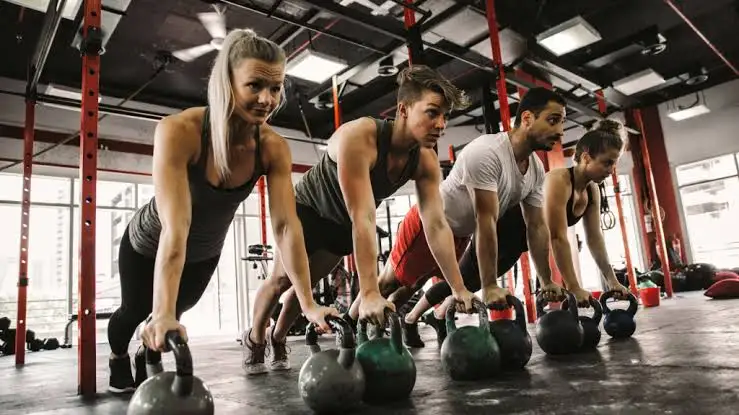
Depending on the workout, you might perform squats, pull-ups, running, rowing, kettlebell swings, Olympic lifts, burpees, or bodyweight exercises.
What makes a WOD different from a typical gym session is the way movements are combined. Instead of spending an hour training only your chest or legs, you may complete a short sequence that challenges your strength, cardiovascular endurance, power, balance, and coordination.
Importantly, intensity does not have to mean using the heaviest weight possible.
A well-designed workout should match your current ability. That principle is one of the most important things beginners and experienced athletes can learn.
How a CrossFit WOD Is Structured
Not every workout follows the same format. In fact, the variety is part of what makes CrossFit appealing.
A session might ask you to complete a specific number of rounds, perform as many repetitions as possible, or finish a set amount of work as quickly as possible while maintaining good form.
Common WOD formats
Here are several formats you are likely to encounter:
- AMRAP: As many rounds or repetitions as possible within a set time.
- For Time: Complete the prescribed work as quickly as you can.
- EMOM: Perform a specific movement at the beginning of every minute.
- Rounds for Quality: Complete prescribed rounds while prioritizing technique.
- Chipper: Move through a long list of exercises, usually completing each movement once before moving on.
- Strength + Conditioning: A heavier strength movement may be followed by a faster conditioning section.
For example, an AMRAP might include air squats, push-ups, and running for 15 minutes. The goal is not to sprint through the first three minutes and collapse halfway through the session.
Instead, you need to find a sustainable pace.
That ability to manage effort is a major part of becoming a better athlete.
Why CrossFit WODs Are So Effective

The appeal of CrossFit comes partly from its focus on functional movements performed at varying levels of intensity.
You are not simply training to lift more weight. You are also learning to move efficiently and produce force repeatedly.
A good session can develop several fitness qualities simultaneously.
For example, a workout containing rowing, kettlebell swings, and box step-ups can challenge your cardiovascular system while also requiring hip strength, coordination, and muscular endurance.
Moreover, varied programming can keep training mentally engaging.
You may know that you need to exercise, but repeating exactly the same routine every day can become boring. A changing workout structure gives you new challenges without requiring a completely different training philosophy.
Intensity is only useful when you can control it
One personal lesson many athletes discover quickly is that going all-out every day is not a smart long-term strategy.
Your fitness improves during a combination of training, recovery, nutrition, and adaptation.
If every session becomes a maximum-effort competition, fatigue can accumulate faster than your body can recover.
Therefore, successful training involves knowing when to push and when to reduce the load.
Choosing a CrossFit WOD for Your Fitness Level
A common mistake among beginners is believing that they must perform the workout exactly as written.
That is not how effective coaching works.
Most movements can be scaled, meaning the exercise, load, repetition count, range of motion, or time target can be adjusted to match the athlete.
Beginners
Someone new to functional fitness may start with movements such as:
- Air squats
- Incline push-ups
- Ring rows
- Light kettlebell deadlifts
- Step-ups instead of box jumps
- Short running or walking intervals
The objective is to learn movement patterns first.
For example, if you cannot yet perform a strict pull-up, jumping pull-ups or ring rows can help develop the strength and coordination needed for future progress.
Intermediate athletes
Once basic movement patterns become comfortable, athletes can gradually increase resistance, complexity, or workout volume.
An intermediate athlete might use moderate barbells, kettlebells, dumbbells, rowing intervals, and more demanding gymnastics movements.
At this stage, pacing becomes increasingly important.
You should know what your body can sustain for five minutes versus 20 minutes.
Advanced athletes
Experienced athletes can focus on improving power output, movement efficiency, strength, gymnastics skills, and competition strategy.
They may also use more complex Olympic lifting movements and heavier loads.
However, advanced status does not eliminate the need for scaling.
An elite athlete may reduce weight because of fatigue, an injury concern, a specific training goal, or the need to maintain a target intensity.
That is not a weakness. It is intelligent programming.
Classic CrossFit WODs That Still Matter
Some workouts have become famous because they provide recognizable benchmarks.
One well-known example is Cindy, which combines pull-ups, push-ups, and air squats.
The cindy crossfit workout is deceptively simple. There are only three movements, but completing repeated rounds requires considerable muscular endurance and pacing.
A beginner might scale pull-ups to ring rows and push-ups to an elevated surface.
Over time, the athlete can repeat the workout and compare performance.
That makes benchmark workouts useful because they provide a measurable reference point.
Why benchmark workouts are valuable
A workout score can tell you more than whether you “worked hard.”
Suppose you completed 12 rounds six months ago and now complete 16 rounds using the same movement standards.
That gives you objective evidence of improvement.
The same principle applies to strength numbers, running times, rowing distances, and gymnastics skills.
The important point is to compare similar conditions. If you reduce the range of motion or use a much lighter load, the result is not directly comparable.
CrossFit WOD and Olympic Lifting
Some workouts include technical barbell movements that require careful coaching.
The power snatch crossfit movement, for example, combines speed, coordination, mobility, and explosive strength.
The athlete moves a barbell from the floor to an overhead position in one powerful sequence, receiving the bar above a full squat position.
Because Olympic lifting is highly technical, beginners should not treat it like a normal strength exercise.
Start with drills and lighter loads. Focus on bar path, hip movement, receiving position, overhead stability, and timing before adding weight.
A technically strong repetition with a light bar is more valuable than a heavy repetition performed with poor mechanics.
CrossFit WOD Training for Women
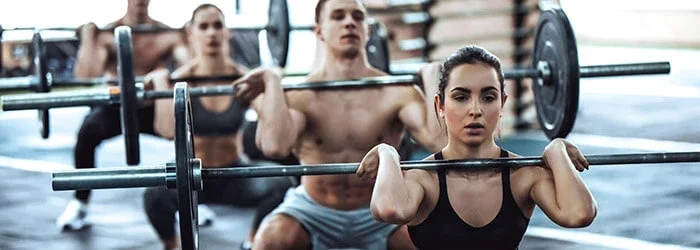
CrossFit has attracted a large and diverse female training community.
The phrase crossfit women often brings to mind competitive athletes, but the community includes people with very different goals and fitness levels.
Some women train for strength. Others want better cardiovascular fitness, improved mobility, increased confidence, or simply a structured way to stay active.
Similarly, the crossfit girls benchmark workouts are not designed only for women. Many have female names, but they are used as standardized workouts across the broader CrossFit community.
The important distinction is between the workout and the athlete performing it.
A workout does not need to be changed simply because of gender. It should be adapted according to experience, ability, goals, recovery, and individual circumstances.
How to Improve Your CrossFit WOD Performance
Getting better is not simply about trying harder.
Small improvements in technique and strategy can produce significant results.
1. Improve movement quality
Efficient technique reduces wasted energy.
For example, a controlled kettlebell swing uses coordinated hip extension rather than relying mainly on the arms.
Likewise, efficient rowing depends on sequencing the legs, body, and arms instead of pulling only with the upper body.
2. Learn to pace
Pacing is one of the most valuable skills in conditioning workouts.
If you can complete the first five minutes at a controlled pace, you may have enough energy to increase your effort later.
Starting at maximum speed often creates the opposite result.
3. Track your scores
Write down your rounds, repetitions, weights, times, and movement modifications.
A training log can reveal patterns that are difficult to notice from memory.
You might discover that your strength is improving while your endurance is lagging, or that you consistently struggle with workouts containing a particular movement.
4. Respect recovery
Sleep, nutrition, hydration, rest days, and stress management all influence performance.
More training is not automatically better training.
For many athletes, improving recovery can be as valuable as adding another workout.
Workout of the Day CrossFit: What Should You Expect?
The workout of the day crossfit format can look intimidating when you first see it on a whiteboard.
However, the workout is only one part of the session.
A typical class may include:
- A general warm-up.
- Mobility or movement preparation.
- Skill or strength practice.
- The main conditioning workout.
- A cool-down or recovery period.
This structure matters because performing intense movements without preparation can make technique deteriorate quickly.
A good coach should explain the workout, demonstrate movements, provide scaling options, and help athletes select appropriate loads.
Building a Daily CrossFit WOD Routine
The idea of a daily crossfit wod can sound motivating, but training seven days a week at high intensity is not necessary for most people.
Instead, think about your overall weekly workload.
For example, a recreational athlete might combine several CrossFit sessions with walking, mobility work, light cardio, or complete rest days.
A practical week could look like this:
- Monday: Strength-focused WOD
- Tuesday: Conditioning and gymnastics
- Wednesday: Recovery or light activity
- Thursday: Mixed-modal WOD
- Friday: Strength and power
- Saturday: Longer conditioning session
- Sunday: Rest
The exact schedule should depend on your training history and recovery capacity.
Consistency is more valuable than an aggressive routine that you cannot maintain.
Common Mistakes to Avoid
Even motivated athletes can make avoidable mistakes.
Chasing the leaderboard
Competition can be fun, but constantly comparing yourself with stronger athletes can encourage poor decisions.
Your primary competition should be your previous performance.
Using too much weight
Heavy loads can make a workout look impressive, but they can also turn a conditioning session into a slow strength workout.
Choose a weight that allows you to maintain the intended stimulus.
Ignoring technique
Fatigue makes technical errors more likely.
If your form starts breaking down, reduce the load, slow down, or choose a suitable scaling option.
Treating every session as a test
Not every training day needs a personal record.
Some workouts should develop skills. Others should build strength, aerobic capacity, or movement quality.
Training works best when each session has a purpose.
CrossFit WOD vs. Traditional Gym Training
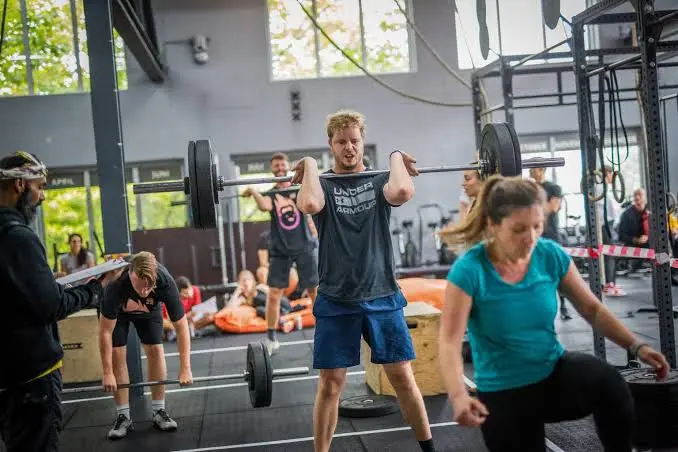
Both approaches can be effective, but they often emphasize different experiences.
| CrossFit WOD Training | Traditional Gym Training |
| Often combines multiple fitness qualities | Often focuses on specific muscle groups |
| Frequently uses timed workouts | Commonly uses sets and repetitions |
| Strong community element | Can be more independent |
| Constant movement variety | Often more predictable |
| Emphasizes functional movement | Can emphasize hypertrophy or isolated strength |
Neither approach is automatically superior.
If your primary goal is bodybuilding, traditional resistance training may be particularly useful. If you enjoy varied conditioning and community-based training, CrossFit may be a better fit.
In short, the best training method is one you can perform consistently and safely.
Conclusion: Make Every CrossFit WOD Count
A CrossFit WOD is more than a list of exercises on a whiteboard.
It is a framework for developing strength, endurance, coordination, power, and mental resilience while giving you measurable ways to track progress.
The smartest approach is not to chase maximum intensity every day. Instead, learn the movements, choose the right scaling level, control your pace, record your results, and give your body enough time to recover.
Classic workouts such as Cindy can provide useful benchmarks, while newer combinations can keep training challenging and engaging.
Whether you are taking your first class or preparing for serious competition, the same principle applies: quality comes before ego.
Choose the appropriate workout, perform every movement with purpose, and let consistent training create the results.
Frequently Asked Questions About CrossFit WODs
What does WOD mean in CrossFit?
WOD stands for Workout of the Day. It refers to the main workout prescribed for a training session and can include strength, conditioning, gymnastics, running, rowing, or Olympic lifting.
Is CrossFit WOD suitable for beginners?
Yes. Beginners can participate by scaling exercises, reducing weight, adjusting repetitions, or choosing simpler movement variations. Learning proper technique should come before increasing intensity.
How long does a typical WOD take?
The main workout can last anywhere from a few minutes to more than 30 minutes, depending on its design. A complete class usually takes longer because it includes warm-up, skill work, and preparation.
How often should I do a WOD?
There is no universal number that works for everyone. Your training frequency should account for experience, workout intensity, recovery, sleep, and other physical activities.
Is CrossFit good for building strength?
It can contribute significantly to strength development, particularly when programming includes progressive resistance training. However, athletes with a specialized strength or bodybuilding goal may benefit from additional focused resistance work.
⭐ Make MindLiva Your Preferred Source on Google
Get trusted health, wellness, and lifestyle articles from MindLiva.
Add MindLiva
Samie Babaei is a medical science student at Shahid Beheshti University of Medical Sciences with a strong interest in health, wellness, and medical research. As a health writer and researcher at MindLiva, she focuses on creating clear, evidence-based content that helps readers better understand health and well-being.