




Causes of Insomnia in Adults: Why You Can’t Sleep
Have you ever gone to bed feeling tired but spent hours staring at the ceiling? You’re not alone. Many adults struggle with falling asleep, staying asleep, or waking up too early. While an occasional restless night is normal, ongoing sleep problems can affect every part of your life.
According to health experts, millions of adults worldwide experience insomnia each year. Poor sleep can reduce concentration, lower productivity, weaken the immune system, and increase the risk of chronic diseases. Moreover, long-lasting insomnia can affect emotional well-being, relationships, and overall quality of life.
Understanding the causes of insomnia in adults is the first step toward finding the right solution. Sleep problems rarely happen without a reason. Instead, they are often linked to lifestyle habits, stress, medical conditions, medications, or changes in hormones.
In this guide, you’ll discover the most common reasons adults struggle with sleep, learn who is most at risk, and explore simple ways to improve sleep naturally.
Why Understanding the Causes of Insomnia in Adults Matters
Insomnia is more than getting fewer hours of sleep. It is a sleep disorder that makes it difficult to:
- Fall asleep
- Stay asleep
- Return to sleep after waking
- Feel refreshed in the morning
Even if you spend eight hours in bed, poor-quality sleep can leave you feeling exhausted the next day.
From personal experience working with health information, many people assume insomnia simply means “not sleeping enough.” However, sleep quality is just as important as sleep duration. Someone who sleeps seven hours but wakes repeatedly during the night may feel worse than someone who sleeps six uninterrupted hours.
What Is Insomnia?
Insomnia is a common sleep disorder that can be:
Acute Insomnia
This lasts for a few days or weeks.
It often happens after stressful events like:
- Job interviews
- Family problems
- Traveling
- Illness
- Financial worries
Fortunately, acute insomnia usually improves once the stress passes.
Chronic Insomnia
Chronic insomnia lasts at least three nights a week for three months or longer.
Unlike short-term sleep problems, chronic insomnia usually has one or more underlying causes that need attention.
Common Causes of Insomnia in Adults

Many factors can interfere with healthy sleep. Sometimes more than one cause is responsible.
Let’s look at the most common ones.
1. Stress and Anxiety
Stress is one of the leading causes of insomnia in adults.
When your brain remains active at bedtime, relaxing becomes difficult. Instead of preparing for sleep, your mind continues thinking about work deadlines, family responsibilities, or future plans.
Common stress triggers include:
- Money concerns
- Relationship problems
- Work pressure
- Caring for family members
- Major life changes
Moreover, anxiety increases the production of stress hormones, making it harder to fall asleep.
Example:
Someone preparing for an important exam may feel mentally exhausted but still remain awake because their brain refuses to slow down.
2. Poor Sleep Habits
Healthy sleep depends on consistent daily routines.
Unfortunately, many people unknowingly develop habits that reduce sleep quality.
These include:
- Using phones before bed
- Watching television late at night
- Drinking coffee in the evening
- Sleeping at different times every day
- Taking long afternoon naps
Blue light from electronic devices can reduce melatonin production, the hormone that tells your body it’s time to sleep.
As a result, falling asleep becomes much more difficult.
3. Mental Health Conditions
Mental health and sleep are closely connected.
People with depression, anxiety disorders, panic disorder, or post-traumatic stress disorder (PTSD) often experience insomnia.
In many cases, insomnia appears before mental health symptoms become severe.
Likewise, poor sleep can worsen depression and anxiety, creating a difficult cycle to break.
4. Medical Conditions
Many health problems can interfere with sleep.
Examples include:
- Chronic pain
- Arthritis
- Asthma
- Heart disease
- Diabetes
- Thyroid disorders
- Acid reflux (GERD)
- Parkinson’s disease
Pain or discomfort may repeatedly wake you during the night, even if you fall asleep easily.
Healthcare providers often recommend treating the underlying condition alongside improving sleep habits.
5. Certain Medications
Some prescription and over-the-counter medicines can cause insomnia as a side effect.
Examples include:
- Steroids
- Some antidepressants
- Asthma medications
- Blood pressure medicines
- ADHD medications
- Decongestants
If sleep problems begin after starting a new medicine, talk with your healthcare provider before stopping it.
Sometimes adjusting the timing or dosage may help.
6. Caffeine, Alcohol, and Nicotine
What you consume during the day has a significant effect on sleep.
Caffeine can stay in the body for several hours.
Common sources include:
- Coffee
- Tea
- Energy drinks
- Cola
- Chocolate
Meanwhile, alcohol may help you fall asleep faster, but it often causes fragmented sleep later in the night.
Nicotine is another stimulant that makes relaxation difficult.
For better sleep, experts often recommend avoiding caffeine in the late afternoon and evening.
7. Hormonal Changes
Hormones play an important role in regulating sleep.
Changes during pregnancy, monthly menstrual cycles, and aging can affect sleep patterns.
Likewise, one of the major causes of insomnia in menopause is the drop in estrogen and progesterone levels. These hormonal changes often lead to hot flashes, night sweats, and frequent awakenings throughout the night.
Many women notice that their sleep improves once these symptoms are properly managed.
8. Aging and Sleep Changes
Sleep naturally changes with age.
Many older adults:
- Wake earlier
- Sleep more lightly
- Wake several times during the night
- Spend less time in deep sleep
As a result, the causes of insomnia in older adults often include a combination of age-related sleep changes, chronic illnesses, medications, and reduced physical activity.
However, poor sleep should never be accepted as a normal part of aging. Identifying the underlying cause can often lead to significant improvement.
Lifestyle Choices That Increase the Causes of Insomnia in Adults
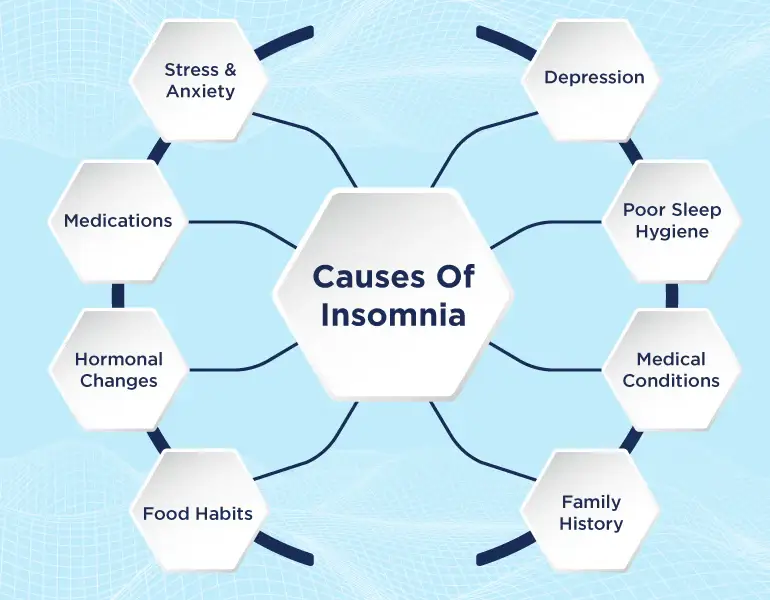
Daily habits have a powerful effect on sleep. Even small changes in your routine can make it harder to fall asleep or stay asleep.
Lack of Physical Activity
Exercise helps regulate your body’s internal clock and reduces stress. People who are active during the day often fall asleep faster and enjoy deeper sleep.
However, exercising intensely just before bedtime may have the opposite effect. It can raise your heart rate and body temperature, making it harder to relax.
Tip: Aim for at least 30 minutes of moderate exercise most days, preferably earlier in the day.
Irregular Sleep Schedule
Going to bed at different times every night confuses your body’s natural sleep-wake cycle.
For example, sleeping until noon on weekends after waking early during the week can make Sunday night particularly difficult.
A consistent bedtime and wake-up time—even on weekends—helps your body know when it’s time to sleep.
Eating Too Late
Large meals close to bedtime may lead to discomfort, indigestion, or acid reflux. These problems often interrupt sleep during the night.
Instead, choose a light evening snack if you’re hungry, such as:
- A banana
- Plain yogurt
- A handful of almonds
- Whole-grain crackers
Medical Conditions Linked to Insomnia

Several health conditions can make restful sleep difficult.
Chronic Pain
Pain is one of the most common reasons people wake during the night.
Conditions such as arthritis, fibromyalgia, migraines, or back pain prevent the body from fully relaxing.
The better the pain is managed, the better sleep often becomes.
Sleep Apnea
Some people believe they have insomnia when they actually have sleep apnea.
Sleep apnea causes repeated pauses in breathing during sleep, reducing oxygen levels and causing frequent awakenings.
Common warning signs include:
- Loud snoring
- Morning headaches
- Dry mouth
- Excessive daytime sleepiness
Restless Legs Syndrome
Restless Legs Syndrome creates an uncomfortable urge to move the legs, especially at night.
Many people describe it as:
- Tingling
- Crawling sensations
- Burning
- Itching deep inside the legs
Moving the legs brings temporary relief, but the symptoms often return, delaying sleep.
How Stress Affects Your Brain at Night
When you’re under pressure, your brain stays alert instead of preparing for sleep.
Stress increases cortisol, often called the “stress hormone.” Normally, cortisol drops in the evening. When stress keeps levels high, your body remains in “wake mode.”
This explains why many people feel exhausted but still cannot fall asleep.
Simple relaxation techniques may help, including:
- Deep breathing
- Gentle stretching
- Reading a printed book
- Meditation
- Listening to calming music
Even ten minutes of relaxation before bed can improve sleep quality over time.
Causes of Long Term Insomnia
The causes of long term insomnia are usually more complex than those of short-term sleep problems.
Several factors often work together, including:
- Ongoing stress
- Depression or anxiety
- Chronic pain
- Hormonal disorders
- Poor sleep habits
- Long-term medication use
- Untreated sleep disorders
For example, someone may begin losing sleep because of work stress. Months later, the stress has improved, but their brain has learned unhealthy sleep patterns that continue the cycle.
Breaking this cycle may require lifestyle changes and, in some cases, professional treatment.
Causes of Extreme Insomnia
The causes of extreme insomnia are often linked to serious physical or mental health conditions.
These may include:
- Severe anxiety disorders
- Major depression
- Bipolar disorder
- Neurological diseases
- Substance withdrawal
- Certain medications
- Chronic medical illnesses
Extreme insomnia should never be ignored, especially if someone goes several nights with very little sleep.
Seeking medical advice early can prevent further health complications.
Causes of Insomnia in Men
Although insomnia affects both sexes, the causes of insomnia in men can sometimes differ.
Common contributing factors include:
- High work-related stress
- Sleep apnea
- Heavy alcohol use
- Shift work
- Depression that goes untreated
- Low testosterone in some older men
Men are also more likely to delay seeking help, allowing sleep problems to become chronic.
Causes of Insomnia in Elderly Females
The causes of insomnia in elderly females often involve several overlapping factors.
These include:
- Natural aging
- Hormonal changes after menopause
- Arthritis and chronic pain
- Frequent nighttime urination
- Medication side effects
- Loneliness or emotional stress
Fortunately, many women notice better sleep after improving their bedtime routine and treating underlying health conditions.
The Connection Between Insomnia and Fatigue
Many people assume sleeping less automatically causes tiredness.
However, the relationship is more complicated.
The causes of insomnia and fatigue may include:
- Poor-quality sleep
- Depression
- Thyroid disorders
- Iron deficiency
- Chronic stress
- Sleep apnea
- Diabetes
This is why some people sleep eight hours but still wake feeling exhausted.
If fatigue continues for several weeks, it’s important to discuss it with a healthcare professional.
When Should You See a Doctor?
Occasional sleepless nights are common.
However, you should seek medical advice if insomnia:
- Lasts longer than three months
- Happens at least three nights each week
- Affects work or daily life
- Causes excessive daytime sleepiness
- Leads to anxiety or depression
- Occurs with loud snoring or breathing pauses
Early treatment often leads to better long-term outcomes.
Simple Ways to Improve Sleep Naturally
Good sleep habits can make a significant difference.
Consider these healthy practices:
- Keep a regular bedtime.
- Wake up at the same time every day.
- Avoid caffeine late in the day.
- Limit screen time before bed.
- Keep your bedroom cool, quiet, and dark.
- Exercise regularly.
- Practice relaxation before sleeping.
- Avoid large meals late at night.
Small improvements, repeated consistently, often produce lasting results.
Can Insomnia Be Prevented?
Although not every case of insomnia can be prevented, many people can lower their risk by building healthy sleep habits. In fact, small changes made consistently often produce better results than relying on sleep aids alone.
Here are some practical strategies:
- Follow a consistent sleep schedule. Go to bed and wake up at the same time every day, including weekends.
- Create a relaxing bedtime routine. Reading, gentle stretching, or deep breathing can signal your brain that it’s time to rest.
- Limit caffeine and nicotine. These stimulants can stay in your system for several hours.
- Reduce screen time before bed. Blue light from phones, tablets, and computers may delay melatonin production.
- Make your bedroom sleep-friendly. Keep it cool, quiet, and dark for better sleep quality.
- Manage stress. Journaling, mindfulness, and regular exercise can help calm your mind before bedtime.
Moreover, if sleep problems continue despite these changes, don’t ignore them. Persistent insomnia deserves medical attention.
Conclusion
A good night’s sleep is one of the most valuable gifts you can give your body. Understanding the causes of insomnia in adults allows you to recognize what may be disrupting your sleep and take meaningful steps toward recovery.
Whether your insomnia is related to stress, lifestyle, aging, or an underlying medical condition, early action can make a significant difference. Improving your sleep is not just about feeling less tired—it supports your heart, brain, immune system, and emotional health.
If your symptoms persist for several weeks or interfere with daily life, speak with a healthcare professional. The right diagnosis and treatment plan can help you regain restful, refreshing sleep.
Frequently Asked Questions (FAQs)
Why do I have insomnia and fatigue?
Insomnia and fatigue often occur together because poor-quality sleep prevents your body and brain from fully recovering. Stress, depression, sleep apnea, thyroid problems, and other medical conditions can also contribute to both symptoms.
What causes lack of sleep and fatigue?
Common causes include stress, anxiety, chronic pain, poor sleep habits, certain medications, hormonal changes, and untreated sleep disorders. Identifying the underlying cause is essential for effective treatment.
What vitamin is lacking for insomnia?
Low levels of vitamin D, vitamin B12, magnesium, and iron have been linked to sleep problems in some people. However, not every case of insomnia is caused by a nutrient deficiency, so testing should be guided by a healthcare provider.
What disease starts with insomnia?
Insomnia can sometimes be an early symptom of conditions such as depression, anxiety disorders, hyperthyroidism, Parkinson’s disease, Alzheimer’s disease, and sleep apnea. It may also occur before other symptoms become noticeable.
What are the 5 most common causes of insomnia?
The five most common causes are:
- Stress and anxiety
- Poor sleep habits
- Medical conditions
- Mental health disorders
- Caffeine, alcohol, or certain medications
⭐ Make MindLiva Your Preferred Source on Google
Get trusted health, wellness, and lifestyle articles from MindLiva.
Add MindLiva
Samie Babaei is a medical science student at Shahid Beheshti University of Medical Sciences with a strong interest in health, wellness, and medical research. As a health writer and researcher at MindLiva, she focuses on creating clear, evidence-based content that helps readers better understand health and well-being.