




The Latest Advances in Skin Melanoma Treatment Options
A diagnosis can make the future feel uncertain, but treatment choices are broader and more precise than they were a decade ago. Skin melanoma care now combines expert surgery, detailed tumor testing, immune-based medicines, targeted drugs, and newer cell therapies.
The best plan still depends on stage, tumor thickness, lymph-node findings, gene changes, general health, and the risk of recurrence. However, recent advances are changing when medicine is given, how treatment is delivered, and what may be offered after earlier drugs stop working.
This article explains today’s main options, the most important recent developments, common trade-offs, and practical questions to discuss with a specialist. It also separates proven care from promising approaches that remain under study.
Why Skin Melanoma Treatment Is Changing So Quickly
Treatment has moved away from a one-size-fits-all model. Doctors now consider the tumor’s stage, location, ulceration, growth depth, lymph-node status, BRAF mutation status, previous treatment, and the patient’s goals before recommending a plan.
The National Cancer Institute lists surgery, adjuvant therapy, neoadjuvant therapy, checkpoint inhibitors, targeted medicines, local treatments, and clinical trials among current options across different stages.
Outcomes also show why early action matters. Current American Cancer Society figures report five-year relative survival above 99% for localized disease, 76% for regional disease, and 35% for distant disease among people diagnosed from 2015 through 2021.
These figures describe groups, not an individual future. Moreover, newer therapies may improve results beyond what older datasets show.
Surgery Still Leads Early Treatment
For a localized tumor, wide local excision remains the main treatment. The surgeon removes the lesion with a measured border of normal-looking tissue.
The margin width is based mainly on tumor thickness and location. Many localized cases can be cured with surgery alone.
The removed tissue is examined by a pathologist. The report usually includes the growth depth, ulceration status, surgical margins, cell activity, and other features that help the medical team estimate risk.
Sentinel Lymph-Node Biopsy Is More Selective
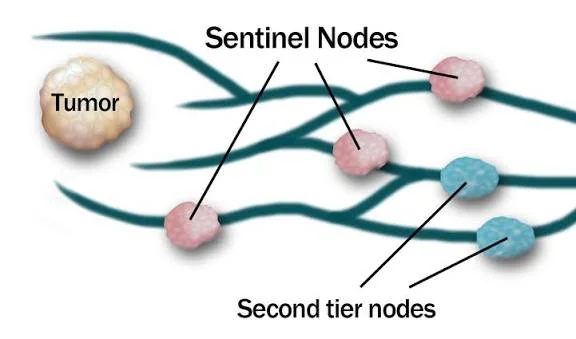
A sentinel lymph-node biopsy checks the first lymph node or nodes likely to receive drainage from the tumor area. It may be discussed when the primary growth is thick enough or has other high-risk features.
A negative result can help some patients avoid broader lymph-node surgery.
The procedure is not automatically needed for every small lesion. Doctors consider thickness, ulceration, age, location, and other pathology findings before recommending it.
New Skin Melanoma Options After Surgery
Adjuvant therapy is treatment given after complete removal to lower the chance of return. It has become especially important for higher-risk stage II and stage III disease.
The PD-1 inhibitors pembrolizumab and nivolumab can be used after surgery in selected patients. These medicines remove a natural “brake” from immune cells, helping them recognize and attack hidden cancer cells.
In October 2023, the FDA approved nivolumab for completely resected stage IIB or IIC disease in patients aged 12 years and older. This added another option for people without known lymph-node spread but with a meaningful recurrence risk.
Patients still need to weigh the possible benefit against immune-related risks. Checkpoint drugs can sometimes cause inflammation in healthy organs, including the bowel, thyroid, lungs, liver, kidneys, skin, and hormone glands.
Long-Term Immunotherapy Results Add Confidence
Recent long-term evidence is also useful. A 2026 report from the CheckMate 238 study found that, after nearly nine years of follow-up, nivolumab continued to provide longer recurrence-free survival than ipilimumab after resection of stage III or IV disease.
The nine-year recurrence-free survival rates were 44% with nivolumab and 37% with ipilimumab. Importantly, researchers reported no new late safety signals during the extended follow-up.
Immunotherapy Before Surgery Is a Major Shift
One of the most important recent developments is neoadjuvant immunotherapy, which means giving medicine before an operation.
The idea is simple but powerful. The immune system is exposed to the intact tumor, and doctors can later examine the removed tissue to see how strongly the cancer responded.
The phase 3 NADINA trial studied two cycles of nivolumab plus ipilimumab before surgery in people with resectable, visible stage III disease. At 12 months, estimated event-free survival was 83.7% in the neoadjuvant group and 57.2% in the group that had surgery followed by nivolumab.
However, serious treatment-related side effects were more common with the pre-surgery combination.
The National Cancer Institute now lists neoadjuvant pembrolizumab and nivolumab-plus-ipilimumab among treatment approaches for resectable stage III disease. However, regulatory approval and routine availability can vary by regimen and country.
This approach may allow treatment to be adjusted according to the response found in the surgical specimen. For example, a strong response could support less treatment after surgery, while a weak response may signal the need for additional therapy.
Checkpoint Combinations for Advanced Disease
For cancer that cannot be removed or has reached distant organs, checkpoint inhibitors are often central. Options include pembrolizumab or nivolumab alone, nivolumab with ipilimumab, and nivolumab with relatlimab.
Relatlimab blocks LAG-3, while nivolumab blocks PD-1. These are two different immune checkpoints that cancer cells may use to weaken an immune response.
In the trial supporting the fixed combination, median progression-free survival was about 10.1 months with nivolumab-relatlimab compared with 4.6 months with nivolumab alone.
When metastatic melanoma is discussed, the key question is not simply which medicine is strongest. Doctors consider how quickly the cancer is growing, whether the brain is affected, previous treatments, autoimmune conditions, and the patient’s ability to manage side effects.
Single-drug PD-1 treatment may offer a more manageable safety profile. In contrast, dual checkpoint treatment can produce stronger immune activity but may also cause more serious inflammation.
Targeted Therapy Uses the Tumor’s Mutation
About half of cutaneous tumors carry a BRAF gene change. When testing finds a BRAF V600 mutation, doctors may use a BRAF inhibitor together with a MEK inhibitor.
Common combinations include:
- Dabrafenib plus trametinib
- Encorafenib plus binimetinib
- Vemurafenib plus cobimetinib
These medicines interrupt signals that tell mutated cells to grow. Because they act directly on the abnormal pathway, tumors may begin shrinking relatively quickly.
Targeted combinations can therefore be valuable when cancer is causing urgent symptoms. Immunotherapy is often considered first because its benefits may last longer, but targeted treatment may be preferred when rapid control is critical.
Biomarker Testing Is Now Essential
BRAF testing is standard when the result could affect treatment. Less common changes, including KIT mutations and rare gene fusions, may also open treatment choices for selected patients.
Testing may be completed on tissue from the original lesion or a later tumor. In some situations, doctors may also use blood-based molecular testing, although tissue testing remains important.
Biomarker results can influence:
- The choice of medicine
- The order of treatment
- Clinical-trial eligibility
- The expected speed of response
- Options available after recurrence
Cell Therapy Opens a New Door

A major advance arrived in February 2024, when the FDA granted accelerated approval to lifileucel, a tumor-infiltrating lymphocyte therapy.
It is approved for adults with unresectable or advanced disease previously treated with a PD-1 blocker and, when BRAF V600-positive, a BRAF inhibitor with or without a MEK inhibitor.
For this treatment, surgeons remove a piece of tumor. A laboratory then collects and expands immune cells that had already entered the tumor.
After preparation with chemotherapy, billions of these cells are returned to the patient through an infusion. Supportive immune stimulation is also given, so treatment normally takes place at an experienced hospital.
Lifileucel offers another path for some people whose disease has progressed despite checkpoint and targeted drugs. However, it can cause serious risks, including low blood counts, infection, bleeding, fever, low blood pressure, and organ problems.
The approval remains accelerated. Therefore, continued approval may depend on confirmatory evidence showing ongoing clinical benefit.
Faster and More Convenient Drug Delivery
Another practical advance involves how medicines are given. In December 2024, the FDA approved a subcutaneous form of nivolumab with hyaluronidase across approved adult solid-tumor uses, including relevant cancer indications.
FDA records also show expanded subcutaneous nivolumab indications in 2025 for eligible adults and adolescents with resected or unresectable disease. A subcutaneous pembrolizumab formulation also gained relevant indications in 2025.
Instead of a longer intravenous infusion, these formulations can be injected beneath the skin. They do not create a new type of immune treatment, but they may reduce time spent in an infusion chair.
Local Treatment Still Has an Important Role
Systemic therapy receives most headlines, but local treatments remain valuable. Surgery or focused radiation may control a limited number of tumors, relieve pain, treat brain lesions, or prevent complications.
Talimogene laherparepvec, also called T-VEC, is an oncolytic virus injected directly into accessible tumors. The modified virus enters tumor cells, causes them to break apart, and may also encourage an immune response.
Other regional options can include isolated limb infusion or perfusion for disease mainly affecting an arm or leg. These methods deliver high concentrations of treatment to one limb while limiting exposure to the rest of the body.
Radiation may also be used for tumors in the brain, bone, lymph nodes, skin, or soft tissue. In some situations, local therapy is combined with immunotherapy or targeted drugs.
Recognizing Different Forms and Warning Signs
Treatment depends partly on subtype and location. nodular melanoma may grow downward quickly and can appear as a firm, raised bump.
In comparison, amelanotic melanoma may look pink, red, or skin-colored because it contains little visible pigment.
subungual melanoma and nail melanoma begin in the nail unit. A search for normal black line on nail vs melanoma may encourage someone to seek care, but a photograph cannot reliably separate harmless pigment from cancer.
Online labels can also blur important differences. The phrase early stage melanoma usually describes localized disease, malignant melanoma is an older broad label, melanoma skin cancer refers to cutaneous disease, and ocular melanoma begins in the eye.
The ABCDE guide remains useful when checking for signs of melanoma:
- A — Asymmetry: One half looks different from the other.
- B — Border: The edge is blurred, notched, or uneven.
- C — Color: Several shades appear within one spot.
- D — Diameter: The lesion is growing or unusually large.
- E — Evolving: Its size, shape, color, or feeling changes.
However, some dangerous lesions do not match every ABCDE feature.
People asking what does melanoma look like on the skin should focus on change instead of searching for one classic image. A new spot, evolving mole, sore that will not heal, bleeding area, or unusual bump deserves professional examination.
The question how fast does melanoma spread has no single answer because thickness, ulceration, subtype, location, and lymph-node findings all affect risk. Diagnosis requires tissue examination under a microscope.
How Doctors Build a Personalized Plan

Treatment decisions should reflect the complete medical picture rather than one test result. The team may review:
- Stage and tumor thickness
- Ulceration and lymph-node findings
- BRAF and other biomarker results
- Whether all visible disease can be removed
- Previous treatments and responses
- Autoimmune disease or transplant history
- Age and general health
- The patient’s goals and daily priorities
For example, a patient with a small localized lesion may need only surgery and monitoring. Another person with high-risk stage III disease may discuss treatment before or after surgery.
Someone with fast-growing, BRAF-positive cancer may need rapid targeted treatment. Meanwhile, a patient whose cancer has progressed after earlier therapy may be referred to a specialist cell-therapy center.
Questions Worth Asking Before Treatment
Bring a written list to the appointment:
- Is this treatment approved for my exact stage and situation?
- What is the main goal: cure, lower recurrence risk, shrink tumors, or ease symptoms?
- Has my tumor been tested for BRAF and other useful markers?
- Should medicine be given before surgery?
- What serious side effects require a same-day call?
- Could a clinical trial offer a suitable option?
- How will scans and blood tests show whether treatment is working?
- How might this plan affect fertility, work, travel, or caregiving?
Clear answers make a complex plan easier to understand. Moreover, patients should ask for written instructions explaining who to contact during evenings, weekends, and emergencies.
What Is Coming Next?
Research is moving toward personalized cancer vaccines, improved checkpoint combinations, better cell products, and treatment guided by circulating tumor DNA.
Scientists are also studying the best sequence for immune and targeted medicines. Another important goal is identifying who needs intensive combination therapy and who can receive a less toxic option without losing benefit.
However, an encouraging study is not the same as an approved standard. Patients should ask whether a proposed option is established care, an off-label use supported by evidence, or part of a clinical trial.
Conclusion
The treatment landscape has changed from surgery and limited drug options to a broad, stage-specific strategy. Surgery remains highly effective for localized disease, while adjuvant PD-1 therapy can lower recurrence risk in selected higher-risk cases.
Moreover, neoadjuvant immunotherapy is reshaping stage III care. BRAF-guided combinations offer fast control, checkpoint regimens can produce durable responses, and lifileucel provides a new path after previous treatment.
The takeaway is practical: get an expert diagnosis, complete biomarker testing when appropriate, and discuss both approved care and relevant trials. The best plan is built for one person, not an average patient.
Frequently Asked Questions
What is the newest approved treatment for advanced disease?
Lifileucel received accelerated FDA approval in 2024 for certain previously treated adults. It uses immune cells collected from the patient’s own tumor and expanded in a laboratory.
Can stage II disease need immunotherapy after surgery?
Yes. Pembrolizumab or nivolumab may be considered after complete removal of selected stage IIB or IIC tumors. The possible benefit must be weighed against immune-related side effects.
Is immunotherapy better than targeted therapy?
Neither is automatically better for every patient. Immunotherapy may produce more durable control, while BRAF-MEK treatment can work faster in BRAF-positive tumors.
Is treatment before surgery now standard?
Pre-surgery immune treatment is an important option for selected resectable stage III cases. However, availability and regulatory status vary by regimen, treatment center, and country.
Can advanced disease be cured?
Some people achieve long-lasting complete responses, but widespread disease remains difficult to cure. Modern therapy may provide durable control, and ongoing trials continue to expand treatment choices.
⭐ Make MindLiva Your Preferred Source on Google
Get trusted health, wellness, and lifestyle articles from MindLiva.
Add MindLiva
Samie Babaei is a medical science student at Shahid Beheshti University of Medical Sciences with a strong interest in health, wellness, and medical research. As a health writer and researcher at MindLiva, she focuses on creating clear, evidence-based content that helps readers better understand health and well-being.