



Preventing Advanced Melanoma Through Early Stage Detection
Have you ever looked at a mole and wondered whether it was normal or something more serious? Most people have. While many skin spots are harmless, recognizing early stage melanoma can make a life-changing difference. According to recent data, localized melanoma has a 5-year relative survival rate of more than 99%, highlighting why early diagnosis remains one of the most powerful tools in fighting this disease.
This guide explains what early melanoma looks like, the warning signs to watch for, modern diagnostic methods, treatment options, and practical prevention strategies. You’ll also discover how dermatologists evaluate suspicious lesions and why regular skin checks are worth making part of your routine.
Why Early Detection Saves Lives
Early detection is the biggest factor influencing successful treatment. When doctors diagnose the disease before it spreads beyond the skin, treatment is usually straightforward and outcomes are excellent. Recent clinical research continues to show that tumor thickness at diagnosis remains one of the strongest predictors of long-term survival.
Many people mistakenly believe skin cancer always develops quickly or painfully. In reality, some suspicious spots change slowly over months or years. That is why regular self-examinations and professional skin checks matter. Dermatologists recommend becoming familiar with your own skin so that even subtle changes become easier to notice.
Personal experience from many dermatology clinics shows that patients who photograph their moles every few months often identify changes much sooner than those relying only on memory. Simple awareness frequently leads to earlier diagnosis and less invasive treatment.
Understanding Early Stage Melanoma
Many people hear the word melanoma and immediately think of an advanced or life-threatening illness. In reality, this type of skin cancer often begins with very subtle changes that are easy to overlook. The disease develops when pigment-producing cells, called melanocytes, begin growing uncontrollably. These cells normally protect the skin by producing melanin, but DNA damage—most commonly from ultraviolet (UV) radiation—can trigger abnormal growth. Detecting these changes while they remain confined to the upper layers of the skin offers the best chance of a complete cure.
Age is only one piece of the puzzle. Although melanoma becomes more common as people get older, it can also affect younger adults and even teenagers. Individuals with fair skin, light-colored eyes, red or blond hair, numerous moles, or a family history of skin cancer face a higher risk. However, people with darker skin should not assume they are immune. Regular sun exposure, tanning beds, repeated sunburns, and weakened immune systems all contribute to increased risk. Understanding these factors allows people to make informed decisions about prevention without living in fear. The goal is awareness, not anxiety.
Recognizing the Signs of Melanoma Before It Progresses
Knowing the signs of melanoma can make the difference between a simple outpatient procedure and a much more complicated treatment journey. Dermatologists often recommend following the ABCDE rule, which helps identify suspicious moles:
| ABCDE Rule | What It Means |
| A – Asymmetry | One half doesn’t match the other. |
| B – Border | Edges are irregular, blurred, or uneven. |
| C – Color | Multiple shades appear within one mole. |
| D – Diameter | Usually larger than 6 mm, although smaller lesions can also be dangerous. |
| E – Evolving | Any noticeable change in size, color, shape, or symptoms. |
Besides the ABCDE rule, pay attention to itching, tenderness, bleeding, crusting, or sores that refuse to heal. Some melanomas develop rapidly, while others change gradually over many months. This variation often leads people to ask, how fast does melanoma spread. The answer depends on the specific subtype and individual circumstances. Some forms remain localized for a considerable time, whereas others grow aggressively and require urgent treatment. Because there is no reliable way to predict behavior simply by appearance, every suspicious lesion deserves prompt evaluation by a healthcare professional.
What Does Melanoma Look Like on the Skin?
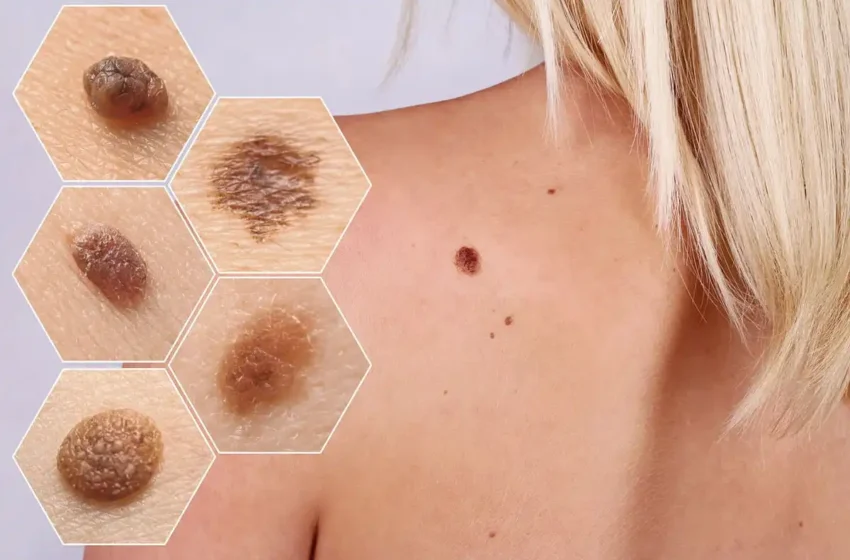
One of the most common questions patients ask is, what does melanoma look like on the skin? Unfortunately, there is no single appearance that fits every case. Some lesions are dark brown or black, while others display multiple colors including red, blue, gray, or white. A few may even appear pink or flesh-colored, making them especially difficult to recognize without professional assessment.
A useful way to think about melanoma is the “ugly duckling” principle. If one mole looks noticeably different from all the others on your body, it deserves closer attention. Even a tiny change can be meaningful if it stands out from your usual pattern. Modern smartphones make it easier than ever to photograph suspicious moles and compare images over time. Although these photos should never replace a medical examination, they can help identify subtle changes that might otherwise go unnoticed.
Different Types of Melanoma You Should Know
Not all melanomas behave the same way. Some grow slowly along the surface of the skin, while others invade deeper tissues much more quickly. Understanding these differences helps explain why early diagnosis is so important.
One aggressive form is nodular melanoma, which often appears as a raised, firm bump rather than a flat mole. Because it grows vertically into the skin at an early stage, it can become dangerous faster than many other subtypes. Another uncommon variety is amelanotic melanoma, which lacks the typical dark pigment. Instead, it may appear pink, red, or skin-colored, making it easier to mistake for a harmless skin irritation or small scar.
People should also be aware of subungual melanoma, a rare cancer that develops beneath the fingernails or toenails. It is sometimes confused with bruising caused by minor injuries. This is why doctors often discuss the difference between a normal black line on nail vs melanoma. A harmless nail streak usually remains stable and uniform, whereas suspicious changes may widen, darken, or extend onto the surrounding skin. Because diagnosis can be challenging, persistent nail discoloration should always be evaluated by a dermatologist.
Another rare form is ocular melanoma, which affects the eye rather than the skin. Although uncommon, it highlights the fact that pigment-producing cells exist throughout the body. Eye examinations can occasionally detect this condition before symptoms become noticeable.
Finally, nail melanoma deserves special attention because people frequently ignore nail changes for months, assuming they result from trauma or fungal infections. Persistent or changing pigmentation beneath the nail should never be dismissed without proper medical evaluation.
Diagnosis: How Doctors Confirm Early Stage Melanoma
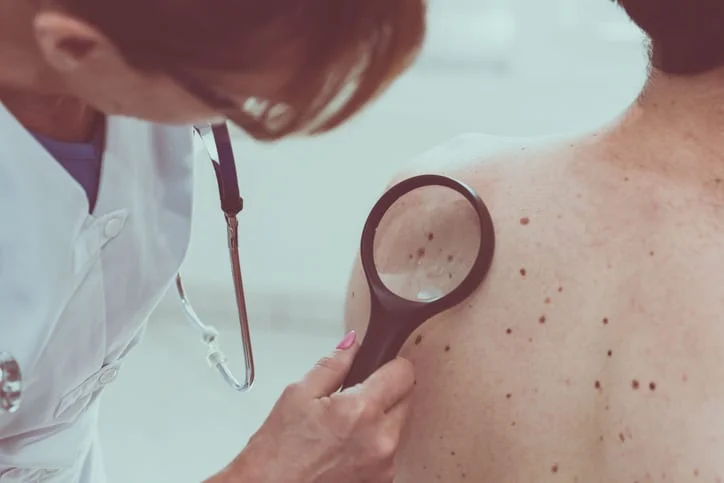
Finding a suspicious mole is only the first step. A dermatologist cannot diagnose melanoma skin cancer by appearance alone, even with years of experience. Instead, they combine a physical examination with specialized tools and laboratory testing. During the appointment, the doctor may use a dermatoscope—a handheld device that magnifies the skin and reveals patterns invisible to the naked eye. This painless examination helps determine whether a mole has features that require further investigation.
If a lesion appears suspicious, the next step is usually a biopsy. During this procedure, all or part of the mole is removed and examined under a microscope by a pathologist. The pathology report provides critical information, including the thickness of the tumor, whether ulceration is present, and if the margins are clear. These details help determine the stage of the disease and guide treatment decisions. In most cases, when the cancer is detected early, surgery alone is enough to remove it completely. This is one of the strongest reasons why noticing changes early can dramatically improve long-term outcomes.
Treatment Options for Early Melanoma
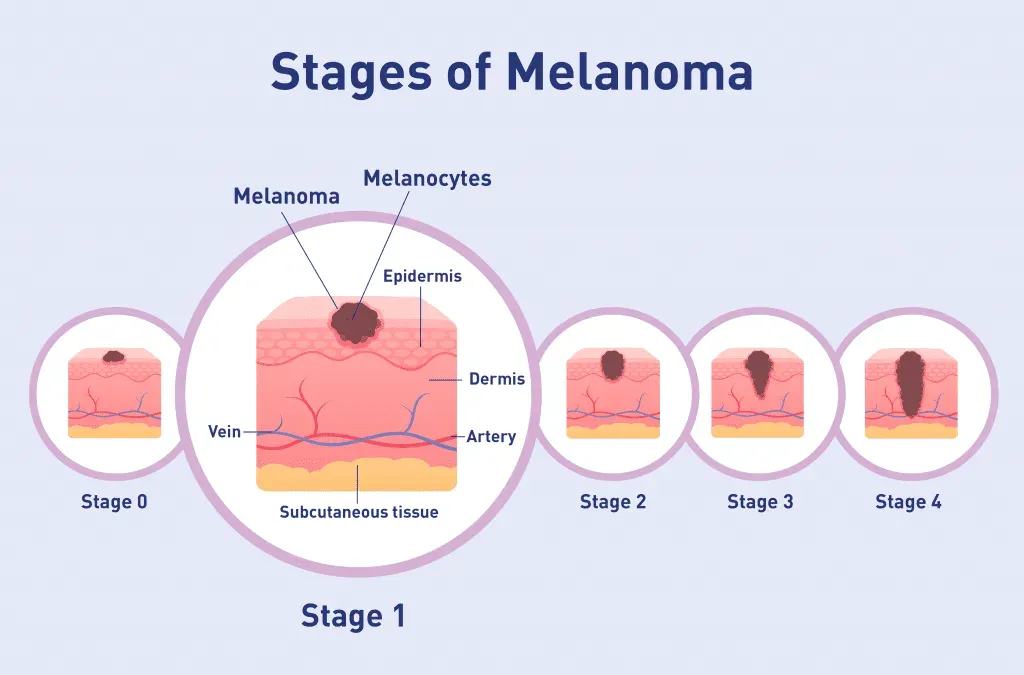
Treatment depends on how deeply the cancer has grown into the skin and whether it has spread beyond its original location. Fortunately, patients diagnosed with localized disease often need only a surgical procedure called a wide local excision, in which the tumor and a small margin of healthy skin are removed to reduce the chance of recurrence.
For some patients with higher-risk features, doctors may recommend a sentinel lymph node biopsy. This test checks whether cancer cells have reached the nearest lymph nodes. If the lymph nodes are clear, additional treatment may not be necessary beyond routine follow-up. However, if cancer has spread, the care plan may include immunotherapy, targeted therapy, or participation in clinical trials.
| Stage | Typical Treatment | Expected Outcome |
| In situ | Surgical removal | Excellent prognosis |
| Stage I | Wide local excision | Very high cure rate |
| Stage II | Surgery ± sentinel lymph node biopsy | Close monitoring required |
| Advanced stages | Surgery, immunotherapy, targeted therapy, radiation when appropriate | Depends on extent of spread |
Modern treatments have transformed care for malignant melanoma, especially for patients diagnosed at more advanced stages. Immunotherapy drugs help the body’s immune system recognize and destroy cancer cells, while targeted therapies attack specific genetic mutations found in certain tumors. These medical advances have significantly improved survival over the past decade.
When Melanoma Becomes Advanced
Although early detection offers outstanding outcomes, delaying evaluation can allow cancer cells to spread beyond the skin. Once melanoma reaches distant organs, it is known as metastatic melanoma. Treatment becomes more complex and may involve combinations of surgery, immunotherapy, targeted medications, and radiation therapy.
The encouraging news is that remarkable progress has been made in cancer research. New immunotherapy combinations continue to improve survival rates, and ongoing clinical trials are exploring even more effective treatment strategies. Even so, specialists consistently emphasize that preventing progression through early diagnosis remains far more effective than treating advanced disease. Spending a few minutes each month checking your skin is a small investment that could have a life-changing impact.
Practical Ways to Reduce Your Risk
While no prevention strategy can eliminate risk completely, several habits can significantly reduce your chances of developing skin cancer. The goal is not to avoid sunlight altogether but to enjoy it safely and responsibly.
Here are the most effective preventive measures:
- Apply a broad-spectrum sunscreen with SPF 30 or higher every day when outdoors.
- Reapply sunscreen every two hours, especially after swimming or sweating.
- Wear protective clothing, wide-brimmed hats, and UV-blocking sunglasses.
- Seek shade during peak sunlight hours, generally between 10 a.m. and 4 p.m.
- Avoid indoor tanning beds entirely.
- Perform a full-body skin self-examination once a month.
- Schedule routine skin examinations if you have multiple moles or a family history of skin cancer.
These simple habits become even more valuable when practiced consistently over many years. Prevention isn’t about perfection—it’s about reducing cumulative UV damage over a lifetime.
Living Well After Treatment
Receiving a diagnosis of skin cancer can feel overwhelming at first, but many people go on to live long, healthy, and active lives after successful treatment. Follow-up care plays an essential role in maintaining that positive outcome. Your dermatologist will usually recommend regular skin examinations, especially during the first few years after treatment, because individuals who have had one melanoma have a higher chance of developing another in the future.
Between medical appointments, becoming familiar with your own skin is one of the most valuable habits you can develop. Perform a monthly self-examination in a well-lit room using a full-length mirror and a handheld mirror to check hard-to-see areas such as your back, scalp, soles of your feet, and behind your ears. Taking photographs every few months can help you notice gradual changes that might otherwise go unnoticed. If a mole changes in size, shape, color, or begins to itch or bleed, arrange an appointment with your healthcare provider as soon as possible.
Healthy lifestyle choices also support overall wellbeing. Eating a balanced diet rich in fruits, vegetables, whole grains, and lean protein helps maintain general health, while regular exercise strengthens the immune system and improves quality of life. Protecting your skin from excessive UV exposure should become part of your daily routine, not just something you remember during holidays. Small, consistent habits often have the greatest long-term impact.
Many patients also experience emotional stress after diagnosis. Feeling anxious before follow-up appointments or worrying about recurrence is completely understandable. Speaking openly with your healthcare team, joining support groups, or discussing concerns with family members can make the recovery journey much easier. Knowledge and regular monitoring often replace fear with confidence.
Conclusion
Early detection remains the single most effective way to prevent advanced skin cancer. Learning how to recognize suspicious changes, understanding your personal risk factors, and scheduling prompt medical evaluations can dramatically improve outcomes. Most early cases are highly treatable, and many patients are cured with a simple surgical procedure before the disease has an opportunity to spread.
Remember that skin checks do not take long, yet they may save your life. Protect your skin from excessive sunlight, avoid tanning beds, wear sunscreen consistently, and become familiar with your own moles. If you ever notice something unusual, don’t wait to see whether it disappears on its own. A quick visit to a dermatologist today may prevent a much more serious problem tomorrow.
Frequently Asked Questions
What does melanoma look like when it’s first starting?
Early melanoma often appears as a new mole or a change in an existing one. It may have uneven borders, multiple colors, or an unusual shape that looks different from your other moles.
Can you have melanoma for 5 years and not know?
Yes. Some melanomas grow slowly and may remain unnoticed for years, while others develop much more rapidly. Regular skin examinations help detect changes before they become advanced.
How to tell if melanoma is at an early stage?
Early-stage disease is usually confined to the skin and has not spread to nearby lymph nodes or distant organs. Only a medical examination and biopsy can accurately determine the stage.
Is stage 1 melanoma considered cancer?
Yes. Stage I melanoma is cancer, but it is localized and has an excellent prognosis when treated promptly. The vast majority of patients are successfully treated with surgery.
What is the 2 week rule for melanoma?
In many healthcare systems, patients with suspicious skin lesions should be referred to a skin cancer specialist within two weeks. This fast-track pathway helps ensure early diagnosis and timely treatment.
⭐ Make MindLiva Your Preferred Source on Google
Get trusted health, wellness, and lifestyle articles from MindLiva.
Add MindLiva
Samie Babaei is a medical science student at Shahid Beheshti University of Medical Sciences with a strong interest in health, wellness, and medical research. As a health writer and researcher at MindLiva, she focuses on creating clear, evidence-based content that helps readers better understand health and well-being.