




How to Spot Melanoma Under Toenail Before It Spreads
Have you ever noticed a dark streak, unusual color change, or mark beneath your toenail and wondered if it was normal? Many people ignore these changes because they assume they are caused by an injury or simple nail pigmentation.
However, melanoma under toenail can sometimes begin with subtle signs that are easy to overlook. Recognizing these changes early gives people a better chance of receiving timely evaluation and treatment.
In this guide, you will learn how melanoma under toenail develops, which symptoms deserve attention, how doctors identify suspicious nail changes, and what steps can help protect your health.
What Is Melanoma Under Toenail and Why Does It Matter?
Melanoma under toenail is a type of cancer that develops from pigment-producing cells located beneath the nail. Although it is less common than other forms of melanoma, it can be more difficult to notice because it develops in an area people rarely check.
The condition is often associated with the nail unit, which includes the nail plate, nail bed, and surrounding skin. Because early changes may look similar to harmless marks, many cases are discovered later than expected.
Doctors often describe this condition as a form of subungual melanoma, which specifically refers to melanoma that starts under the fingernail or toenail.
Unlike bruises that usually grow out with the nail, suspicious pigment changes may continue to expand, change shape, or affect nearby skin.
Why Early Awareness Is Important
The earlier a suspicious nail change is examined, the more options doctors usually have for management. An early stage melanoma diagnosis often means the abnormal cells have not spread beyond the original area.
Many people delay appointments because they think a dark nail streak is only cosmetic. However, paying attention to changes can help identify problems before they become more advanced.
Common Signs of Melanoma Under Toenail to Watch For
Knowing the signs of melanoma can help people decide when a nail change needs medical attention.
Some warning signs include:
- A dark brown or black streak appearing under the nail
- A stripe that becomes wider over time
- Uneven coloring within the nail mark
- Changes in the shape or border of the pigment
- Bleeding, swelling, or a lump near the nail
- Pigment spreading onto the surrounding skin
- A nail that becomes damaged or separates from the nail bed
For example, a thin, stable line that has looked the same for years may not be concerning. However, a new dark band that becomes wider within months deserves professional evaluation.
Melanoma Under Toenail vs Normal Nail Changes
One of the biggest challenges is knowing whether a mark is harmless or something that requires further investigation.
A common question people search is normal black line on nail vs melanoma because both conditions can create dark streaks.
A normal nail line may:
- Stay the same size and color
- Have smooth edges
- Appear on multiple nails
- Match a person’s natural pigmentation pattern
A suspicious nail change may:
- Grow wider over time
- Have irregular borders
- Show multiple shades of color
- Appear on only one nail
- Affect the surrounding skin
However, appearance alone cannot confirm a diagnosis. A dermatologist may use specialized tools, such as dermoscopy, to examine the nail more closely.
How Doctors Diagnose Melanoma Under Toenail
When a healthcare professional evaluates melanoma under toenail, they usually begin with a detailed examination of the nail and medical history.
The evaluation may include:
- Visual examination
The doctor checks the color, size, shape, and pattern of the nail change. - Dermoscopy
A magnifying device helps identify patterns that are difficult to see with the naked eye. - Biopsy
If the area appears suspicious, a small tissue sample may be removed and tested. - Additional testing
If cancer cells are confirmed, doctors may recommend further scans or assessments.
This process helps distinguish nail pigmentation from more serious conditions.
Different Types of Melanoma Related to Nail and Skin Changes
Although many people associate the condition only with dark spots, melanoma can appear in different forms.
Malignant melanoma is the medical term for a cancerous tumor that develops from pigment-producing cells.
Another form called nodular melanoma can grow more quickly and may appear as a raised, changing growth rather than a flat mark.
Some cases involve amelanotic melanoma, which has little or no visible pigment. Because it may appear pink, red, or skin-colored, it can be harder to recognize.
The broader category of melanoma skin cancer includes several types that may affect different areas of the body.
Doctors also study related conditions such as ocular melanoma, which affects pigment cells in the eye, showing that melanoma is not limited only to visible skin areas.
What Does Melanoma Look Like on the Skin and Nails?
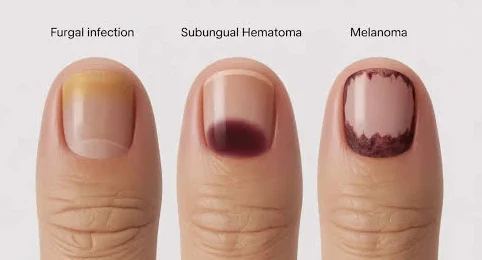
People often ask, what does melanoma look like on the skin because appearance can vary widely.
On the skin, suspicious changes may include:
- An uneven mole
- A spot with multiple colors
- A mark that changes over time
- A growth that looks different from surrounding spots
On the nail, changes can be more subtle. A dark vertical band, especially one that changes gradually, may require evaluation.
It is important to remember that every unusual mark is not cancer. Many nail and skin changes are harmless. The key difference is whether the area changes, grows, or behaves differently over time.
How Fast Does Melanoma Spread?
A common concern is how fast does melanoma spread. The answer depends on several factors, including the type, location, thickness, and biological behavior of the cancer.
Some forms may progress slowly, while others can become aggressive. For example, certain faster-growing forms can increase in size or depth more quickly than others.
This is why waiting to see whether a suspicious nail mark disappears is not always the safest approach.
A dermatologist can provide a more accurate assessment based on examination and testing.
Risk Factors Linked to Nail Melanoma
The exact cause of nail melanoma is not always clear. Unlike many skin cancers, it is not strongly connected only to sun exposure.
Possible risk factors may include:
- Increasing age
- Family history of melanoma
- Certain genetic factors
- Previous melanoma diagnosis
- Trauma or changes affecting the nail area
A previous injury can sometimes draw attention to an existing nail problem, but injuries alone do not usually explain persistent changes.
Can Melanoma Under Toenail Spread?
If untreated, some cases can progress beyond the original nail area.
When cancer cells travel to distant parts of the body, doctors refer to it as metastatic melanoma.
The possibility of spread is one reason early assessment matters. A suspicious nail change should not be ignored simply because it does not hurt.
Many people assume cancer must cause pain, but early changes may be painless.
Understanding Melanoma Under Toenail Treatment Options
Treatment depends on factors such as the size of the tumor, depth of growth, and whether it has spread.
Possible approaches may include:
- Surgical removal of the affected tissue
- Removing part or all of the nail unit when necessary
- Monitoring nearby lymph nodes in certain cases
- Additional therapies for advanced disease
Every situation is different. Treatment decisions are made by healthcare professionals after reviewing test results.
Practical Ways to Monitor Your Toenails

A simple self-check can help you notice changes earlier.
Try these habits:
- Examine your toenails regularly under good lighting.
- Compare both feet for unusual differences.
- Take photos of suspicious marks to track changes.
- Schedule medical advice if a mark changes or grows.
This does not replace professional screening, but it encourages awareness.
Conclusion
Melanoma under toenail may begin as a small and easy-to-miss change, but awareness can help people recognize when something needs medical attention.
A new dark streak, changing nail color, irregular border, or spreading pigment should not automatically be ignored.
Understanding the difference between normal nail changes and warning signs helps people make informed decisions. Regular checks, professional evaluations, and early action remain important tools in protecting long-term health.
In short, noticing a change early is one of the most valuable steps anyone can take when it comes to nail and skin health.
FAQs
How serious is melanoma under a toenail?
Melanoma under a toenail can be serious because it may spread if it is not diagnosed early. Early evaluation improves treatment possibilities.
How do you treat melanoma under a toenail?
Treatment usually involves removing the affected cancerous tissue. The exact approach depends on the size, depth, and stage of the condition.
What is the 2 week rule for melanoma?
The two-week rule encourages people to seek medical advice quickly when they notice a suspicious or changing skin or nail mark that does not improve.
How do you know if you have melanoma in your toe?
Possible clues include a changing dark streak, irregular nail pigmentation, bleeding, swelling, or pigment spreading around the nail.
What does stage 1 nail melanoma look like?
Stage 1 nail melanoma may appear as a narrow dark band or discoloration under the nail without obvious spread. A doctor must confirm the stage through testing.
⭐ Make MindLiva Your Preferred Source on Google
Get trusted health, wellness, and lifestyle articles from MindLiva.
Add MindLiva
Samie Babaei is a medical science student at Shahid Beheshti University of Medical Sciences with a strong interest in health, wellness, and medical research. As a health writer and researcher at MindLiva, she focuses on creating clear, evidence-based content that helps readers better understand health and well-being.