



Mucosal Melanoma: Causes, Risks, and Prevention Strategies
Have you ever noticed an unusual dark spot, persistent sore, or unexplained change inside your mouth or nose and wondered whether it was simply irritation?
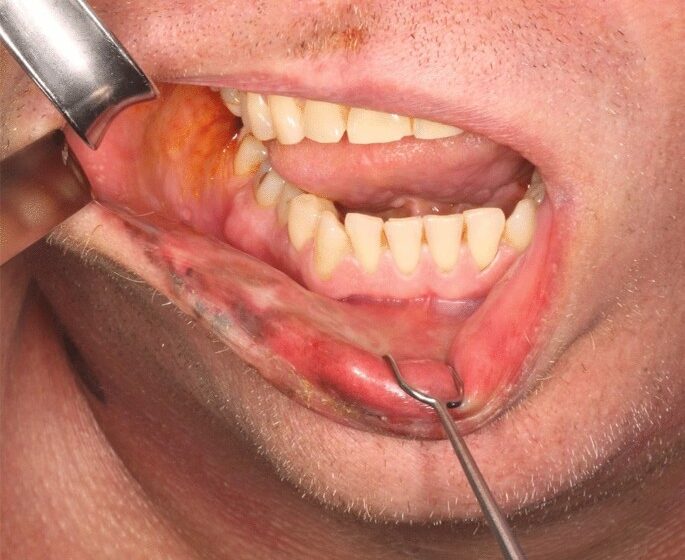
Most changes are harmless. However, some unusual lesions deserve medical attention because mucosal melanoma can develop on mucous membranes rather than on the visible skin.
Unlike many common skin cancers, this rare cancer may appear in hidden areas, making early recognition more difficult. It can affect the nasal passages, mouth, throat, digestive tract, urinary tract, or genital area.
In this guide, we will explain what mucosal melanoma is, where it develops, which factors may increase risk, what warning signs to watch for, how doctors diagnose it, and which prevention habits may help.
The goal is not to create unnecessary fear. Instead, it is to help readers recognize meaningful changes and understand when professional evaluation is appropriate.
What Is Mucosal Melanoma?
Mucosal melanoma is a rare type of cancer that begins in melanocytes, the cells responsible for producing the pigment melanin.
These cells can exist in mucous membranes throughout the body. Therefore, melanoma does not always begin on sun-exposed skin.
Possible locations include:
- Nasal and sinus passages
- Mouth and throat
- Esophagus and gastrointestinal tract
- Anal and rectal region
- Vulva and vagina
- Urinary tract
The exact cause is not always clear. Importantly, mucosal melanoma differs from the more familiar forms of skin melanoma because ultraviolet sunlight is not considered its main driving factor.
Moreover, because some affected areas cannot easily be checked at home, symptoms may initially seem unrelated to cancer.
How Is Mucosal Melanoma Different From Skin Melanoma?
A melanoma developing on the skin is usually easier to notice because people can see changes in a mole, freckle, or patch.
Mucosal disease can be much less obvious.
For example, a person with a nasal lesion might experience repeated nosebleeds or blockage. Someone with an oral lesion may notice a persistent dark patch, swelling, or unexplained bleeding.
That difference is one reason awareness matters.
Where Does Mucosal Melanoma Develop?
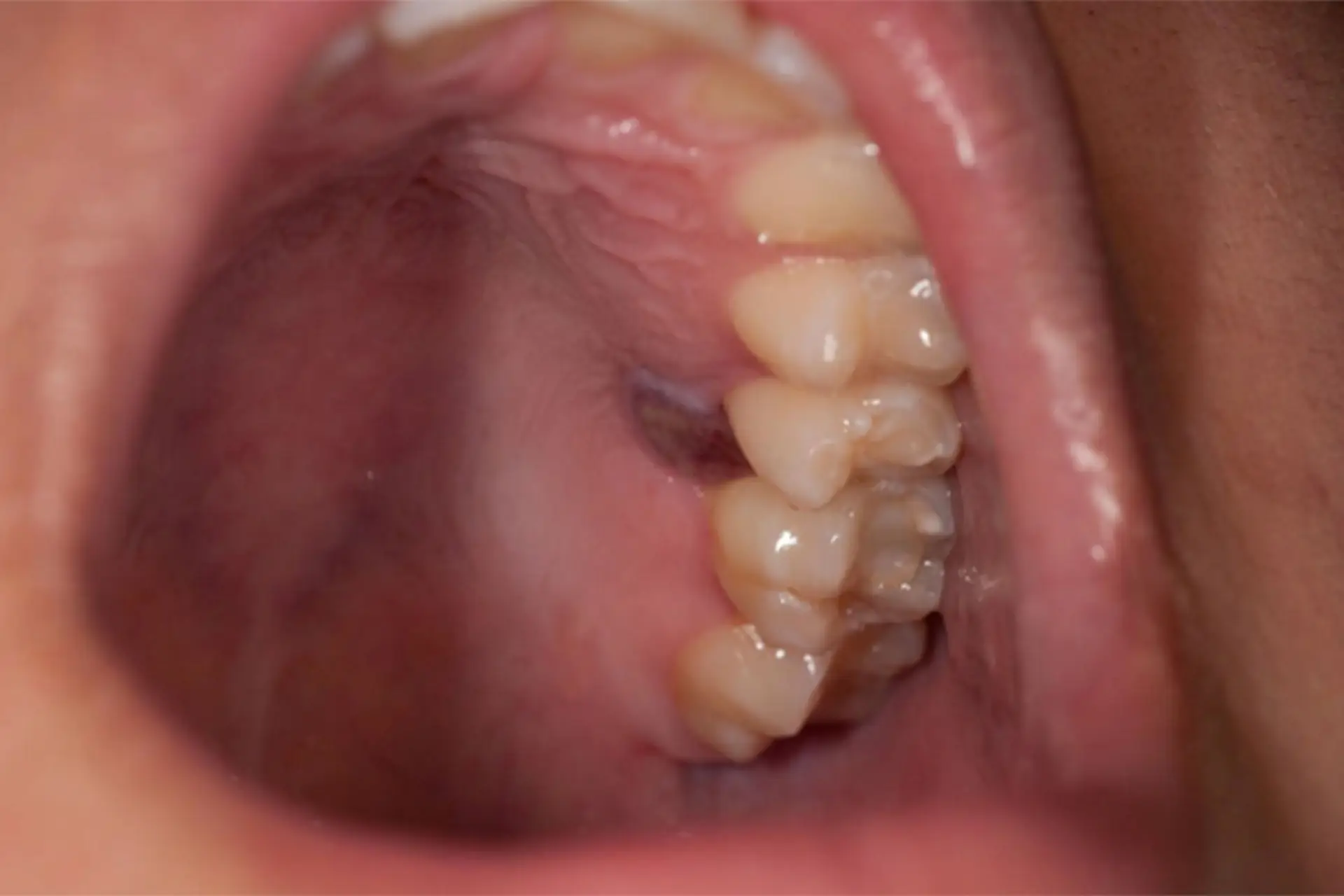
Mucosal melanoma can occur in several parts of the body. However, certain locations are more commonly affected than others.
Oral and Nasal Mucosal Melanoma
Lesions in the mouth may develop on the palate, gums, or other oral surfaces. Nasal disease can affect the nasal cavity or nearby sinus spaces.
Potential symptoms include:
- Persistent nasal congestion on one side
- Recurrent nosebleeds
- A dark or unusual oral patch
- A sore that does not heal
- Swelling or a lump
- Unexplained pain
- Changes in speech or swallowing
These symptoms have many possible causes, including infections and irritation. Still, persistent or unexplained changes should be assessed by a healthcare professional.
Genital and Anorectal Mucosal Melanoma
Mucosal melanoma may also develop in genital or anorectal tissues.
Possible symptoms can include bleeding, a new lump, persistent discomfort, itching, or an unusual pigmented area.
Because these symptoms can overlap with common conditions, people may delay seeking care. However, unusual symptoms that persist deserve attention rather than self-diagnosis.
What Causes Mucosal Melanoma?
Scientists have not identified one simple cause of mucosal melanoma.
This is an important distinction. Unlike many conventional skin cancers, its development is not primarily linked to cumulative ultraviolet radiation.
Instead, researchers believe that genetic changes and other biological factors may contribute to the development of cancerous melanocytes.
Some cases also appear to involve specific molecular changes that doctors can identify through laboratory testing.
Is Sun Exposure the Main Risk?
Not usually.
Sun protection remains extremely important because ultraviolet radiation contributes to many other cancers, including common forms of skin melanoma. However, avoiding sunlight alone cannot fully prevent mucosal melanoma.
This means prevention requires a broader approach.
Risk Factors for Mucosal Melanoma
Because the disease is uncommon, researchers are still studying exactly why some people develop it.
Possible risk factors and associations may include:
- Older age: The disease is more often diagnosed in adults.
- Certain genetic changes: Tumor testing may identify mutations or molecular alterations.
- Location-specific biological factors: The tissues where mucosal melanoma develops have different cellular environments.
- Family history: A family history of melanoma may be relevant in some individuals, although most mucosal cases are not inherited.
- Unknown factors: In many patients, no clear risk factor can be identified.
In other words, having no known risk factor does not eliminate the possibility of developing the disease.
Warning Signs You Should Not Ignore
Recognizing the signs of melanoma can help people know when a medical assessment is worthwhile.
For mucosal melanoma, symptoms depend heavily on location.
Watch for changes such as:
- A new dark, brown, black, gray, or unusual-colored lesion
- A sore that repeatedly returns or does not heal
- Unexplained bleeding
- A growing lump
- Persistent swelling
- One-sided nasal blockage
- Recurrent nosebleeds
- Unexplained pain
- Changes in bowel habits
- Difficulty swallowing
- Unusual genital bleeding or pigmentation
However, the appearance of a lesion does not prove cancer. Only appropriate medical evaluation and, when necessary, tissue testing can establish a diagnosis.
What Does Melanoma Look Like on the Skin?
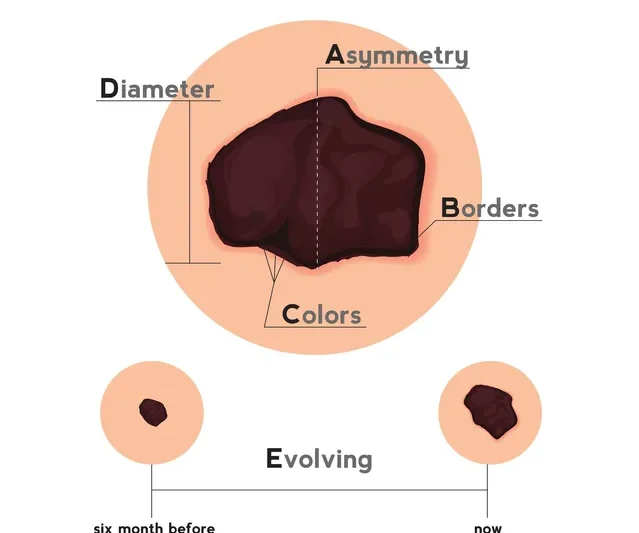
Many people search what does melanoma look like on the skin because they associate the disease with changing moles.
On visible skin, doctors often use the ABCDE approach:
- A — Asymmetry: One half looks different from the other.
- B — Border: Edges may be irregular or poorly defined.
- C — Color: Several shades may appear within one lesion.
- D — Diameter: Larger lesions may deserve closer examination.
- E — Evolving: A changing lesion is particularly important.
However, these rules are designed primarily for skin lesions and should not be used as a complete test for mucosal disease.
Early Detection and Diagnosis
Finding cancer at an early stage melanoma can be associated with more treatment options and better outcomes in many melanoma settings.
However, mucosal melanoma presents a particular challenge because symptoms may be subtle.
A doctor may begin with a physical examination and medical history. Depending on the location, an ear, nose and throat specialist, dentist, dermatologist, gynecologist, gastroenterologist, or another specialist may become involved.
What Tests Are Used?
Diagnostic evaluation can include:
- Physical examination
- Endoscopic examination
- Imaging studies
- Biopsy
- Microscopic examination of tissue
- Molecular or genetic testing
A biopsy is particularly important because visual appearance alone cannot reliably distinguish cancer from a benign lesion.
After diagnosis, doctors determine the tumor’s location, size, depth, spread, and molecular characteristics to guide treatment.
Mucosal Melanoma Treatment Options
Treatment depends on where the tumor is located and whether it has spread.
Surgery
When possible, surgeons may remove the tumor along with an appropriate margin of surrounding tissue.
The exact operation depends on the anatomical location and size of the cancer.
Radiation Therapy
Radiation may be considered in selected situations, particularly when local control is important or when surgery alone may not provide sufficient treatment.
Immunotherapy
Modern immunotherapy has changed treatment for several advanced cancers.
Medicines known as immune checkpoint inhibitors can help the immune system recognize and attack cancer cells. Their suitability depends on the individual patient’s disease and overall medical situation.
Targeted Therapy
Some tumors contain molecular alterations that may make them candidates for targeted medicines.
Therefore, tumor profiling can sometimes provide useful information when doctors are deciding among treatment options.
Advanced Disease
If cancer has spread to distant organs, it may be described as metastatic melanoma.
At this stage, treatment commonly focuses on controlling the disease, extending survival, relieving symptoms, and maintaining quality of life.
Treatment plans should always be individualized by an oncology team.
How Fast Does Melanoma Spread?
One common online question is how fast does melanoma spread?
There is no single timeline. Growth and spread can vary substantially between individual tumors.
Tumor biology, location, stage, depth, molecular characteristics, and the patient’s overall situation all influence behavior.
Some melanomas can progress rapidly, while others develop more slowly. Therefore, waiting to see whether a suspicious lesion changes is not a safe substitute for medical assessment.
Mucosal Melanoma vs. Other Types of Melanoma
People sometimes confuse several distinct melanoma terms.
Nodular melanoma is a subtype of cutaneous melanoma that often grows vertically and can appear as a raised lesion.
Subungual melanoma develops beneath a fingernail or toenail and can initially appear as a dark streak.
Amelanotic melanoma contains little or no visible pigment, making it particularly difficult to recognize by color alone.
Ocular melanoma develops in the eye and is biologically different from mucosal melanoma.
These conditions share a common origin in melanocytes, but their locations, biological behavior, diagnosis, and treatment can differ.
Understanding Nail Changes
Not every dark nail streak represents cancer.
For people searching normal black line on nail vs melanoma, important clues include whether the streak is new, changing, widening, irregular, or associated with pigment extending onto surrounding skin.
A dark nail streak can have many causes, including trauma and benign pigmentation. However, a new or changing pigmented nail lesion should be examined by a dermatologist, especially when there is no clear explanation.
This is particularly relevant because nail melanoma can be overlooked for months when it is mistaken for an injury.
Mucosal Melanoma and Malignant Melanoma
The term malignant melanoma refers to melanoma that is cancerous and capable of invading surrounding tissue or spreading elsewhere.
Mucosal melanoma is malignant by definition when it is diagnosed as a cancerous melanocytic tumor.
However, terminology can become confusing online. Not every dark spot is malignant, and not every unusual-looking lesion is melanoma.
That is why a biopsy and professional interpretation are essential.
Can Mucosal Melanoma Be Prevented?
There is no guaranteed way to prevent mucosal melanoma because many of its causes remain unknown.
Nevertheless, people can take practical steps that support earlier detection and overall cancer prevention.
1. Pay Attention to Persistent Changes
Do not ignore a sore, lump, bleeding area, or unusual pigmentation simply because it is painless.
Persistence is often more important than discomfort.
2. Maintain Routine Health Examinations
Regular dental, medical, gynecological, or other appropriate examinations can help identify unusual changes that may otherwise remain unnoticed.
3. Protect Your Skin From UV Radiation
Although UV exposure is not considered the main cause of mucosal melanoma, sun protection remains essential for reducing the risk of many common skin cancers.
Use shade, protective clothing, and broad-spectrum sunscreen when appropriate.
4. Avoid Self-Diagnosis From Images Alone
Internet photographs can be useful for education, but they cannot reliably diagnose a lesion.
Two lesions that look similar may have completely different causes.
How Mucosal Melanoma Compares With Melanoma Skin Cancer
Melanoma skin cancer usually begins on visible skin, where changes can often be detected through routine self-examination.
Mucosal disease is different because it develops on internal or semi-hidden surfaces.
| Feature | Mucosal Melanoma | Skin Melanoma |
| Main location | Mucous membranes | Skin |
| UV exposure | Not considered the main cause | Important risk factor |
| Visibility | Often difficult to see | Usually more visible |
| Detection | May require specialist examination | Often noticed through skin checks |
| Symptoms | Depend on body location | Often involves a changing lesion |
The key lesson is simple: melanoma is not limited to sun-exposed skin.
What Personal Experience Teaches Us About Awareness
From a practical health-information perspective, one of the most important lessons is that people often wait for pain before seeking help.
That approach can be misleading.
Some serious conditions cause little or no pain in their early phases. A persistent visual change, unexplained bleeding, or unusual lesion can be more important than whether it hurts.
For example, someone may dismiss a recurring nosebleed as dry air or an oral dark patch as minor irritation. Often, that explanation may be correct. Yet if the change continues, professional evaluation is the safer choice.
The goal is not to fear every symptom. It is to recognize when a symptom is persistent, unusual, or changing.
Staying Informed Without Becoming Anxious
Cancer awareness works best when it encourages sensible action rather than constant worry.
Most unusual spots, sores, and areas of pigmentation have caused other than cancer.
However, the combination of persistence, change, unexplained bleeding, growth, or an unusual lesion is a reasonable reason to seek medical advice.
In short, awareness gives people a better chance to act when something genuinely needs attention.
Conclusion: Knowledge Can Lead to Earlier Action
Mucosal melanoma is rare, but its hidden locations can make recognition difficult. It can develop in areas such as the mouth, nose, gastrointestinal tract, genital region, and other mucous membranes.
Its causes are not completely understood, and conventional sun exposure is not considered its primary cause. Nevertheless, people can still take meaningful steps by paying attention to persistent changes and keeping appropriate health appointments.
Most importantly, do not attempt to diagnose a suspicious lesion from photographs or online descriptions alone.
If you notice an unusual growth, persistent sore, unexplained bleeding, or changing pigmented area, talk with a qualified healthcare professional.
Early attention does not guarantee a particular outcome, but it can help ensure that concerning changes are evaluated rather than ignored.
FAQs About Mucosal Melanoma
Is mucosal melanoma common?
No. Mucosal melanoma is rare compared with melanoma that begins on the skin. Its uncommon nature can also make recognition more challenging.
What are the first symptoms of mucosal melanoma?
Symptoms depend on location but may include persistent pigmentation, a sore that does not heal, bleeding, swelling, a lump, or unexplained changes in the affected area.
Can mucosal melanoma be caused by the sun?
Unlike many skin melanomas, mucosal melanoma is not primarily linked to ultraviolet exposure. Its exact causes are still being studied.
Is mucosal melanoma treatable?
Treatment is possible, but it depends strongly on the tumor’s location, stage, spread, and molecular features. Surgery, radiation, immunotherapy, and targeted treatments may be considered.
When should I see a doctor?
Seek professional evaluation for a new, persistent, growing, bleeding, or unexplained lesion or symptom, particularly when it does not improve as expected.
⭐ Make MindLiva Your Preferred Source on Google
Get trusted health, wellness, and lifestyle articles from MindLiva.
Add MindLiva
Samie Babaei is a medical science student at Shahid Beheshti University of Medical Sciences with a strong interest in health, wellness, and medical research. As a health writer and researcher at MindLiva, she focuses on creating clear, evidence-based content that helps readers better understand health and well-being.