



Can Creatine Cause Kidney Stones? What You Need to Know
Have you ever started a new fitness supplement and then worried about what it might be doing to your kidneys? It is a reasonable concern, especially when online discussions mix laboratory changes, kidney damage, and kidney stones as though they were the same condition.
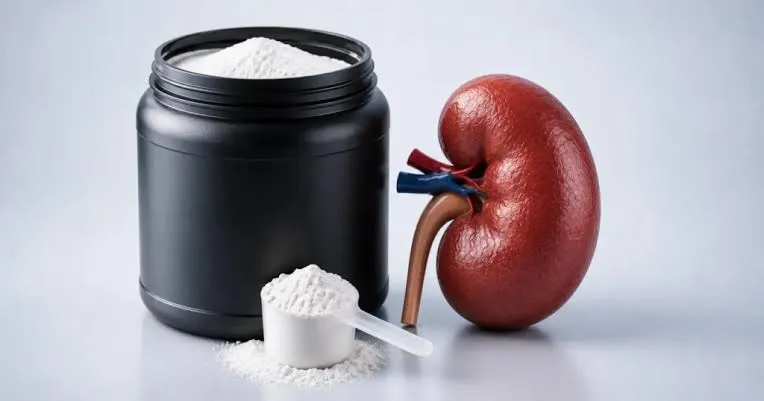
So, can creatine cause kidney stones in an otherwise healthy person? Current human research has not established a direct causal link between standard supplementation and stone formation. However, most available studies examine kidney function rather than tracking kidney stones as their main outcome.
That difference matters. Normal filtration tests do not prove that stone risk is impossible, but they do offer useful reassurance about recommended use in healthy adults.
This guide explains how kidney stones form, what recent research actually shows, which users require more caution, and how hydration, dosage, diet, medications, and product quality may affect the bigger picture.
Can Creatine Cause Kidney Stones? The Evidence in Brief
The most accurate answer is that there is currently no strong evidence showing that normal doses directly produce kidney stones in healthy adults.
However, researchers have not conducted many large, long-term trials designed specifically to count new kidney stones among supplement users. Most clinical trials instead measure serum creatinine, urea, and glomerular filtration rate, or GFR.
Two recent systematic reviews found that supplementation can cause a small increase in serum creatinine without producing a significant reduction in GFR. This suggests that the laboratory change often reflects normal metabolism rather than measurable loss of kidney filtration.
Therefore, it would be misleading to claim that the supplement has been proved incapable of contributing to a stone in every situation. It is more accurate to say that standard use has not been identified as an established kidney-stone cause in healthy adults.
Understanding How Kidney Stones Form
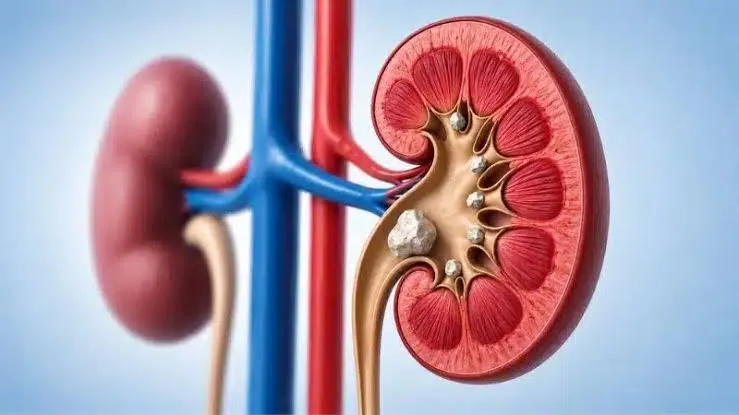
Kidney stones are hard deposits that form when certain substances become concentrated in urine and begin creating crystals.
The most common types are calcium oxalate and calcium phosphate stones. Other forms include uric acid, struvite, and cystine stones. Each type develops for different reasons and may require a different prevention plan.
For example, uric acid stones may develop when urine is too acidic. Calcium oxalate stones may be linked to high urinary calcium or oxalate, low urine volume, diet, genetics, and other metabolic factors.
Common risk factors include:
- Not drinking enough fluid
- A previous history of stones
- High sodium intake
- High intake of certain animal proteins
- Obesity
- Repeated urinary tract infections
- High urinary calcium, oxalate, or uric acid
- Certain inherited conditions
- Some prescription medicines
The National Institute of Diabetes and Digestive and Kidney Diseases identifies adequate fluid intake as one of the most important steps for preventing most types of kidney stones.
Why Concentrated Urine Matters
When you lose fluid through exercise, heat, illness, or simply forgetting to drink, your urine becomes more concentrated.
That concentration allows calcium, oxalate, uric acid, and other substances to come into closer contact. Crystals may then form and gradually grow into a stone.
This is relevant to athletes because long workouts and heavy sweating can increase fluid needs. The supplement itself should not automatically be blamed when dehydration, a salty diet, high heat, and inadequate recovery are occurring at the same time.
What Does Creatine Do in the Body?
People asking what does creatine do are often surprised to learn that the body already produces it naturally.
Most of the body’s supply is stored in skeletal muscle. There, it helps regenerate adenosine triphosphate, or ATP, during short periods of intense activity such as sprinting, jumping, and heavy resistance training.
The best-supported creatine benefits include improvements in strength, power, and repeated high-intensity performance. It generally has less value for long, steady endurance events.
After it has been used, part of the stored compound is converted into creatinine. Creatinine then enters the blood and is removed through the kidneys.
This normal conversion is one reason a blood test may show higher serum creatinine after supplementation even when the kidneys continue filtering normally.
Kidney Function and Kidney Stones Are Not the Same Issue
Kidney damage refers to impaired kidney structure or function. Kidney stones are solid deposits that develop in the urinary system.
A person may have a kidney stone while maintaining normal filtration. Likewise, someone can have reduced kidney function without ever developing a stone.
This distinction is important because many online claims use rising serum creatinine as proof that a supplement causes kidney stones. That conclusion does not logically follow.
What the Latest Kidney Research Found
A 2025 systematic review examined 21 studies and found a modest increase in serum creatinine but no significant change in GFR. The researchers concluded that the increase was more consistent with metabolic turnover than kidney impairment.
A separate 2026 meta-analysis included 19 randomized trials and one crossover study. It also found an increase in serum creatinine without significant differences in urea or estimated GFR between supplement and control groups. However, the authors called for trials lasting longer than one year.
Earlier systematic reviews reached similar conclusions, reporting no evidence of renal damage at the studied doses and durations. Nevertheless, most trials involved healthy participants, so the findings should not automatically be extended to people with chronic kidney disease.
Why Blood Results Can Look Concerning
Serum creatinine is widely used to estimate kidney filtration. However, it is influenced by more than kidney health.
Muscle mass, intense exercise, meat intake, hydration, and supplementation can affect the measurement. A small increase may lower a calculated eGFR even when true kidney filtration has not meaningfully changed.
Therefore, tell your doctor or laboratory professional about all supplements before undergoing kidney testing. A clinician may interpret the result alongside your history, urine tests, previous results, and other kidney markers.
Do not stop prescribed medication or ignore an abnormal result because you assume the supplement caused it. Laboratory changes still require proper medical interpretation.
Who Should Be More Cautious?
Current reassurance mainly applies to healthy adults using recommended amounts.
Someone with kidney disease, reduced kidney filtration, recurring stones, or a known urinary disorder has a different risk profile. Clinical trials have not studied these groups as thoroughly.
Ask a healthcare professional before use if you have:
- Chronic kidney disease
- A history of repeated kidney stones
- One functioning kidney
- Abnormal kidney blood tests
- Protein or blood in the urine
- Diabetes with kidney complications
- High blood pressure that is poorly controlled
- A condition that affects fluid balance
- Prescription medicines that may affect the kidneys
- A medically restricted fluid or protein intake
Older case reports have described kidney injury in people using large amounts or several bodybuilding products together. However, such reports cannot always identify which ingredient, contaminant, illness, or combination caused the problem.
Does the Daily Dose Affect Kidney-Stone Risk?
A typical maintenance plan uses 3 to 5 grams per day. Some people begin with a loading phase of approximately 20 grams daily, divided into four smaller servings for five to seven days. Loading is optional rather than essential.
The most studied form is creatine monohydrate, and more expensive chemical versions have not been shown to offer better absorption, safety, or muscle storage.
Taking more than the recommended amount does not mean you will receive greater results. Very large servings may instead increase digestive discomfort, cost, and uncertainty about long-term safety.
A lower daily approach may be more suitable for people who want to avoid rapid water-weight changes or stomach upset. It gradually raises muscle stores without requiring a loading phase.
Is Loading Necessary?
No. Loading helps muscles reach saturation sooner, but a regular maintenance dose can produce a similar result over a longer period.
For example, a recreational lifter who is not preparing for a competition gains little practical value from rushing the process. A simple daily routine is easier to follow and often better tolerated.
People with a stone history should not design their own high-dose loading plan. Their clinician may want to review kidney function, stone composition, urine chemistry, medications, and dietary habits first.
The Role of Hydration
You do not need to force extreme amounts of water simply because you use a sports supplement. However, you should replace the fluid lost through ordinary daily activity, exercise, and heat.
The NIDDK notes that drinking enough liquid keeps urine diluted and helps flush away substances that may form stones. Water is usually the preferred option, although individual fluid targets differ according to body size, climate, exercise, health conditions, and medical advice.
A practical hydration plan includes:
- Drinking regularly throughout the day
- Taking water to long or hot training sessions
- Replacing fluid after heavy sweating
- Increasing attention during illness or hot weather
- Following medical fluid limits when applicable
Do not rely on thirst alone during long training sessions in extreme heat. Moreover, avoid assuming that a pre-workout drink or energy beverage provides all the fluid your body needs.
Diet May Matter More Than the Supplement
People worried about stones sometimes focus on one powder while overlooking their overall diet.
High sodium intake can increase the chance of calcium stones. Large amounts of certain animal proteins may also raise risk in susceptible people, particularly those who form uric acid or calcium-based stones.
Calcium is more complicated. Normal calcium from food can bind oxalate in the digestive tract and may help reduce calcium oxalate stone formation. Cutting calcium from food without medical advice may therefore be counterproductive.
In contrast, high-dose supplemental calcium has been associated with stone risk in some research, although later reviews have produced mixed results.
For example, a person using a sports supplement may also be eating a very salty high-protein diet, taking several mineral tablets, and drinking little water. Their overall pattern deserves more attention than one isolated ingredient.
Which Supplements Can Raise Kidney-Stone Concerns?
Not every supplement carries the same type of risk.
High-Dose Vitamin C
Large supplemental doses of vitamin C can increase urinary oxalate and uric acid. This may contribute to stones, particularly in people with kidney disorders or pre-existing hyperoxaluria, although study results are not completely consistent.
Calcium Supplements
High supplemental calcium intake may increase stone risk in some users. However, the evidence is mixed, and calcium from food should not be treated as identical to high-dose tablets.
Multi-Ingredient Bodybuilding Products
Products containing stimulants, herbs, diuretics, hidden drugs, or poorly disclosed blends create more uncertainty than a transparent single-ingredient product.
If symptoms appear after starting several products together, identifying the responsible ingredient becomes difficult. Independent product testing can reduce, but not completely remove, concerns about mislabelling or contamination.
Powder, Capsules, and Gummies
The delivery format does not automatically change the active ingredient’s effect on the kidneys.
Powder is normally the easiest format to measure and compare by cost per serving. Capsules may be convenient, but several pills can be required to reach a standard amount.
Creatine gummies can be portable and pleasant to use, yet buyers should check the full serving size, added sugar, storage instructions, and third-party testing.
Products marketed as the best creatine for men or the best creatine for women often contain the same core ingredient. Gendered colours, flavours, or advertising do not prove that a formula is safer for the kidneys.
Choose a product with:
- One clearly named active ingredient
- A transparent amount per serving
- No unnecessary proprietary blend
- Independent quality certification
- Clear storage and expiry information
- No extreme medical or muscle-building claims
Common Creatine Side Effects and Warning Signs
Typical creatine side effects may include temporary water-weight gain, bloating, stomach discomfort, or loose stools, particularly when large servings are taken at once. NIH guidance states that healthy adults generally tolerate supplementation and that it appears safe during longer use over several years.
However, kidney-stone symptoms are different. Seek medical care for:
- Severe pain in the side, back, or lower abdomen
- Blood in the urine
- Pain or burning during urination
- Fever or chills
- Persistent nausea or vomiting
- Difficulty passing urine
- Cloudy or bad-smelling urine
- Pain that comes in waves
A stone accompanied by fever, infection symptoms, uncontrolled pain, or difficulty urinating may require urgent treatment.
Do not attempt to treat severe symptoms by simply stopping supplements and drinking more water. A healthcare professional may need imaging, urine testing, blood tests, or medication.
A Safer Daily-Use Checklist

Use this checklist before adding the supplement to your routine:
- Review your medical history. Pay special attention to kidney disease, stones, high blood pressure, and diabetes.
- Check your medicines. Ask a pharmacist or doctor about possible kidney-related concerns.
- Choose a simple formula. Avoid unclear blends and extreme doses.
- Use the labelled amount. Do not assume more will produce faster progress.
- Maintain sensible hydration. Replace fluid lost through exercise and heat.
- Tell your doctor before testing. Supplement use may affect serum creatinine interpretation.
- Monitor unusual symptoms. Persistent pain, swelling, urinary changes, or digestive problems deserve attention.
- Review your entire supplement stack. Vitamin, mineral, pre-workout, and bodybuilding products may interact with your health profile.
My practical view is that most problems begin when a simple product becomes part of a complicated routine. Large doses, poor hydration, several supplements, intense exercise, restrictive diets, and ignored symptoms create far more uncertainty than a measured daily serving by itself.
Conclusion
So, can creatine cause kidney stones? Current research does not show a confirmed direct link between standard supplementation and kidney stones in healthy adults.
Recent reviews are reassuring about kidney filtration at studied amounts. They show that serum creatinine may rise slightly without a significant decline in GFR. However, stone-specific long-term research remains limited, and the evidence is weaker for people with existing kidney disease or recurring stones.
The safest approach is straightforward: use a transparent product, stay within researched amounts, maintain sensible hydration, and tell your healthcare provider about supplement use.
Most importantly, do not treat every laboratory change as proof of kidney damage, but do not dismiss abnormal results either. Good decisions come from combining research with your personal medical history.
Frequently Asked Questions
Will creatine give you kidney stones?
Current evidence does not show that standard doses directly cause kidney stones in healthy adults. However, research designed specifically to track stone development remains limited.
Is creatine OK to take every day?
Daily maintenance use is common in research and is generally considered well tolerated by healthy adults. People with kidney disease, recurring stones, or relevant medications should seek personal medical advice first.
What organ is creatine hard on?
It is often associated with the kidneys because creatinine is filtered through them. Current trials do not show significant kidney-function loss in healthy adults using studied amounts, but pre-existing kidney conditions require caution.
What supplements can cause kidney stones?
High-dose vitamin C may increase urinary oxalate in susceptible people, while high supplemental calcium may increase risk in some situations. The correct advice depends on stone type, diet, dose, and medical history.
How safe is creatine?
It is one of the more extensively studied performance supplements and appears generally safe for healthy adults at recommended doses. Long-term data in people with kidney disease and recurrent stones are less complete.
⭐ Make MindLiva Your Preferred Source on Google
Get trusted health, wellness, and lifestyle articles from MindLiva.
Add MindLiva
Samie Babaei is a medical science student at Shahid Beheshti University of Medical Sciences with a strong interest in health, wellness, and medical research. As a health writer and researcher at MindLiva, she focuses on creating clear, evidence-based content that helps readers better understand health and well-being.