




Best Creatine for Women: Top 10 Picks for Fitness Success
Have you ever looked at a shelf of sports supplements and wondered why some products are labelled specifically for women? The packaging may look different, but the ingredient inside is often nearly identical to the version marketed to men.
Choosing the best creatine for women is less about gendered branding and more about purity, dose, testing, price, and convenience. A well-chosen product may support harder strength sessions, repeated high-intensity exercise, and gradual improvements in training quality.
However, the research in women is more mixed than many advertisements suggest. Some women respond well, while others notice little beyond a temporary change in water weight.
This guide explains how the supplement works, what female-focused studies have found, which product types make the most sense, and how to avoid paying extra for features that do not improve results.
Best Creatine for Women: What Actually Matters?
A strong product does not need a long ingredient list or a label covered with extreme claims.
Your body naturally makes creatine, while foods such as beef, pork, salmon, and other animal products provide smaller amounts. Most of it is stored in skeletal muscle, where it helps supply energy during short, demanding movements.
The ideal product should offer:
- A clearly listed active ingredient
- A practical amount in each serving
- Few unnecessary additives
- Transparent manufacturing information
- Independent product testing
- A reasonable cost per daily serving
Moreover, women do not need a special chemical version simply because of their gender. A reliable product should be judged by what is inside the container, not by its colour, flavour, or marketing theme.
What Does Creatine Do During Exercise?
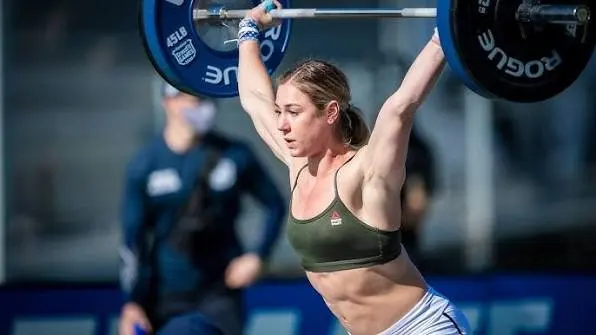
Many new users begin by asking what does creatine do and whether it directly builds muscle.
Your muscles use adenosine triphosphate, commonly called ATP, for immediate energy. ATP is especially important during heavy lifting, sprinting, jumping, and other explosive efforts.
However, the muscles store only a small amount of readily available ATP. Phosphocreatine helps rebuild it, allowing the muscles to continue producing force during repeated short efforts.
For example, imagine completing four demanding sets of squats. Your performance might fall from 10 repetitions in the first set to only six in the final set.
Increasing phosphocreatine stores may help you maintain better performance during those later sets. You might complete another repetition, move the weight with greater speed, or recover more effectively between efforts.
One extra repetition does not transform the body overnight. However, small improvements repeated across months can increase training volume and create a stronger reason for the muscles to adapt.
What Women-Specific Research Really Shows
The growing popularity of supplementation among female athletes has moved faster than the research.
A 2025 systematic review examined 27 studies involving active women. Only three of 11 studies reported improved strength or power, four of 17 found better anaerobic performance, and one of five reported an aerobic benefit. The researchers concluded that some benefits were present, but the limited and varied evidence made firm female-specific conclusions difficult.
This does not mean the supplement is ineffective for women. Instead, it means that results are not guaranteed and that the research has often failed to account properly for factors such as menstrual status, hormonal contraception, training level, and life stage.
A separate 2025 trial included 34 women and 29 men. After seven days at five grams per day, women in the supplement group gained about 0.59 kilograms more measured lean mass than controls. However, after 12 weeks of resistance training, the supplement did not produce significantly greater lean-mass growth than training alone. The researchers suggested that early changes in body water may influence lean-mass measurements.
Therefore, claims that every woman will gain large amounts of muscle are misleading. The most realistic creatine benefits involve supporting training quality, strength development, and repeated intense efforts rather than creating automatic body changes.
Top 10 Picks for Women’s Fitness Goals
The choices below are product categories, not paid brand endorsements. They help you match a format and formula to your budget, lifestyle, and training needs.
1. Best Overall: Single-Ingredient Powder
For most active women, a plain single-ingredient powder is the strongest overall choice.
It offers simple dosing, broad availability, and a lower cost per serving than many capsules or flavoured products. It can also be added to water, juice, yogurt, or a protein shake.
Look for a label that lists only creatine monohydrate as the active ingredient. This form has the largest research base and remains the standard against which newer versions are compared.
2. Best Budget Pick: Unflavoured Bulk Powder
Unflavoured powder is normally the most economical choice for daily use.
It does not require expensive flavour systems, individual packets, coatings, or sweeteners. Moreover, one container may provide several months of servings.
Compare the price per five-gram serving rather than the price of the container. A cheaper tub may offer poor value if the serving is unusually small.
A basic powder may not look exciting, but it often provides exactly what a regular gym user needs.
3. Best for Competitive Athletes: Sport-Certified Products
Competitive athletes should place independent testing near the top of their buying checklist.
Sports supplements may be contaminated with ingredients that are not shown clearly on the label. This can create health concerns and a risk of a positive drug test.
NSF Certified for Sport verifies label contents and screens products for substances prohibited by major athletic organizations. It does not promise better results, but it provides an added level of quality control.
Other respected third-party programs may offer similar testing. Always confirm that the exact product—not only the company—has current certification.
4. Best for Sensitive Stomachs: Micronized Powder
Micronized powder contains smaller particles, which may help it mix more smoothly.
Women who dislike a gritty texture may find this option easier to drink. Better mixing can also make the serving feel lighter, although the active compound itself is not fundamentally different.
Digestive discomfort is more often linked to taking a large serving at once than to the standard form itself. Therefore, starting with a modest daily amount may be more useful than buying an expensive “advanced absorption” formula.
5. Best for Travel: Capsules

Capsules are convenient for business trips, holidays, competitions, and busy workdays.
They do not require a scoop, shaker, or measuring scale. You can also divide the daily amount between meals if taking several capsules at once feels uncomfortable.
However, check the serving carefully. Some products require six or more capsules to provide an amount that one scoop of powder delivers.
Capsules may also use gelatin or other animal-derived ingredients, so vegetarian and vegan users should read the complete label.
6. Best for Taste: Flavoured Powder
A flavoured version may help women who struggle to use an unflavoured supplement consistently.
It can be mixed with cold water and used like a light sports drink. However, flavoured formulas may contain sweeteners, colouring, acids, or added carbohydrates.
Check whether the active amount is listed separately from the total serving weight. A seven-gram scoop does not necessarily provide seven grams of the main active ingredient.
Taste matters because consistency matters. Still, flavour should not come at the cost of a clear and effective serving.
7. Best for Convenience: Gummies
Creatine gummies are portable, sweet, and easy to take without mixing a drink.
They may suit users who dislike powders or swallowing capsules. However, several pieces may be needed to reach a useful daily amount, increasing both the cost and added-sugar intake.
Storage also matters. Heat and moisture may affect soft or chewable products, particularly when they are kept in a gym bag or car.
Read the amount in a complete serving. Do not assume that one gummy provides the same quantity as one scoop of powder.
8. Best for Vegan Women: Clearly Labelled Vegan Products
The active compound in most commercial products is produced without extracting it from meat. However, the complete product may still contain non-vegan flavouring, capsule shells, or gummy ingredients.
Vegan users should look for:
- A clear vegan statement
- Plant-based capsule materials
- No gelatin
- No dairy-derived flavouring
- Independent ingredient testing
Women following plant-based diets may consume less through food because the richest natural sources are animal products. Still, this does not prove that every vegan user will experience a stronger response.
9. Best for Women Over 50: Tested Powder Plus Resistance Training
Maintaining muscle and strength becomes increasingly important with age.
A review of trials involving older women found that supplementation combined with resistance training improved upper-body strength. Longer studies lasting at least 24 weeks also reported improvements in both upper- and lower-body strength. However, the researchers noted that more high-quality evidence was needed.
A recently published review of postmenopausal women also reflects continuing scientific interest in possible effects on strength, lean mass, bone health, and physical function.
For older adults, the exercise program remains the foundation. A supplement should support resistance training, not replace it.
10. Best for Beginners: Simple Three-Gram Servings
A beginner does not need a loading plan, complex blend, or large supplement stack.
Starting with three grams daily creates a simple routine and may reduce the chance of digestive discomfort. It also allows muscle stores to rise gradually.
For example, a beginner could mix one measured serving into breakfast yogurt every morning. Connecting the habit to a regular meal makes missed days less likely.
After several weeks, progress should be measured through strength, repetitions, energy during later sets, and workout consistency—not through dramatic sensations.
Powder, Capsules, or Gummies: Quick Comparison
| Format | Main Advantage | Main Drawback | Best For |
| Powder | Lowest average cost | Requires mixing | Regular daily users |
| Micronized powder | Smoother texture | May cost more | Texture-sensitive users |
| Capsules | Portable and measured | Several pills may be needed | Travel |
| Flavoured powder | Easier taste | More additives | Users who dislike plain powder |
| Gummies | Convenient and enjoyable | Higher cost and possible added sugar | Occasional travellers |
In short, powder normally offers the best combination of value, research support, and serving control. The other formats mainly solve convenience or taste problems.
How Much Should Women Take?
Most research uses either a gradual daily method or a short loading period.
A common maintenance range is 3 to 5 grams per day. An optional loading phase uses about 20 grams daily, split into four servings, for five to seven days before moving to a smaller maintenance amount.
Loading is not required. It simply increases muscle stores more quickly.
Women concerned about stomach discomfort or rapid scale changes may prefer the gradual method. Taking three to five grams daily can reach the same general goal over a longer period.
Does Timing Matter?
Daily consistency matters more than taking it during a narrow “muscle-building window.”
You can use it before exercise, after exercise, with breakfast, or alongside another regular meal. Continue taking it on rest days because the goal is to maintain muscle stores.
For example, someone who trains after work may still prefer taking the supplement at breakfast. A dependable morning habit is more useful than an evening schedule that is regularly forgotten.
Will Women Gain Weight?
Some women notice an increase on the scale during the first days or weeks.
This early change is usually linked to extra water stored in muscle rather than immediate fat gain. A small study involving female collegiate dancers found increases in total body water and measured lean mass after six weeks of supplementation.
However, a gain of 10 pounds should not automatically be blamed on one supplement. Food intake, sodium, menstrual-cycle changes, hydration, constipation, medication, training inflammation, and measurement timing can all influence body weight.
Rapid or unexplained changes deserve attention, particularly when they include swelling, shortness of breath, pain, or other symptoms.
Track weight under similar conditions, such as in the morning after using the bathroom. Also consider waist measurements, clothing fit, strength, and progress photos rather than relying only on one scale number.
Safety and Possible Concerns
No supplement is completely risk-free for every person.
A systematic review involving 951 female participants found no deaths or serious adverse outcomes and no significant increase in overall adverse events, digestive problems, or weight gain compared with controls. However, the number of female-only studies remained limited.
Possible creatine side effects include temporary water-weight gain, bloating, stomach discomfort, or loose stools, especially after a large single serving.
People with kidney disease, abnormal laboratory results, pregnancy, breastfeeding, or medications that may affect kidney function should seek personal medical guidance before starting.
It is also important to tell a healthcare provider about supplement use before blood tests. Supplementation may affect serum creatinine, a marker commonly used when evaluating kidney function.
Do Women Need a Different Formula Than Men?
The active ingredient does not have to change according to gender.
Products promoted as the best creatine for men may use dark packaging, large serving claims, or muscle-focused language. Versions for women may use smaller containers, fruit flavours, or wellness-based branding.
Those differences do not prove that one formula works better for a particular sex.
A woman should select a product according to:
- Ingredient purity
- Serving accuracy
- Independent testing
- Dietary preferences
- Format and convenience
- Price per useful serving
From an evidence-based buying perspective, a simple and transparent formula is normally a better choice than a gendered blend containing many lightly dosed extras.
How to Read the Label Before Buying
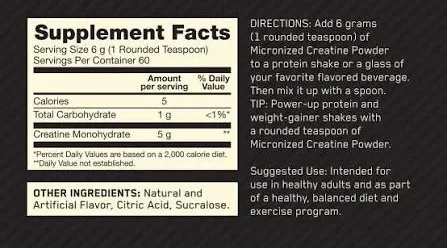
Dietary supplements are not approved by the US Food and Drug Administration before sale in the same way as prescription medicines. Manufacturers are responsible for product safety and accurate labelling, while the agency can act against unsafe or mislabelled products.
Before buying, check:
- Active ingredient: Prefer one clearly identified compound.
- Amount per serving: Look for a practical daily quantity.
- Serving definition: Confirm whether it means one scoop or several pieces.
- Other ingredients: Note sweeteners, fillers, allergens, and stimulants.
- Testing seal: Verify certification through the testing organization.
- Expiry date: Avoid damaged or poorly stored containers.
- Manufacturer details: Choose companies that provide traceable contact information.
Avoid products promising instant fat loss, hormone changes, or several pounds of muscle within days. Early weight changes are not the same as newly built muscle tissue.
Habits That Improve Fitness Results
A supplement cannot replace the basics of physical progress.
For stronger results, combine it with:
- A structured resistance-training program
- Progressive increases in weight or repetitions
- Enough protein from food
- Adequate carbohydrates for demanding workouts
- Regular sleep
- Rest between hard sessions
- Consistent hydration
For example, taking a daily serving while completing random workouts is unlikely to produce impressive results. Using it alongside a recorded eight- or twelve-week strength plan gives it a clear purpose.
My practical rule is to judge progress through the training log. Better-quality repetitions, steadier performance across sets, and gradual load increases matter more than whether a supplement produces a noticeable feeling.
Conclusion
The best creatine for women is normally a simple, correctly dosed, independently tested product rather than a complicated formula marketed through gender-based claims.
Women may use powder, capsules, flavoured formulas, or gummies depending on their budget and routine. However, plain single-ingredient powder generally offers the strongest combination of research support, dose control, and value.
Female-specific performance evidence is still developing, and not every user will notice the same result. Some women may improve their repeated high-intensity performance, while others notice mainly a small water-weight change.
Therefore, begin with realistic expectations. Train consistently, eat enough protein, protect your sleep, and record your progress. A supplement may support those habits, but the habits remain responsible for lasting fitness success.
Frequently Asked Questions
What creatine is best for females?
A pure single-ingredient monohydrate powder is usually the most practical option. Look for a clear three-to-five-gram serving and reliable third-party testing.
Is creatine good for ladies?
It may support repeated high-intensity exercise and strength training in some women. However, female-focused research is mixed, so results should be judged individually.
Why did I gain 10 pounds after taking creatine?
Some early gain may come from water stored in muscle, but 10 pounds is more than many users expect. Diet, sodium, menstrual changes, medication, and other causes should also be considered.
What is the best brand of creatine?
There is no universal winning brand. Choose the exact product with transparent ingredients, independent testing, an accurate serving, and a fair cost per dose.
Will I gain weight on creatine as a woman?
A small increase is possible, especially during loading, because the muscles may hold more water. This is not the same as gaining an equal amount of body fat.
⭐ Make MindLiva Your Preferred Source on Google
Get trusted health, wellness, and lifestyle articles from MindLiva.
Add MindLiva
Samie Babaei is a medical science student at Shahid Beheshti University of Medical Sciences with a strong interest in health, wellness, and medical research. As a health writer and researcher at MindLiva, she focuses on creating clear, evidence-based content that helps readers better understand health and well-being.