



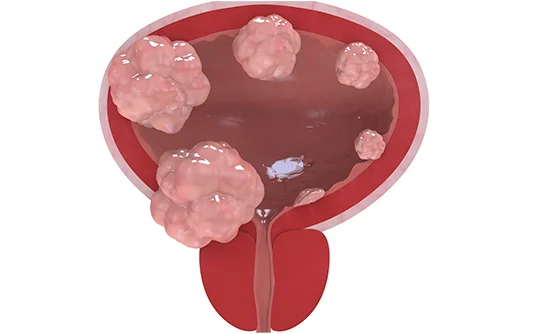
Immunotherapy for Bladder Cancer: New Hope for Patients
Hearing “bladder cancer” can make treatment decisions feel urgent and confusing. However, the treatment landscape has changed rapidly, especially for people with high-risk, muscle-invasive, or advanced disease.
Today, immunotherapy for bladder cancer can be used in several settings. Some treatments are placed directly into the bladder, while others work throughout the body. In 2025 and 2026, FDA approvals also widened the role of immune-based combinations before and after bladder surgery.
This guide explains how these treatments work, when doctors may use them, what is new in 2026, possible side effects, and practical questions patients can ask their cancer team.
Why Immunotherapy for Bladder Cancer Matters in 2026
Bladder cancer remains a major health concern. The National Cancer Institute’s SEER program estimates 84,530 new U.S. cases and 17,870 deaths in 2026. Across all stages, the five-year relative survival rate was 79.1% for people diagnosed during 2016–2022, although outlook differs greatly by stage and tumor behavior.
Roughly 70%–80% of newly diagnosed cases present as superficial, or non-muscle-invasive, tumors. Yet high-grade disease can return and may grow into the bladder muscle, which is why risk level matters as much as the word “cancer” itself.
The growing value of immunotherapy for bladder cancer comes from its ability to use immune pathways at different stages of care. It is no longer limited to one late-stage situation.
How the Immune-Based Approach Works
A common question is “how does immunotherapy work”. In simple terms, immunotherapy helps the immune system recognize or attack cancer cells more effectively.
Cancer cells can use biological “brakes” that reduce an immune attack. Checkpoint drugs block signals such as PD-1 or PD-L1. Pembrolizumab, for example, binds PD-1 on certain T cells, making it harder for cancer cells to suppress the immune response.
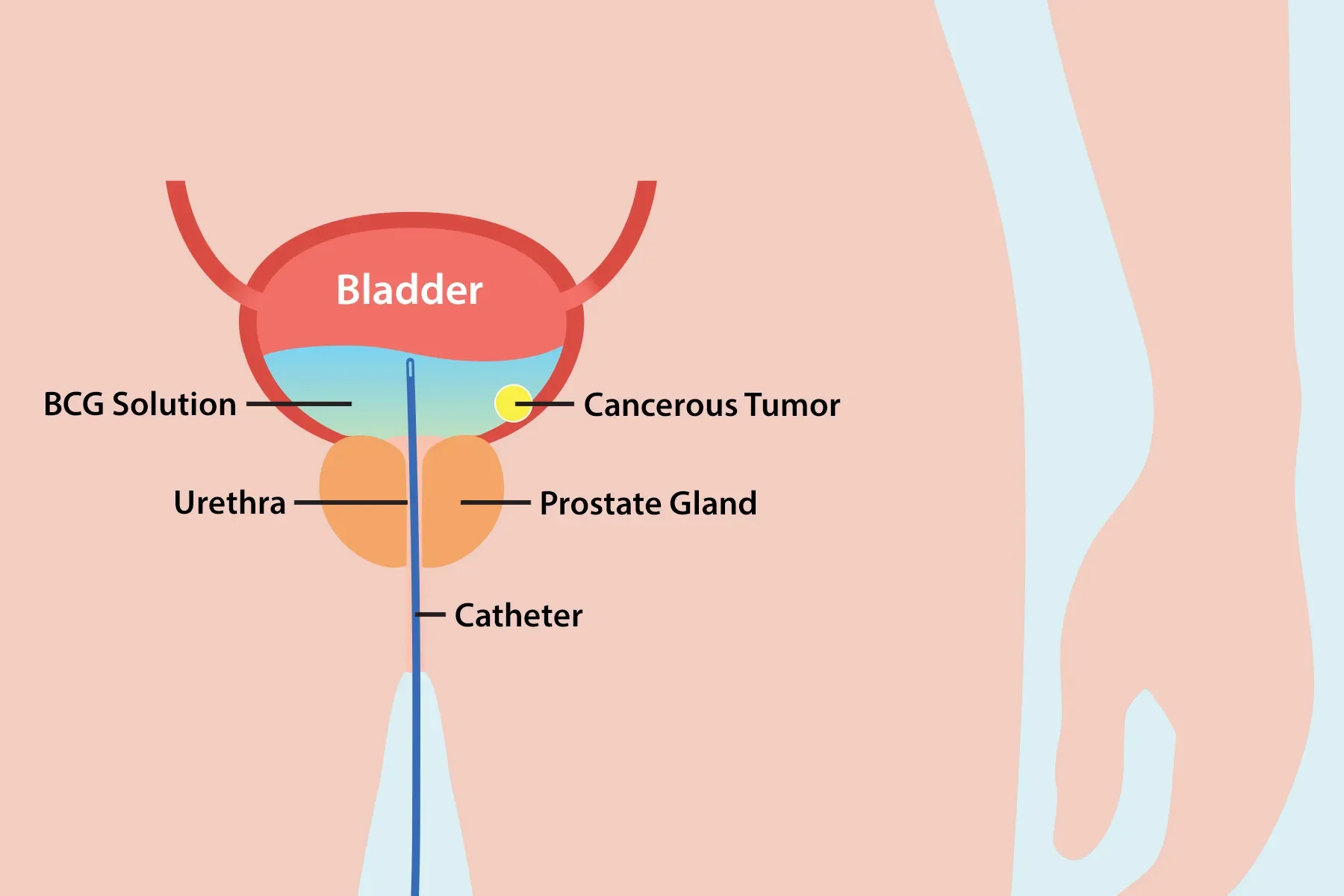
Bladder cancer also has a long-established immune-based treatment called BCG, or Bacillus Calmette-Guérin. BCG is a weakened bacterium placed directly into the bladder through a catheter, where it creates a local immune response against cancer cells.
Main treatment approaches
A practical way to understand the types of immunotherapy used around bladder cancer is to divide them into local and systemic approaches:
- Intravesical BCG: placed inside the bladder for selected non-muscle-invasive cancers.
- Checkpoint inhibitors: drugs such as pembrolizumab or durvalumab that affect immune signaling throughout the body.
- Combination strategies: BCG may be paired with another immune-active drug, while checkpoint therapy can be combined with chemotherapy or an antibody-drug conjugate.
Treatment in Non-Muscle-Invasive Disease
For high-risk non-muscle-invasive bladder cancer, care often begins with transurethral resection of the bladder tumor, followed by treatment placed into the bladder. BCG remains an important option for appropriate high-risk cases.
A major 2026 approval: durvalumab plus BCG
On May 28, 2026, the FDA approved durvalumab (Imfinzi) with BCG for adults with BCG-naïve, high-risk non-muscle-invasive bladder cancer. In other words, the indication applies to high-risk patients who have not previously received BCG.
The approval was based on the POTOMAC study, which enrolled 1,018 patients after transurethral resection. Durvalumab plus BCG induction and maintenance produced a statistically significant improvement in disease-free survival compared with BCG induction and maintenance alone. The reported hazard ratio was 0.68.
This is a genuinely newsworthy change because it brings checkpoint therapy into an earlier bladder-cancer setting. However, it does not mean every high-risk patient should receive the combination. Tumor features, other illnesses, prior treatment, and side-effect risk still shape the decision.
What Happens When BCG Does Not Work?
High-risk disease that persists or returns after adequate BCG creates a difficult choice. Depending on the exact situation, doctors may discuss radical cystectomy, systemic checkpoint treatment, other bladder-delivered therapies, gene-based treatment, or a clinical trial.
Pembrolizumab has an established role for certain patients with BCG-unresponsive, high-risk non-muscle-invasive bladder cancer with carcinoma in situ who are ineligible for or choose not to undergo cystectomy.
Another option for selected BCG-unresponsive cases is nogapendekin alfa inbakicept-pmln (Anktiva) with BCG. In the FDA-reviewed trial, 62% of evaluable patients achieved a complete response at some point; among those responders, 58% maintained the response for more than one year.
One practical insight matters here: after BCG failure, the most useful question is not simply “What drug comes next?” It is “How safe is it to keep the bladder compared with the cancer-control benefit of surgery?” That discussion is especially important when the disease is high-grade or repeatedly returns.
Immunotherapy for Muscle-Invasive Bladder Cancer
Muscle-invasive disease requires a different strategy because the tumor has reached the bladder muscle and has a greater ability to spread. Traditional curative approaches include radical cystectomy, often with cisplatin-based chemotherapy before surgery, or bladder-preserving chemoradiation for selected patients.
Immune-based drugs are now moving earlier in this pathway.
July 2026: a major perioperative expansion
On July 10, 2026, the FDA approved pembrolizumab, or pembrolizumab with berahyaluronidase alfa, in combination with enfortumab vedotin before surgery and again after cystectomy for adults with muscle-invasive bladder cancer who are candidates for cystectomy. The decision expanded a previous indication beyond cisplatin-ineligible patients.
The KEYNOTE-B15/EV-304 trial included 808 previously untreated patients. The FDA reported statistically significant improvements in event-free survival and overall survival with perioperative pembrolizumab plus enfortumab vedotin compared with neoadjuvant gemcitabine and cisplatin.
Moreover, in March 2025, the FDA approved durvalumab with gemcitabine and cisplatin before radical cystectomy, followed by durvalumab after surgery. The NIAGARA trial showed significant improvements in event-free and overall survival compared with chemotherapy alone.
Advanced Bladder Cancer: A Major Treatment Shift
For locally advanced or metastatic urothelial cancer, the combination of pembrolizumab and enfortumab vedotin has changed first-line expectations. The FDA approved the pairing broadly in December 2023 for previously untreated locally advanced or metastatic urothelial cancer.
In the EV-302/KEYNOTE-A39 trial, median overall survival was 31.5 months with the combination versus 16.1 months with platinum-based chemotherapy. Median progression-free survival was 12.5 months versus 6.3 months.
People often search “can immunotherapy cure stage 4 cancer” after reading about long-lasting responses. For metastatic bladder cancer, cure remains uncommon. NCI states that few patients with stage IV disease can be cured, although treatment may shrink tumors, slow progression, relieve symptoms, and sometimes produce durable control.
Who May Benefit?
There is no single checklist for immunotherapy for bladder cancer because each approved regimen has its own indication. Doctors usually consider:
- Stage and risk group — non-muscle-invasive, muscle-invasive, locally advanced, or metastatic.
- Tumor grade and carcinoma in situ.
- Previous BCG, chemotherapy, surgery, or systemic treatment.
- Kidney, liver, lung, nerve, and general health.
- Autoimmune or transplant history, which may affect checkpoint-treatment risk.
- Treatment goals, including whether bladder preservation is appropriate.
For example, a newly diagnosed high-risk NMIBC patient may discuss BCG-based care. A patient preparing for cystectomy may discuss medicine before and after surgery. Someone with metastatic urothelial cancer will face a different systemic-treatment decision.
Side Effects Patients Should Know
Immune-based treatment is not automatically mild. Checkpoint drugs can activate immune cells against healthy tissue as well as cancer. Common effects can include fatigue, rash, itching, and diarrhea. More serious reactions may involve the lungs, bowel, liver, hormone glands, nervous system, heart, or other organs.
For example, immune-related pneumonitis can cause a new cough or shortness of breath. Because some reactions can worsen quickly, patients should report new or rapidly changing symptoms rather than waiting for the next scheduled appointment.
BCG has a different side-effect pattern because it is placed into the bladder. Urinary burning, frequency, urgency, blood in the urine, and flu-like symptoms can occur. Any severe or persistent symptoms need medical review.
When enfortumab vedotin is combined with pembrolizumab, treatment also brings risks linked to the antibody-drug conjugate. In the pivotal advanced-disease trial, common adverse reactions or laboratory abnormalities included rash, peripheral neuropathy, fatigue, high glucose, diarrhea, itching, and liver-test changes.
Bladder Cancer Treatment Is Not the Same as Other Immune Therapy
Online searches often mix unrelated treatments. Immunotherapy for cancer is a broad category, and treatment choices differ sharply by tumor type.
For example, breast cancer immunotherapy is used only in selected breast-cancer settings, while immunotherapy for liver cancer follows different drug combinations and evidence. Even searches for side effects of immunotherapy for lung cancer should not be copied directly into a bladder-cancer decision because the medicines, partner treatments, doses, and patient risks may differ.
The term oral immunotherapy can also cause confusion. In allergy medicine, it commonly refers to controlled exposure to an allergen by mouth. That is a different concept from checkpoint drugs or bladder-delivered immune treatment.
Questions to Ask the Cancer Team

Before starting treatment, patients may want to ask:
- What exact stage, grade, and risk group is my cancer?
- Is my disease BCG-naïve, BCG-exposed, or BCG-unresponsive?
- Is bladder removal the standard option in my case?
- What benefit and serious risks should I expect from this regimen?
- Is there a clinical trial that fits my situation?
What Comes Next?
Research continues to test new drug combinations, bladder-delivered treatments, antibody-drug conjugates, biomarkers, and treatment sequences. NCI currently lists active bladder-cancer trials involving checkpoint drugs, intravesical agents, radiation, and other experimental approaches.
In short, the field is moving toward better selection, smarter combinations, and earlier use of effective therapy rather than relying on the same treatment for every patient.
Conclusion
Immunotherapy for bladder cancer has become a major part of modern care. BCG remains important for non-muscle-invasive disease, while checkpoint drugs and combination regimens now extend into high-risk, muscle-invasive, perioperative, and metastatic settings. FDA decisions in 2025 and 2026 have accelerated this shift.
Still, there is no universal “best” treatment. The right choice depends on stage, grade, previous BCG exposure, surgery options, general health, and the balance between benefit and toxicity.
The encouraging takeaway is that patients and specialists now have more evidence-based choices than they did only a few years ago—and several of the newest options are being used earlier in the course of disease.
FAQs
Is BCG an immune-based treatment for bladder cancer?
Yes. BCG is a weakened bacterium placed directly into the bladder. It triggers a local immune response and has long been used for selected non-muscle-invasive bladder cancers.
Can immune checkpoint treatment replace bladder-removal surgery?
Not for everyone. Radical cystectomy remains an important potentially curative option for selected high-risk and muscle-invasive cancers. Bladder preservation depends on stage, previous response, overall health, and cancer risk.
What is the newest FDA update in 2026?
Two major updates are the May 28, 2026 approval of durvalumab plus BCG for BCG-naïve high-risk NMIBC and the July 10, 2026 expansion of perioperative pembrolizumab plus enfortumab vedotin for adults with MIBC who are candidates for cystectomy.
Does everyone respond to immune-based treatment?
No. Some patients have deep or long-lasting responses, while others receive little benefit or stop because of side effects. Close follow-up and stage-specific treatment selection remain essential.
⭐ Make MindLiva Your Preferred Source on Google
Get trusted health, wellness, and lifestyle articles from MindLiva.
Add MindLiva
Samie Babaei is a medical science student at Shahid Beheshti University of Medical Sciences with a strong interest in health, wellness, and medical research. As a health writer and researcher at MindLiva, she focuses on creating clear, evidence-based content that helps readers better understand health and well-being.