



Top Skincare for Men Tips to Achieve Healthy, Glowing Skin
Modern men are paying more attention to their skin than ever before. Whether it’s because of long work hours, pollution, stress, or simply wanting to look and feel their best, taking care of your skin has become an essential part of a healthy lifestyle.
The good news is that skincare for men doesn’t have to be complicated. You don’t need dozens of products or a lengthy routine to see noticeable improvements. A few smart habits and the right products can make a significant difference.
In this comprehensive guide, you’ll discover how to identify your skin type, build effective daily habits, avoid common mistakes, and choose products that truly work. You’ll also learn professional insights backed by dermatology experts and practical examples that you can start using today.
Why Skincare Matters More Than Ever for Men
Healthy skin is your body’s first line of defense against pollution, bacteria, UV rays, and environmental damage. However, many men still believe that washing their face with regular soap is enough.
In reality, men’s skin is naturally different from women’s skin. It is generally thicker, produces more oil, and is exposed to frequent shaving, which can lead to irritation and ingrown hairs.
Moreover, modern lifestyles expose skin to numerous challenges, including:
- Air pollution
- Blue light from digital devices
- Stress
- Lack of sleep
- Poor diet
- UV radiation
Each of these factors can speed up skin aging and increase breakouts if ignored.
Understanding Men’s Skin
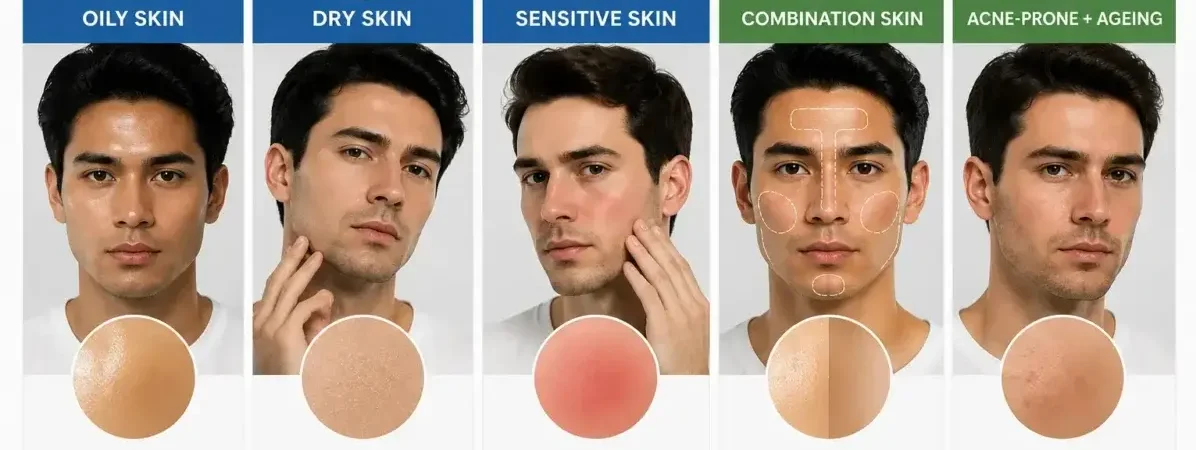
Before choosing products, it’s important to understand your own skin.
Dermatologists generally divide skin into five main categories.
Normal Skin
Normal skin feels balanced.
It isn’t overly oily or excessively dry, making it the easiest skin type to maintain.
Characteristics include:
- Smooth texture
- Small pores
- Rare breakouts
- Even complexion
Oily Skin
Oily skin produces excess sebum, especially around the forehead, nose, and chin.
Common signs include:
- Enlarged pores
- Frequent acne
- Visible shine
- Blackheads
People searching for the best skincare for oily skin often benefit from lightweight cleansers and oil-free moisturizers rather than harsh products that strip natural oils.
Dry Skin
Dry skin lacks moisture and natural oils.
Typical symptoms include:
- Tight feeling
- Flaky patches
- Rough texture
- Increased sensitivity
Using gentle hydrating ingredients can greatly improve comfort and appearance.
Combination Skin
Combination skin contains both oily and dry areas.
Usually:
- Oily T-zone
- Dry cheeks
- Mixed concerns
Finding balance is the key.
Sensitive Skin
People with skincare for sensitive skin concerns should always choose fragrance-free, alcohol-free formulas and test new products before full use.
Redness, burning, itching, and irritation are common warning signs that require gentle care.
The Essential Daily Routine
Many beginners wonder where to start.
The answer is surprisingly simple.
A basic skincare routine only needs a few consistent steps.
Step 1: Cleanse Properly
Cleansing removes:
- Dirt
- Sweat
- Oil
- Sunscreen
- Pollution
Wash your face twice daily using a gentle facial cleanser rather than regular body soap.
For example, someone who exercises after work should always cleanse afterward to prevent clogged pores.
Step 2: Moisturize Every Day
Many men skip moisturizer because they think it causes oily skin.
Actually, the opposite is often true.
Well-hydrated skin produces healthier oil levels and maintains a stronger protective barrier.
Look for ingredients like:
- Ceramides
- Glycerin
- Hyaluronic acid
These help keep moisture locked into the skin.
Step 3: Never Skip Sunscreen
Dermatologists agree that sunscreen is the single most effective anti-aging product.
Daily SPF protects against:
- Wrinkles
- Dark spots
- Skin cancer
- Premature aging
Choose SPF 30 or higher for everyday use.
Even cloudy days expose your skin to ultraviolet rays.
Morning vs Evening Care
Many people believe one routine is enough.
However, your skin has different needs throughout the day.
A proper morning skincare routine focuses on protection.
Morning steps include:
- Gentle cleanser
- Antioxidant serum
- Moisturizer
- Sunscreen
Evening care focuses more on repair and recovery after environmental exposure.
Shaving Without Irritation

Shaving can either improve your appearance or damage your skin depending on your technique.
Professional barbers recommend:
- Wash your face with warm water first.
- Use shaving cream instead of soap.
- Shave with the grain.
- Avoid pressing the razor too hard.
- Rinse with cool water afterward.
Finally, apply a soothing moisturizer to calm irritation.
Nutrition Plays a Bigger Role Than You Think
Healthy skin starts inside the body.
Research consistently shows that nutrition affects skin quality.
Focus on eating:
- Leafy vegetables
- Colorful fruits
- Nuts
- Fish rich in omega-3
- Whole grains
Meanwhile, reducing sugary drinks and highly processed foods may help decrease breakouts for some individuals.
Hydration also matters.
Aim to drink enough water throughout the day instead of waiting until you feel thirsty.
Lifestyle Habits That Improve Skin Naturally
Expensive products cannot replace healthy daily habits.
Some of the biggest improvements come from simple lifestyle changes.
Sleep
During sleep, your body repairs damaged skin cells.
Adults should aim for seven to nine hours of quality sleep each night.
Exercise
Regular exercise improves blood circulation.
Better circulation delivers oxygen and nutrients to skin cells, helping create a healthier appearance.
Stress Management
Chronic stress increases hormones that may trigger acne and inflammation.
Helpful activities include:
- Walking
- Meditation
- Reading
- Yoga
- Deep breathing
Even ten minutes each day can help reduce stress levels.
Common Skincare Mistakes Men Make
Many men unknowingly damage their skin through simple daily habits.
Here are some of the most common mistakes.
Washing Too Often
More washing doesn’t mean cleaner skin.
Over-cleansing removes natural protective oils, leaving skin dry and irritated.
Twice daily is usually enough.
Using Body Soap on the Face
Facial skin is thinner than body skin.
Body soaps often contain stronger detergents that disrupt the skin barrier.
Always choose products made specifically for facial care.
Ignoring Moisturizer
Skipping moisturizer can actually increase oil production in some people.
Balanced hydration helps maintain healthier skin over time.
Picking Pimples
Although tempting, squeezing acne often causes:
- Infection
- Scarring
- Increased inflammation
- Slower healing
Instead, use targeted acne treatments or consult a dermatologist for persistent breakouts.
Advanced Ingredients That Actually Work
Walking into a skincare aisle can feel overwhelming. Hundreds of products promise amazing results, but only a handful of ingredients have strong scientific support.
Vitamin C
Vitamin C is a powerful antioxidant that helps brighten dull skin and reduce the appearance of dark spots. Moreover, it protects against damage caused by pollution and sunlight.
For example, applying a Vitamin C serum in the morning before sunscreen can help improve overall skin tone over time.
Niacinamide
Niacinamide is one of the most versatile skincare ingredients available.
Benefits include:
- Reducing excess oil
- Improving uneven skin tone
- Strengthening the skin barrier
- Minimizing the appearance of pores
It is suitable for most skin types, including sensitive skin.
Retinol
Retinol encourages faster skin cell turnover and supports collagen production.
Many dermatologists recommend it for:
- Fine lines
- Wrinkles
- Acne scars
- Uneven texture
However, beginners should use it only a few nights per week and always wear sunscreen during the day.
Hyaluronic Acid
Despite its name, hyaluronic acid is not harsh. Instead, it attracts moisture to the skin and keeps it hydrated throughout the day.
It works especially well in dry climates or during colder months.
How to Choose the Right Products
Buying expensive products does not always lead to better results.
Instead, focus on your skin type and ingredient list.
If You Have Oily Skin
Choose products labeled:
- Oil-free
- Non-comedogenic
- Lightweight gel formulas
Avoid heavy creams that may clog pores.
If You Have Dry Skin
Look for products containing:
- Ceramides
- Shea butter
- Glycerin
- Hyaluronic acid
These ingredients help restore moisture and strengthen the skin barrier.
If You Have Sensitive Skin
Select fragrance-free products with fewer active ingredients. Introduce one new product at a time so you can identify any reactions.
Seasonal Changes Require Different Care
Your skin’s needs change throughout the year.
Summer
During warmer months:
- Wear sunscreen every day.
- Reapply SPF every two hours when outdoors.
- Use lighter moisturizers.
- Cleanse after sweating.
Winter
Cold weather and indoor heating often cause dryness.
During winter:
- Switch to richer moisturizers.
- Avoid very hot showers.
- Apply moisturizer immediately after washing your face.
- Consider using a humidifier indoors.
Making these small adjustments can help maintain healthy skin year-round.
Do You Need Expensive Products?
One of the biggest myths in skincare is that higher prices always mean better quality.
In reality, many affordable products contain the same active ingredients found in luxury brands.
For example, ordinary skincare products are popular because they focus on proven ingredients without unnecessary fragrances or elaborate packaging.
The key is consistency—not price.
Trends Worth Knowing

Social media has introduced countless skincare trends. While some are helpful, others are based more on marketing than science.
For instance, korean skincare has become popular worldwide because it emphasizes gentle cleansing, hydration, and long-term skin health rather than quick fixes.
Another growing trend is organic skincare. Although naturally derived ingredients can be beneficial, “organic” does not automatically mean safer or more effective. Always evaluate products based on their ingredients and scientific evidence.
Similarly, products marketed as face masks skincare solutions can provide temporary hydration or deep cleansing, but they should complement—not replace—a balanced daily routine.
Building Long-Term Healthy Habits
Healthy skin develops through consistent habits rather than overnight transformations.
Here are a few expert recommendations:
- Wash your face twice daily.
- Wear sunscreen every morning.
- Stay hydrated.
- Eat a balanced diet.
- Avoid smoking.
- Sleep at least seven hours.
- Replace old razors regularly.
- Visit a dermatologist if skin concerns persist.
These simple habits often produce better long-term results than constantly switching products.
Skin Care Advice for Different Ages
Your skin changes as you get older.
In Your 20s
Focus on:
- Cleansing
- Moisturizing
- Sunscreen
Building good habits early helps prevent future skin damage.
In Your 30s
Consider adding antioxidants and retinol to support collagen production and reduce early signs of aging.
In Your 40s and Beyond
Hydration becomes even more important. Products containing peptides, ceramides, and retinol may help maintain smoother-looking skin.
Myths About Men’s Skin
Let’s separate fact from fiction.
| Myth | Reality |
| Men don’t need sunscreen. | Everyone needs daily sun protection. |
| Oily skin doesn’t need moisturizer. | Hydration benefits every skin type. |
| Expensive products always work better. | Ingredients matter more than price. |
| Washing your face many times prevents acne. | Overwashing may worsen irritation. |
| Skin care is only for appearance. | Healthy skin supports overall health and protection. |
Conclusion
Healthy skin isn’t about perfection—it’s about consistency and smart choices.
By understanding your skin type, using products with proven ingredients, protecting your skin from the sun, and maintaining healthy lifestyle habits, you can enjoy clearer, smoother, and healthier-looking skin for years to come.
The best approach is to start simple, stay patient, and adjust your routine based on your skin’s needs. Small daily actions create lasting improvements, and every positive habit brings you one step closer to healthier, more confident skin.
Frequently Asked Questions
What should a man use for skin care?
A man should use a gentle facial cleanser, moisturizer, and sunscreen every day. Additional products like serums can be added if needed.
What’s a good skincare routine for guys?
A simple routine includes cleansing, moisturizing, and applying sunscreen each morning, followed by cleansing and moisturizing at night.
How do men do skin care?
Men should cleanse their face twice daily, shave carefully, moisturize consistently, wear sunscreen, and maintain healthy habits like good sleep and hydration.
What is the best skincare brand for men?
There isn’t one brand that’s best for everyone. Choose products based on your skin type, ingredients, and recommendations from dermatologists.
Should a man do skincare?
Absolutely. Healthy skin helps protect against environmental damage, reduces irritation, supports confidence, and contributes to overall well-being.
⭐ Make MindLiva Your Preferred Source on Google
Get trusted health, wellness, and lifestyle articles from MindLiva.
Add MindLiva
Samie Babaei is a medical science student at Shahid Beheshti University of Medical Sciences with a strong interest in health, wellness, and medical research. As a health writer and researcher at MindLiva, she focuses on creating clear, evidence-based content that helps readers better understand health and well-being.