




What Is Immunotherapy for Cancer? Types & Benefits
When someone receives a cancer diagnosis, one of the first questions is often, “What treatments are available?” Surgery, chemotherapy, and radiation may immediately come to mind. However, modern cancer care now includes treatments that work in a very different way.
So, what is immunotherapy for cancer, and why has it become such an important part of oncology?
Instead of attacking cancer cells directly in the same way many traditional treatments do, immune-based therapies help the body’s defense system recognize, target, or fight cancer more effectively. The National Cancer Institute describes this approach as a form of biological therapy that helps the immune system fight cancer.
Moreover, this field continues to move quickly. New combinations, new uses for existing medicines, and more precise biomarker testing are changing treatment plans for several cancers. This article explains what patients should know, without making the science unnecessarily complicated.
What Is Immunotherapy for Cancer and Why Does It Matter?
The immune system normally protects the body from infections, abnormal cells, and other threats. It includes white blood cells, tissues, organs, and signaling molecules that work together to identify potential dangers.
Cancer creates a special challenge because tumor cells develop from the body’s own cells. Some cancers can avoid immune detection or produce signals that weaken the immune response around a tumor.
Cancer treatment can therefore involve immunotherapy, which helps strengthen, redirect, or restore immune activity so cancer cells become easier for the body to attack.
This is important because the treatment does not always depend on destroying every cancer cell directly with a drug. Instead, doctors may try to help immune cells recognize cancer and continue responding to it.
However, results vary considerably. The treatment can produce remarkable responses in some people while providing little benefit to others. Cancer type, tumor genetics, immune characteristics, previous treatments, and biomarkers can all influence the response.
How Does Immunotherapy Work Against Cancer?
A common patient question is how does immunotherapy work when cancer cells originally developed inside the body?
One useful way to understand it is to think about the immune system as a security team. The team constantly checks cells for signs that something is wrong. Cancer sometimes survives because it finds ways to hide from that security system or sends signals telling immune cells not to attack.
Some cancer medicines remove those signals.
For example, proteins known as immune checkpoints normally help prevent excessive immune reactions. Cancer cells can take advantage of these checkpoints to switch off nearby T cells. Checkpoint-blocking drugs interfere with that process, allowing immune cells to become active against cancer again.
This “release the brakes” concept is one of the major breakthroughs in modern oncology.
Other treatments take different approaches. Some increase immune activity, some train immune cells to recognize cancer, and others collect a patient’s T cells, modify or expand them, and return them to the body.
Major Types of Immunotherapy Used in Cancer Care
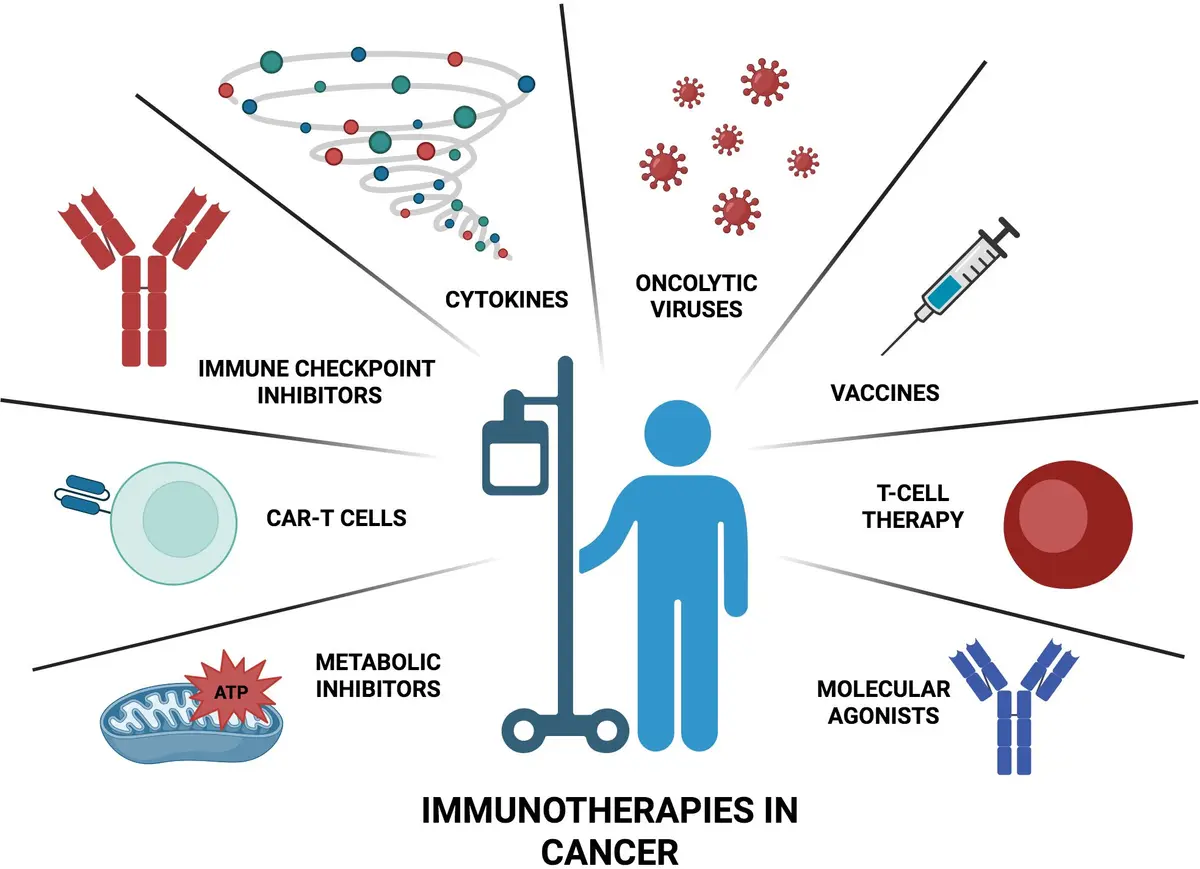
The types of immunotherapy used today do not all work in the same way. Understanding the differences can make treatment discussions with an oncology team much easier.
1. Immune Checkpoint Inhibitors
Checkpoint inhibitors block proteins that help keep immune responses under control.
Important checkpoint targets include:
- PD-1
- PD-L1
- CTLA-4
Drugs targeting these pathways may allow T cells to recognize and attack tumor cells more effectively.
Checkpoint inhibitors are now used across several cancer types, although eligibility depends on the individual diagnosis and treatment setting.
2. T-Cell Transfer Therapy
T-cell transfer treatment uses immune cells collected from a patient.
Doctors may select, grow, or genetically modify these cells before returning large numbers of cancer-fighting cells to the body. CAR T-cell therapy and tumor-infiltrating lymphocyte therapy are examples of this broader strategy.
These treatments have been especially important in certain blood cancers, while research continues to expand their role in solid tumors.
3. Monoclonal Antibodies
Laboratory-made antibodies can recognize specific targets found on cancer cells or immune cells.
Some antibodies directly help immune cells identify cancer, while others influence immune checkpoints or carry treatments toward tumor cells.
For example, pembrolizumab binds to PD-1 on T cells, helping prevent cancer cells from suppressing those immune cells.
4. Cancer Treatment Vaccines
Cancer treatment vaccines are different from vaccines designed primarily to prevent infections.
Their goal is to encourage an immune response against specific tumor-related substances. These treatments may help the immune system recognize cancer cells more effectively.
5. Immune System Modulators
Certain substances can increase immune activity more broadly rather than targeting a single checkpoint.
These treatments may affect immune signaling pathways and help the body create a stronger response against cancer. The exact approach depends on the disease and treatment plan.
What Is Immunotherapy for Cancer Effectiveness Based On?
One of the most important facts for patients to understand is that immune therapy is not equally effective for every tumor.
Doctors increasingly use biomarkers to estimate whether a cancer may respond.
Examples may include:
- PD-L1 expression
- Microsatellite instability, or MSI
- Mismatch repair status
- Tumor mutational burden, or TMB
- Specific genetic changes
- Cancer type and stage
For example, the NCI notes that pembrolizumab has a tumor-agnostic indication for certain unresectable or metastatic tumors with high tumor mutational burden when specific clinical conditions are met.
This reflects an important shift in cancer medicine: sometimes the molecular features of a tumor can influence treatment almost as much as where the cancer began.
Practical insight: patients should not assume that two people with the same general cancer diagnosis will automatically receive the same treatment. A pathology report and biomarker testing can completely change the recommended plan.
Can Immunotherapy Cure Stage 4 Cancer?
People understandably search can immunotherapy cure stage 4 cancer when they or someone close to them has advanced disease.
There is no single yes-or-no answer.
Stage 4 cancer means cancer has generally spread beyond its original location, but outcomes vary greatly depending on cancer type, biology, treatment response, and overall health.
Some patients with metastatic cancers have achieved long-lasting complete responses after immune-based treatment. NCI researchers, for example, have reported durable complete remissions in some patients with metastatic melanoma following cell-transfer approaches.
However, a durable response is not guaranteed, and doctors are careful about using the word “cure” for advanced cancer.
For many patients, the realistic goal may be to shrink tumors, slow cancer growth, extend survival, or maintain disease control for as long as possible.
In short, advanced cancer treatment must always be discussed in the context of the specific tumor rather than cancer stage alone.
Immunotherapy for Lung Cancer
The development of immunotherapy for lung cancer has changed treatment options for many people with both non-small cell and small cell disease.
For non-small cell lung cancer, immune-based drugs may be used alone, with chemotherapy, after chemoradiation, around surgery, or in other combinations depending on stage, tumor characteristics, and previous treatment.
PD-L1 testing can be particularly relevant because expression levels may influence whether certain checkpoint inhibitors are considered.
However, PD-L1 is not a perfect predictor. A high level does not guarantee that treatment will work, while some patients with lower levels may still benefit depending on their treatment setting.
Side Effects of Immunotherapy for Lung Cancer
Common side effects of immunotherapy for lung cancer can include tiredness, cough, nausea, reduced appetite, constipation or diarrhea, skin rash, and joint discomfort.
More serious reactions happen less often but can involve inflammation caused by an overactive immune response.
The lungs, liver, bowel, thyroid, skin, hormone-producing glands, and other organs can potentially be affected. Because some reactions can become serious, new symptoms should be reported promptly to the oncology team.
Breast Cancer Immunotherapy
The role of breast cancer immunotherapy has grown, particularly for selected patients with triple-negative breast cancer.
Pembrolizumab, for example, is an immune checkpoint inhibitor used in certain breast cancer treatment settings. The NCI lists triple-negative breast cancer among cancers for which the drug has approved uses.
Eligibility depends on factors such as disease stage, previous treatment, tumor characteristics, and the exact clinical situation.
Therefore, patients should avoid comparing their treatment directly with another person’s plan simply because both diagnoses involve breast cancer.
Immunotherapy for Liver Cancer
Another important area is immunotherapy for liver cancer, especially hepatocellular carcinoma.
Immune checkpoint inhibitors may be used for certain patients with advanced disease. Current treatment strategies can involve combinations such as atezolizumab with bevacizumab and other immune-based combinations, depending on the patient’s clinical situation.
However, liver function is a major consideration.
A person with liver cancer may also have cirrhosis or other underlying liver disease, so oncologists must consider both the tumor and the health of the remaining liver when choosing treatment.
Immunotherapy for Cancer vs. Chemotherapy
People sometimes assume newer treatment automatically means better treatment. That is not how oncology works.
Chemotherapy and immune therapy attack cancer in different ways.
| Feature | Immune-Based Therapy | Chemotherapy |
| Main approach | Helps the immune system attack cancer | Uses drugs that damage rapidly dividing cells |
| Response | Can sometimes be long-lasting | Can shrink many cancers quickly |
| Side effects | Often related to immune activation | Often related to effects on rapidly dividing healthy cells |
| Best option | Depends on tumor biology | Depends on cancer type, stage and treatment goal |
| Combination use | Frequently combined with other treatments | Frequently combined with surgery, radiation or newer drugs |
Modern cancer care often combines treatment methods rather than choosing only one. For example, chemotherapy and immune checkpoint drugs can be given together in several approved treatment settings.
What Side Effects Should Patients Watch For?
Immune-related side effects deserve special attention because they can appear differently from traditional chemotherapy reactions.
Common problems may include:
- Fatigue
- Skin rash
- Itching
- Diarrhea
- Nausea
- Joint discomfort
- Appetite changes
- Injection or infusion reactions
More rarely, excessive immune activity can cause inflammation in important organs.
For example, inflammation may affect the lungs, bowel, liver, thyroid gland, pituitary gland, heart, kidneys, or nervous system.
Some reactions can occur during treatment, while others may appear after treatment has finished. Patients should therefore tell healthcare professionals about their treatment history when new unexplained symptoms develop.
CAR T-cell therapy has additional risks, including cytokine release syndrome. Symptoms may include fever, low blood pressure, rapid heartbeat, nausea, headache, rash, or breathing difficulty.
How Doctors Decide Whether Someone Is a Candidate
Doctors rarely make this decision from cancer stage alone.
They may consider:
- Exact cancer type and subtype
- Stage and location of disease
- Tumor biomarkers
- Previous treatments
- General health
- Autoimmune or immune-related medical history
- Organ function
- Expected benefits compared with risks
For some therapies, an FDA-authorized companion diagnostic test is used to identify patients whose tumors have a biomarker linked to a particular treatment.
This is one reason modern cancer treatment is becoming increasingly personalized.
Why Cancer Immunotherapy Remains a Major Story in 2026
The field is still changing quickly.
On June 12, 2026, the FDA approved a treatment combination involving pembrolizumab and belzutifan for certain patients with clear-cell renal cell carcinoma at increased risk of recurrence after surgery.
Then, in July 2026, the National Cancer Institute highlighted how decades of research into immune checkpoints transformed the idea of releasing immune-system “brakes” into an important cancer treatment strategy.
Moreover, researchers continue testing new combinations, personalized T-cell approaches, biomarkers, and strategies designed to make previously resistant tumors respond.
For patients, this means treatment options can change relatively quickly. Asking whether new approvals, clinical trials, or biomarker tests are relevant may therefore be worthwhile during oncology appointments.
Is Oral Immunotherapy a Cancer Treatment?

The phrase oral immunotherapy can create confusion because it is most commonly associated with allergy treatment, where controlled amounts of an allergen are consumed to reduce sensitivity.
That is different from cancer immune therapy.
Cancer drugs can certainly come in different formulations, and treatment plans continue to evolve, but patients should not assume that allergy-based treatments and cancer immune treatments are the same simply because both involve the immune system.
Always confirm the exact medicine, indication, and treatment goal with a qualified healthcare professional.
What Is Immunotherapy for Cancer? Key Takeaway
Understanding what is immunotherapy for cancer starts with one simple idea: the treatment tries to help the immune system recognize or fight cancer more effectively.
Checkpoint inhibitors, T-cell therapies, antibodies, cancer vaccines, and immune modulators use different strategies to achieve that goal.
However, the treatment is not suitable for everyone, and success depends on much more than cancer stage. Tumor type, biomarkers, genetics, previous treatment, organ function, and overall health all matter.
The encouraging part is that immune-based cancer treatment continues to develop rapidly. More precise testing and better combinations are helping doctors identify patients most likely to benefit.
For anyone facing cancer treatment decisions, the most useful next step is not to search for a universal “best” therapy. Instead, ask the oncology team which treatments fit the specific biology of the cancer and why.
Frequently Asked Questions
Is immunotherapy better than chemotherapy?
Neither treatment is automatically better. Their effectiveness depends on cancer type, stage, biomarkers, previous treatment, and individual health. In some cases, doctors intentionally combine the two.
How long does cancer immune treatment take to work?
Response times vary. Some tumors respond relatively early, while others take longer. Imaging, laboratory tests, symptoms, and clinical examinations are used to evaluate whether treatment is helping.
Does everyone with cancer qualify for immune therapy?
No. Eligibility depends on the exact cancer, treatment setting, biomarkers, overall health, previous therapies, and approved indications. Companion diagnostic testing may sometimes help guide the decision.
Can cancer come back after a successful response?
Yes. Some people experience very long-lasting responses, while others eventually develop cancer progression. Researchers continue studying why some tumors develop resistance and how those responses can be extended.
What should I ask my oncologist before starting treatment?
Ask about the expected benefit, treatment goal, available alternatives, required biomarker testing, possible immune-related reactions, warning symptoms, treatment schedule, and how doctors will measure whether the therapy is working.
⭐ Make MindLiva Your Preferred Source on Google
Get trusted health, wellness, and lifestyle articles from MindLiva.
Add MindLiva
Samie Babaei is a medical science student at Shahid Beheshti University of Medical Sciences with a strong interest in health, wellness, and medical research. As a health writer and researcher at MindLiva, she focuses on creating clear, evidence-based content that helps readers better understand health and well-being.