



Top breakthroughs in immunotherapy for cancer therapy
What if cancer treatment could help the body’s own defense system find tumor cells that once managed to hide from it?
That idea has moved from experimental research into everyday oncology. Immunotherapy for cancer can produce long-lasting responses in some patients, and researchers are now trying to make those benefits available to more people. The National Cancer Institute notes that checkpoint inhibitors have transformed treatment for several cancers, although many patients still do not respond or eventually develop resistance.
The story has also accelerated in 2026. Recent FDA decisions have expanded immune-based treatment into earlier-stage bladder and kidney cancers, while an August 2026 approval introduced a genetically modified cancer-killing virus combined with a checkpoint drug for resistant melanoma.
Below are the breakthroughs worth understanding now.
Why Immunotherapy for Cancer Has Changed Oncology
Cancer cells are difficult targets because they begin as normal cells. As they change, some tumors learn to hide from immune cells or use natural immune checkpoints to stop T cells from attacking them.
Immunotherapy tries to overcome those defenses.
Some treatments remove immune “brakes.” Others collect and strengthen a patient’s own immune cells. Newer approaches may use cancer vaccines, engineered viruses, or combinations designed to attack the tumor from more than one direction.
A useful way to think about the field is this: the goal is no longer simply to make the immune response stronger. The goal is to make it smarter, more targeted, and more durable.
That change explains many of today’s biggest breakthroughs.
Breakthrough 1: Checkpoint Inhibitors Are Moving Earlier
Checkpoint inhibitors were first associated mainly with advanced cancers that had already spread or stopped responding to other therapies.
That is changing.
Checkpoint proteins such as PD-1, PD-L1, and CTLA-4 normally help control immune activity. Cancer cells can exploit these signals to avoid attack. Checkpoint drugs interfere with that process and help T cells remain active against the tumor.
Treatment Before and After Surgery
One of the most important recent trends is using checkpoint drugs around surgery rather than waiting for metastatic disease.
On July 10, 2026, the FDA approved pembrolizumab, including its subcutaneous formulation, with enfortumab vedotin before surgery and then after bladder removal for adults with muscle-invasive bladder cancer.
This is significant because immune treatment is increasingly being used when doctors are still aiming to prevent recurrence after potentially curative local treatment.
Similarly, on June 12, 2026, the FDA approved belzutifan with pembrolizumab as adjuvant treatment for certain patients with clear-cell renal cell carcinoma who have an increased risk of recurrence following surgery.
The broader lesson is clear: immune therapy is no longer only a “last option.”
Breakthrough 2: A Cancer-Killing Virus Reaches a New Milestone
One of the freshest developments came on August 6, 2026.
The FDA granted accelerated approval to vusolimogene oderparepvec-wtpg, marketed as Tudriqev, in combination with nivolumab for adults with unresectable advanced cutaneous melanoma that progressed after PD-1-based treatment.
What makes this unusual is the way the treatment works.
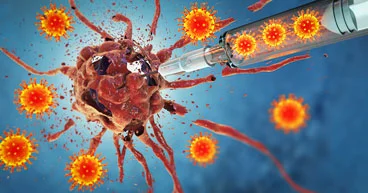
Tudriqev is a genetically modified oncolytic virus. These therapies are designed to infect and damage tumor cells while also helping stimulate an immune response against the cancer.
The approval is accelerated, meaning continued approval depends on confirmatory evidence of clinical benefit. FDA specifically requires post-approval trials to verify the benefit of the combination.
Still, the development highlights an exciting direction: researchers are increasingly combining local tumor destruction with systemic immune activation.
That could become especially valuable when cancers develop resistance to checkpoint drugs.
Breakthrough 3: Personalized TIL Therapy Is Expanding
One of the most promising areas of immunotherapy for cancer involves using immune cells already present inside a patient’s tumor.
These cells are known as tumor-infiltrating lymphocytes, or TILs.
Doctors can remove part of a tumor, identify useful immune cells, grow large numbers of them in a laboratory, and return them to the patient’s body.
In 2024, lifileucel became the first FDA-approved TIL therapy and the first approved cellular therapy for a solid tumor, specifically advanced melanoma.
Researchers are now trying to extend this concept beyond melanoma.
Encouraging Results in Gastrointestinal Cancers
An NIH-led trial reported in 2025 studied carefully selected TILs in people with metastatic gastrointestinal cancers.
Nearly 24% of patients receiving selected TILs plus pembrolizumab had substantial tumor shrinkage, compared with 7.7% among patients receiving selected TILs without pembrolizumab.
This was not proof that TIL therapy will work for every solid cancer. However, the result suggested that combining personalized immune cells with checkpoint blockade may help overcome some forms of treatment resistance.
From a practical perspective, this is one of the most interesting ideas in cancer research: use the tumor itself to help identify which immune cells should attack it.
Breakthrough 4: CAR T Cells Keep Getting Smarter
CAR T-cell therapy changed treatment for several blood cancers by genetically engineering a patient’s T cells to recognize specific targets.
The process generally involves:
- Collecting T cells from blood.
- Genetically modifying the cells.
- Growing hundreds of millions of them.
- Returning them to the patient.
- Allowing the engineered cells to seek out cancer cells.
The NCI reports that approved CAR T treatments have produced major responses in some difficult blood cancers. In one follicular lymphoma trial, for example, axi-cel eliminated detectable cancer in nearly 80% of participants, with many still free of recurrence three years later.
However, solid tumors remain much harder.
Their cells can vary greatly, useful targets may also exist on healthy cells, and the environment surrounding solid tumors can weaken incoming CAR T cells.
Researchers are therefore testing multi-target CARs, donor-derived “off-the-shelf” cells, improved genetic engineering, and earlier use of cellular therapy.
These developments could eventually make customized cell therapy faster and available to more patients.
Breakthrough 5: Personalized Cancer Vaccines Are Getting Serious Attention
Vaccines are usually associated with preventing disease. Cancer treatment vaccines have another goal: helping immune cells recognize a cancer that is already present or preventing microscopic cancer from returning after treatment.
One of the most interesting approaches involves neoantigens.
Neoantigens are abnormal proteins created by mutations in an individual’s tumor. Because different patients can have different tumor mutations, researchers can analyze a person’s cancer and design a vaccine around its unique molecular features.
In small studies reported by NCI in April 2025, personalized neoantigen vaccines showed encouraging signs in patients who had undergone surgery for certain kidney and pancreatic cancers. The vaccines were designed to teach T cells to recognize specific features of each person’s tumor.
These findings remain early.
However, personalized vaccines point toward a future where cancer treatment may be designed not only for a cancer type but for the molecular fingerprint of one patient’s tumor.
Breakthrough 6: Combination Treatment Is Becoming the Rule
Another major change is that immune therapy increasingly works as part of a treatment team rather than alone.
Researchers are combining checkpoint inhibitors with:
- Chemotherapy
- Targeted drugs
- Antibody-drug conjugates
- TIL therapy
- Cancer vaccines
- Angiogenesis inhibitors
- Radiation
- Oncolytic viruses
The purpose is often to make cancer more visible or vulnerable to immune cells.
A New Bladder Cancer Combination
On May 28, 2026, the FDA approved durvalumab with BCG for adults with previously untreated high-risk non-muscle-invasive bladder cancer.
BCG has long been placed directly into the bladder to trigger an immune response. Combining it with checkpoint blockade represents another example of old and new immune strategies working together.
Triple-Negative Breast Cancer
Breast cancer immunotherapy is particularly relevant in selected triple-negative disease.
NCI states that pembrolizumab can be used with chemotherapy in certain triple-negative breast cancer settings.
In addition, the FDA’s 2026 oncology approval list shows continuing movement toward drug combinations involving pembrolizumab in triple-negative breast cancer.
Rather than expecting one drug to solve every problem, modern oncology increasingly attacks cancer through several biological pathways at once.
Breakthrough 7: Biomarkers Are Making Treatment More Precise
A major challenge with checkpoint drugs is that some patients respond remarkably well while others gain little benefit.
This is why biomarkers matter.
Doctors may consider factors such as:
- PD-L1 expression
- Microsatellite instability
- Mismatch repair deficiency
- Tumor mutational burden
- Specific genetic changes
- Cancer subtype
Biomarkers do not perfectly predict who will respond. Still, they can help doctors select treatments and avoid a completely one-size-fits-all approach.
For example, FDA’s February 2026 approval of pembrolizumab with paclitaxel for certain platinum-resistant ovarian, fallopian tube, or primary peritoneal cancers specifically applies to tumors meeting a defined PD-L1 threshold.
That is an important trend.
The future of immune treatment may depend as much on who receives a therapy as on creating another new drug.
How Does Immunotherapy Work With Different Cancer Types?
Patients frequently search how does immunotherapy work because immune treatment can look different depending on the tumor.
Checkpoint drugs remove signals that suppress T cells. CAR T and TIL therapies provide large numbers of cancer-reactive immune cells. Vaccines help immune cells identify tumor-related targets, while viral approaches can damage tumor cells and stimulate immune activity.
This diversity explains why the types of immunotherapy should not be treated as interchangeable.
A treatment that works extremely well in leukemia may have limited value in a solid pancreatic tumor. Likewise, a checkpoint inhibitor can be highly effective for one molecular subtype but far less useful for another.
Immunotherapy for Lung Cancer Is Still Evolving
Immunotherapy for lung cancer has become an important part of treatment for selected patients with non-small cell and small cell disease.
Checkpoint drugs may be given alone or combined with chemotherapy depending on cancer subtype, stage, biomarkers, and previous treatment. Research continues to focus on identifying who benefits and how resistance can be overcome.
One growing area involves the tumor microenvironment, including bacteria in the digestive system. For example, an active NCI-listed trial is studying whether fecal microbiota transfer from treatment responders can help restore sensitivity to pembrolizumab in certain resistant PD-L1-positive lung cancers.
That remains experimental, but it shows how broad the field has become.
Side Effects of Immunotherapy for Lung Cancer
The side effects of immunotherapy for lung cancer may include fatigue, rash, diarrhea, itching, and immune-related organ inflammation.
One especially important complication is pneumonitis, or inflammation of the lungs, which may cause shortness of breath and a worsening cough.
Because symptoms can overlap with the cancer itself, patients should report meaningful changes rather than trying to diagnose the cause at home.
New Directions in Liver Cancer
Progress in immunotherapy for liver cancer also shows how combination treatment is changing care.
NCI reported in 2025 that two large trials found encouraging results when TACE, a procedure that delivers treatment directly to the liver, was combined with checkpoint drugs and medicines that limit tumor blood-vessel growth in intermediate-stage hepatocellular carcinoma.
Current liver cancer treatment can also include checkpoint-based combinations such as atezolizumab with bevacizumab in appropriate patients.
However, treatment decisions can be especially complex because many people with liver tumors also have cirrhosis or reduced liver function.
Can Immunotherapy Cure Stage 4 Cancer?
The question can immunotherapy cure stage 4 cancer reflects one of the biggest reasons these treatments attract attention.
For a small proportion of patients with certain advanced cancers, immune therapy can produce very deep, long-lasting responses. CAR T-cell trials in some blood cancers have even produced outcomes NCI researchers describe as apparent cures in selected patients.
However, this cannot be generalized to every stage 4 cancer.
NCI emphasized again in July 2026 that although some people experience dramatic and durable responses to checkpoint inhibitors, many patients do not respond, while others eventually develop resistance.
Therefore, patients should interpret exceptional success stories as evidence of what may be possible—not as a prediction of their own outcome.
The Biggest Challenge: Overcoming Resistance
If immune therapy can work so well, why doesn’t it work for everyone?
Cancer is highly adaptable.
Tumors may:
- Stop displaying recognizable targets.
- Create an immune-suppressing environment.
- Prevent T cells from entering.
- Exhaust immune cells.
- Develop new mutations.
- Activate alternative checkpoint pathways.
Overcoming resistance is now one of the field’s central research goals. NCI identified this challenge as a major focus in its July 2026 review of checkpoint inhibitor progress.
This is also why combination approaches are becoming so important.
One drug may expose the tumor, another may activate T cells, while a third blocks the cancer’s escape route.
What About Oral Immunotherapy?

The term oral immunotherapy is mainly associated with allergy treatment rather than standard immune-directed cancer therapy.
Cancer immune treatments are delivered through different routes depending on the medicine. Some are intravenous infusions, some involve cells infused into the bloodstream, and certain newer formulations can be given by injection.
For example, the FDA approved a subcutaneous formulation of pembrolizumab in September 2025 for indications covered by the intravenous formulation.
That may improve convenience in some treatment settings, but route of administration does not change the need for careful oncology monitoring.
What Patients Should Ask Their Oncologist
With so many breakthroughs appearing, patients can easily feel overwhelmed.
A more useful approach is to focus on questions that directly affect treatment decisions:
- Does my tumor have biomarkers that predict benefit?
- Is this treatment FDA-approved for my exact cancer and stage?
- Would I receive it alone or in combination?
- What benefit was seen in clinical trials?
- What serious side effects should I report immediately?
- Are clinical trials relevant to my situation?
- Could treatment before or after surgery reduce recurrence risk?
In my view, the most useful question is often not “What is the newest treatment?” but “Why is this treatment a good match for my cancer?”
That keeps the discussion centered on evidence rather than headlines.
Conclusion: The Next Era of Immunotherapy for Cancer
The biggest breakthroughs in immunotherapy for cancer are no longer limited to one drug or one disease.
Checkpoint inhibitors are moving into earlier stages of care. TIL therapy is being tested across more solid tumors. CAR T cells are becoming more sophisticated. Personalized cancer vaccines are moving deeper into clinical research. New combinations are targeting several cancer weaknesses at once.
And in August 2026, the accelerated approval of an engineered oncolytic virus with nivolumab for resistant advanced melanoma added another strategy to the rapidly expanding immune-treatment toolbox.
However, the most important progress may ultimately come from precision.
Researchers are learning which patient needs which immune strategy, at what stage, and in what combination.
For patients, that means more possibilities—but also a greater need for biomarker testing, specialist advice, and careful interpretation of new cancer headlines.
The future is not simply about making immune responses stronger. It is about making cancer treatment increasingly personalized, targeted, and difficult for tumors to escape.
Frequently Asked Questions
What is the biggest recent breakthrough in cancer immune therapy?
There is no single winner. Major advances include personalized TIL therapy, cancer vaccines, earlier checkpoint treatment, and new combinations. Most recently, the FDA granted accelerated approval on August 6, 2026, to a genetically modified oncolytic virus combined with nivolumab for certain resistant advanced melanomas.
Is CAR T-cell therapy available for solid tumors?
CAR T treatments are established mainly for selected blood cancers. Solid tumors remain more difficult because of tumor diversity, limited target proteins, and an immune-suppressing tumor environment. Research is progressing, but most solid-tumor CAR T approaches remain investigational.
Are personalized cancer vaccines available now?
Several personalized cancer vaccines remain experimental and are being tested in clinical trials. Small studies in kidney and pancreatic cancers have produced encouraging results, but larger studies are needed before these approaches become routine care.
Why doesn’t immune therapy work for everyone?
Tumors can avoid immune attack in many ways, and patients’ cancers differ genetically and biologically. Some tumors lack useful immune targets, while others create environments that block T-cell activity or eventually develop resistance.
Can immune therapy cause serious side effects?
Yes. Checkpoint drugs can sometimes cause immune-related inflammation affecting organs such as the lungs, bowel, liver, skin, and hormone glands. Most patients will not experience every serious reaction, but new symptoms should be reported promptly.
⭐ Make MindLiva Your Preferred Source on Google
Get trusted health, wellness, and lifestyle articles from MindLiva.
Add MindLiva
Samie Babaei is a medical science student at Shahid Beheshti University of Medical Sciences with a strong interest in health, wellness, and medical research. As a health writer and researcher at MindLiva, she focuses on creating clear, evidence-based content that helps readers better understand health and well-being.